| So, you want to speak |
| Most Americans travelling in Canada will find that people here speak and dress almost the same way as they do, expect for the approximately 25% of french speakers who may (not necessarily) speak english with a french accent. Canadian speech is much more similar to American speech than to the English spoken in England and other parts of the United Kingdom. However, Americans may hear a British-like accent in Canadian speech. This is due in part to the fact that Canadians often use "raised vowel" sounds, resulting in the more clipped, "British" sound. Listen to a Canadian say "out and about". Americans tend to hear it as "oot and aboot" (rhymes with hoot). Of course, if you mention this to a Canadian he may think you have lost your mind. We Canadians don't hear the difference! The second way in which Canadian speech differs greatly from American is in the placement of the emphasis in words and division into syllables: PRO-gress vs. prog-RESS, route rhyming with out vs. root, etc. Thirdly, we Canadians do say "eh". The expression "eh," (pronounced "A" ) tacked on to the end of a sentence with regularity, is a uniquely Canadian idiom (do not read this as idiot). It changes the sentence from a mere statement, to that of a question, or sometimes an exclamation where no answer is expected. It is used quite similarily to the American "huh", but it has many more uses. It is more commpnly used in the Eastern parts of Canada. It is quite amusing listening to Americans try to mimic this unique Canadian idiomatic (not idiotic) expression. It becomes stilted and artificial when someone deliberately tries using it. They realize that it occurs at the end of a sentence, but they don't have the feel and flow of the expression that comes from a true Canadian. They will mimic by tacking it on to the end of any ol' sentence making it sound contrived: "Pass the salt, eh" (with a strong emphasis on "eh"). The use of the expression will naturally flow from a Canadian. It is a product of years of use and deployment. It is art. It is music. It is poetry. And goes mostly unnoticed between Canadians since it seems a natural part of the language. "By now you understand, eh?" (with a softly spoken "eh"). In case you're american and you still do not understand, I'll give you an example: Joe doesn't quite hear what Paul said so Joe says "Eh?". Paul will then realize that either Joe: 1) didn't hear him 2) didn't understand him 3) wants more information 4) thinks Paul's statement is interesting and is encouraging Paul to continue. English speaking Canadians (anglophones) also use a few British words and expressions that may be unfamiliar to Americans. An "elastic" is a rubber band. A chesterfield = sofa = couch. Runners = sneakers = tennis shoes. Cash register = a till. Bum = the part of the person that meets a chair. There are many more. And unlike the USA, where "ma'am" and "sir" are common polite phrases, many women in Canada (including my mother) will inform you that they are not old enough to be called "ma'am"! It is not necessarily considered polite. The french spoken in Canada is also quite different from that taught in American classrooms. French-speakers in Canada (francophones), use hundreds of english words mixed with their french, such as "le smoked beef", "le brake drum", and "un party". The French slang spoken in the streets of Quebec or Acadia are very different from the french spoken in France. Finally, American readers of Canadian text will notice a lot of extra "u"s tagging along behind "o"s, such as in colour, flavour, humour, and neighbour. Some of the "r"s are shy and frightened of appearing at the end of words, as in The Centre of Arts. Those traveling in the Atlantic Provinces may feel like they have been transported to the fishing villages of Scotland and Ireland. Brave souls who get out to the "Island" (Newfoundland) are not alone in their inability to understand the fishermen's dialect. Most mainland Canadians have difficulty understanding a good "Newfy" twang too! Be careful if a fisherman offers you any "screech" though! [Screech is moonshine made from old rum barrels.] |
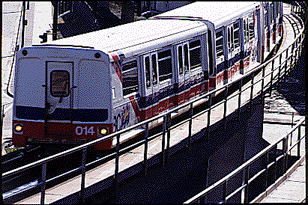
| The Rock The Island of Newfoundland Chinook Winter storm system that causes warm weather Two-Four A case of real beer Breath In, Breath Oat What we do in order to survive (And a cool song) Deck Al What Americans call DEE Kal The Basketweave Highway 401 across Toronto Monsoons Vancouver weather from Oct to April Hogtown Toronto nickname Cookie Crazy 2,4 Uh Blue A case of Labatts blue, please The Peg Winnipeg Kay Beck Quebec Seein' the Governor Drinking rum Loonies & 2 Knees Canadian dollar and 2 dollar pieces Choad So bad it's good Zed The letter after Y 5 point 0 Minimum beer alcohol level Skull Cramp Headache Sowester Storm from a certain direction Die Wrecked Opposite of indirect Oil Cloths Raingear to Americans Puck Bunny Hockey players girlfriend The Leafs, The Nucks Our beloved hockey teams Tronno Toronto How Zit Goan, Eh? How are you? With Oat a Doat Without a doubt Organ EYE Zay Shun Organization Brollywood What some call Vancouver Surrey Girls Women who dress easy in Surrey, BC Sky Train Light rail transit system Marshmallow in Bondage BC Place Stadium Gun Toting Fools Americans The Tube The George Massey Tunnel Eavestrough Americans say gutter Vancouver Rain Festival Occurs from September 1 through August 31 Jambusters Jelly-filled doughnuts Deke A move in hockey Pogey Hotdog on a stick |
| Canadian Slang |
 |
 |
|
 |
 |
| Canadianisms |
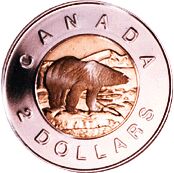
| Language allophone A Canadian whose first language is neither French nor English, but who prefers English to French. A visitor cites this example: someone who "speaks Arabic and English, mother tongue is Arabic, speaks Arabic to the spouse, English to the rude government employee." I believe this term isn't used much unless it's referring to the language differences in Quebec. anglophone A Canadian whose first language is English. francophone A Canadian whose first language is French. joual A Quebec working-class dialect that's a striking mix of English and French. Varies from region to region. Sometimes called "Frenglish" or "Franglais". Food back bacon Canadian bacon. Sometimes rolled in peameal (like cornmeal, only it's made from peas). brown bread In most of Canada, whole wheat bread. If you are at a diner for breakfast and you ask for whole wheat toast, they'll understand you, but "brown toast" is a lot more Canadian. Down east, "brown bread" refers to a sweetened, molasses bread. butter tart A very small (single-serving) pie. They taste like pecan pies without the pecans. This is a fairly typical recipe. They're yummy. candy floss cotton candy chocolate bar Candy bar. Popular Canadian brands include Aero, Crispy Crunch, Crunchie, Coffee Crisp, Caramilk, Bounty. Mars Bars have darker chocolate and no nuts. Other Canadian candies include Smarties (imagine very sweet M&Ms in brightly colored boxes, not the sweet-tart chalky things), Mackintosh toffee, and Callard & Bowser toffees. Crimcoe Chocolate milk, on Cape Breton Island in Nova Scotia. donair A pita containing spiced meat and a sauce made from sugar, vinegar, milk, and garlic. Glosettes Brand name for chocolate-covered raisins. homo milk Homogenized milk. Known in the States as whole milk. Nobody here thinks twice about what images milk cartons with the word "HOMO" in big letters on the side conjure up in the minds of Americans. A friend notes: "The term whole milk is actually used in Canada too, but refers to something different. Homo milk is homogenized milk with a butterfat content of 3.25%. Whole milk is not homogenized (it will separate if left standing for any period of time; this is the milk our parents drank). Almost all milk today is homogenized, although whole milk can still be found if one looks." icing sugar powdered sugar Kraft Dinner, or KD Kraft Macaroni and Cheese. No difference between what's in the boxes, just what's on them. Canadians eat a lot of KD. Referred to in some areas as "rubber bullets." Mae West A snack food similar to a Ring Ding. Popular mostly in Quebec. Usually consumed with Pepsi. Nanaimo bar A confection, named for the town of Nanaimo on Vancouver Island in British Columbia, that resembles a brownie but is topped with a layer of white butter cream icing and another of solid chocolate. The brownie part usually has coconut. Here's a recipe from Tourism Nanaimo. A friend notes that in the western part of the country, a Nanaimo bar is sometimes called a "New York Slice." pop A sweetened carbonated beverage. Canadians: not all Americans call it soda. Some call it pop, some call it coke (regardless of the brand or kind: "D'ya want a Sprite coke or a root beer coke?") -- it's a regional difference, rather than a national one. Here's a great website showing the regional difference: http://www.popvssoda.com/ poutine (pron. poo-TEEN) Quebecois specialty. French fries covered in cheese curds and gravy. Yumm. Rockets Small, chalky candies packaged in rolls wrapped in clear plastic. Shreddies A brand of breakfast cereal, vaguely resembling Chex. Smarties Not the ones you're used to seeing in the US. In Canada, Smarties are a candy resembling M&Ms. They do melt in your hand, and they're a lot sweeter. Smarties conoisseurs eat the red ones last. Timbits Doughnut holes from Tim Horton's. Several people with dark senses of humo(u)r have pointed out to me that these were introduced shortly after Tim Horton, a famous and beloved hockey player who started the chain, was killed in a car accident. torti�re A kind of meat pie, most popular in Quebec. whitener Powdery stuff to put into coffee or tea. Called "non-dairy creamer" in the US. Vi-co Chocolate milk, in Saskatchewan. Alcohol Alcool Pure grain alcohol. Known in the States as Everclear. The kind person who described Screech has this to say: "The name Alcool actually comes from the french word "alcool" (kind of pronounced like alco-ol, like alcove and awl, but no v) which means alcohol, (obviously) but since there is no other product name on the bottle, people have come to calling it "Alcool", rhymes with tool, instead of no-name alcohol. Alcool is also easier to say than alcohol when inebriated." He notes that it may just be an Ontario thing, but someone else tells me it's available in Quebec too. Beer Store Where you buy beer in Ontario. Bloody Caesar Just like a Bloody Mary, except it's made with Clamato (clam and tomato) juice instead of plain tomato juice. two-four A package containing 24 bottles of beer, can also be pronounced too-fer. dep wine Cheap, nasty, house-brand wine from a "d�panneur," or corner store, in Quebec. flat A two-four. forty-pounder A bottle of liquor containing 40 ounces. Also called a "pounder" or a "bottle." LCBO The Liquor Control Board of Ontario. Generally refers to the government-run chain of liquor stores. mickey A measurement of alcohol (13 ounces: it's a flat, curved bottle, supposed to fit in your pocket, but it doesn't, really). mini-mickey Six and a half ounces of alcohol. This one does fit in your pocket. Molson muscle Not a drink itself, but the potbelly one gets from drinking too much beer. pissed drunk (not generally used to mean "angry," as it is in the States) rye & ginger A drink made from rye whisky and ginger ale. SAQ The Soci�t� des alcools du Qu�bec, the government-run chain of liquor stores. Pronounced "sack." Screech A kind of liquor popular in Newfoundland. I've always been too frightened by the name to try it. sixty-pounder A bottle of liquor containing 66 ounces. Swish A kind of liquor made from putting water into barrels that have previously held some sort of alcohol (whisky, brandy, whatever) and letting the alcohol leach out of the wood. Drunk by university students who like to go blind. twenty-sixer A bottle of liquor containing 26 ounces. Sometimes called a "two-six" or a "twixer." This term is outdated; the equivalent bottle now contains 750 milliliters. Money bean One hundred dollars. May be a local Montr�al term. buttons Loose change, like buttons you find on a shirt. May be a local Montr�al term. dix or dixie Ten dollars, in a bill or coins. May be a local Montr�al term. fin Five dollars, in a bill or coins. May be a local Montr�al term. "Spot me a fin, eh?" loonie A dollar. The Canadian $1 coin has a loon (the bird) on the back. pogey Unemployment benefits. "I'm getting pogey" means, as the British would say, "I'm on the dole." toonie, doubloon The $2 coin. Gold in the middle, with a silver ring around the outside. The Queen is one one side, and a polar bear is on the other. (Several people have mentioned the painful little joke that the coin could be called a "moonie" because it's "the Queen with a bear behind." Har har.) When the coins were introduced in the winter of 1995-1996, Canada was overcome by a frenzy to pop out the middles of the coins. This was especially popular on the Prairies, where there's not much to do in the winter. (Would you go outside any more than you had to when it's -40 for days on end?) The most successful method for destroying this new piece of currency seems to be to put it in the freezer for a while and then hit it with a hammer. Throwing it off tall buildings was popular, too. The craze passed pretty quickly, though. Holidays Boxing Day The day after Christmas. So named because of the British tradition of giving gift boxes to people such as mail carriers, milkmen, etc., on December 26. In Canada, Boxing Day is the date for many huge annual sales. Canada Day Canada's birthday. July 1, the anniversary of the Confederation of Canada in 1867. The day is marked by parties and fireworks. The May Two-Four See "Victoria Day" Remembrance Day November 11, known in the US as "Veterans' Day." Canadians were important and valiant fighters in the two world wars, and are still known and respected as military peacekeepers. See "Why everyone wears poppies in early November." Thanksgiving Celebrated on the second Monday of October, to reflect that Canada's harvest comes earlier than the American one. Very similar to the American Thanksgiving -- family get-togethers, big turkey dinner with potatoes, gravy, etc. -- but not as big a deal here, and there's no mention at all of Pilgrims. Victoria Day Queen Victoria's birthday, May 24th. It's celebrated the Monday before Memorial Day. Beer is the official beverage of the Victoria Day weekend, because it's more or less the first weekend of the summer, when everyone goes to their cottages or cabins and opens them up for the first time since fall. If you're American, be aware that Canadians don't celebrate Independence Day (duh), Martin Luther King Jr. Day, Columbus Day, Memorial Day, or Presidents' Day. Clothing housecoat robe, bathrobe runners sneakers, running shoes toque/tuque Rhymes with "kook." A kind of hat, ubiquitous in wintertime. track pants sweat pants School grad Prom. May only be in Western Canada. university College. Americans will tend to refer to universities as colleges. For example "I am attending college at Carnegie Mellon University". In Canada college only refers to a Community College which is a place that grants diplomas rather than degrees and generally has more practical courses (i.e. technicians rather than engineers). grade x Xth Grade. For instance "I am in grade 10" not "I am in 10th grade." Canadians don't use the terms "freshman," "sophomore," "junior," or "senior," for high school or college students. What Americans would call "juniors in high school" are "grade elevens." University students are referred to according to what year they're in: an American junior would be a third-year in Canada. write a test Take a test. marks Grades. In Canada, teachers mark students' work instead of grading it, and take "marks off" if the students give wrong answers. at university In college residence ("He lives in residence") Dormitory ("He lives in the dorms") skipping out cutting class Miscellaneous arena An ice rink with seats around it. Could be any enclosed area with seats for viewing surrounding it, but the implication is that it's primarily for hockey. Army Guy A soldier arse, bum One's hind quarters. "He kicked me in the bum." ASA aspirin, which is a trademark of Bayer in Canada. bunnyhug A Saskatchewan term for a kind of hooded sweatshirt with a pocket in the front to keep hands warm. Chesterfield A couch, or sofa, or whatever you call it where you are. corner store A small variety store, usually on a corner in a residential neighbourhood of a city. Similar to the American "convenience store." deke To move quickly, especially across the border. d�panneur A corner store or convenience store in Quebec. eavestrough A gutter, the sort that is attached to houses and funnels rain water down a pipe. elastic rubber band frog A derogatory anglophone term for Quebecers. garburator garbage disposal glove box glove compartment go missing to disappear, become misplaced Gravol dramamine GST The dreaded Goods and Services Tax, 7% that goes on top of just about every purchase (in addition to the provincial sales taxes). The current Prime Minister, Jean Chr�tien, got elected partly because he promised to get rid of this tax (also called the "Grab and Steal Tax" or the "Gouge and Screw Tax), and then promptly didn't. If you're visiting Canada and spend enough money, you can get your GST back by mail after you've gone home. Ask about this at the border. guedille A francophone term for a hot dog covered in spaghetti sauce. Pron. "gay-DEE." hack A Montr�al taxi cab. holiday A vacation or a trip. Also used in the American sense, meaning a day off work or school. hydro, hydro bill electricity, electric bill (used in Ontario, Quebec, British Columbia, and elsewhere, but not throughout the entire country) jockey box glove compartment (in a car -- may be just East Coast) Joe job A job passed down to the person lowest on the totem pole, as in "Let Joe do it." keener Someone very eager and enthusiastic. Sometimes derogatory, in the sense of brown-noser, suckup, bootlicker. Someone obviously trying to get into someone else's good books. knapsack backpack, book bag laneway driveway lineup line. "There was a really long lineup for tickets to last night's hockey game." Some Canadians also use the British term "queue." Canadians wait in line or in lineups, never "on line." Maritimes The eastern Canadian provinces of Nova Scotia, New Brunswick, and Prince Edward Island. minty A Winnipeg term for "cool." An example: "D'ja see that Farrah Fawcett-Majors poster? Minty, eh?" It was later adopted by some Vancouverites, particularly those associated with a small record company, Mint Records, and incorporated into the phrase "Stay minty" for "Stay cool." north of 60 1. The High Arctic. 2. A TV show of the same name. parkade A public parking lot. Term most common in western Canada. Pepsi, pepper Derogatory terms for a Quebecer, used probably because of the great popularity of Pepsi Cola in that province. Evidently Pepsi was much cheaper than Coke at one point, and the Quebecers never stopped drinking it. Pogo A brand name for a corn dog (hot dog dipped in batter and then deep fried). postal code The Canadian equivalent of ZIP codes. Postal codes are six characters long and are a mixture of three letters and three numbers. RCs Mounties. From RCMP, for Royal Canadian Mounted Police. reserve, or "rez" A parcel of land allotted for Native Canadians, aboriginals, or Indians. Revenue Canada, or RevCan Canada's analogue to the IRS Robertson screws Screws (for metal or wood) with a square hole in the top rather than a straight or X-shaped one. Robertson screwdrivers come in different colors to indicate what size they are. Green number ones and red number twos are the most common. Robertson screws are just about impossible to strip, unlike Phillips-head ones, which become unusable about thirty seconds after you've brandished the screwdriver at them. They'd be popular in the States except that Henry Ford wanted exclusive rights to them, and Robertson (the inventor, a Canadian) refused to sell. second-last Next to last, or penultimate serviette French for "napkin." This term is used by anglophones as well as francophones. One visitor noted that younger people don't seem to use this term. shinney Also spelled "shinny," it's an early form of hockey, and now means a pick-up hockey game where people just show up and play. Played recreationally all over Canada, in ice skates, on inline skates, or in shoes. Sir John A. A reference to Sir John A. Macdonald, Canada's first prime minister. "On Parliament Hill, you'll see a statue of Sir John A." ski-doo Generic term for snowmobile. "I'm going out on my ski-doo." Can also be used as a verb: "They're going ski-dooing later." The word "Ski-doo" is the brand name for snowmobiles made by a company named Bombardier (pronounced "bom-bar-dee-AY," not "bom-bar-DEER"). In Canada, "ski-doo" is one of those brand names that have evolved into generic terms. snowbird A Canadian who flees to the southern United States (usually Florida) for some or all of the winter. south of the border The USA (not Mexico). The States The USA. Canadians hate referring to the US as "America," because Canadians are just as much North Americans as Americans are. stubby A short-necked, fat beer bottle once used by Canadian breweries. Very hard to find now. table (v.t.) To bring up for discussion, as in a session of Parliament. Compare with American sense of "table" as a verb, which means "to postpone discussion about the issue indefinitely." take a decision To make a decision, or decide. Tarbish A card game created by Cape Breton Islanders; very popular there. tea towel dish towel three-sixty-five In Ontario, formerly a learner's permit for new drivers. Referred to the number of days that the permit was valid. In Nova Scotia, a 365 is a $365 fine you're charged when you get caught with open liquor in public. transport truck An 18-wheeler, or a tractor-trailer washroom bathroom Whiskey Jack Also known as "camp robbers," Whiskey Jacks are birds who are around all year and often come into logging camps and try to scavenge food from the guys working in the bush. wicket The desk at the bank where you conduct transactions with a bank teller. When the teller goes to lunch, he or she will display a sign that says "This wicket closed." yankee, or yank An American. Used regardless of where in the US the specified American is from. beater An old beat-up car. "Winter Beater" qualifies that one is driving a beater only because the "summer car" is in storage. DUI Driving under the influence. Same as DWI, although a lot easier to get arrested for as limits in Canada are about 0.08, vs. 0.1 in a lot of States. RRSP Tax-sheltered retirement savings plan. Similar to 401K in US. Autoroute Highway. A French word used by anglos. klick Kilometer, or kilometer per hour. "Better slow down, Vern, the limit's 90 klicks here. Hand me the bottle." Joe Louis Cake treat similar to a Twinkie, with chocolate cake and a white icing interior. Available in Ontario and Quebec. No actual natural or redeeming ingredients. Central Canada Refers to southern Ontario, actually 1300 miles east of the centre of Canada. But in their minds... The West Refers to any point from Manitoba (actually the dead centre of Canada) west to the Pacific Ocean. sucking slough water Exhausted. Prairie expression. sweater Hockey uniform top, called "jersey" in the States. ("Sweater" also refers to that familar staple of winter wear.) no-see-um Small biting insect canteen Can refer to a cafeteria or snack counter bag Versus "sack," especially in US midwest chips Can describe potato chips or french fries pulling, to pull, booting Saskatchewan term. Describes when an adult buys liquor or cigarettes for minors. Beep Manitoba drink made from about 1% real orange juice, 99% sugar, water, food colouring. Also available in the Maritimes. cheesies Cheese puffs. In Canada pretty much all of the Cheetos type snack, whether round, long, curly, etc. are refered to as cheessies. Americans will refer to these are cheese sticks, cheese puffs, etc. elastic band rubber band mini-golf Americans undersand this, although Putt Putt is more common. pencil crayons Coloured pencils |