|
| |
Program Structure
The Project Stewardship program consists of
four modules, each with a different theme:
|
Module
1:
Biological
diversity, stewardship and plant propagation
|
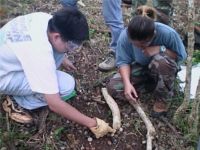
After introductions to the concepts of biodiversity and stewardship on global
and local levels, students take their first field trip. They learn about the
area’s natural history and current management challenges. They learn about
native and alien species, including their cultural uses, and they learn and
follow proper techniques for collecting plant material for propagation. Back at
school, they experiment with various propagation techniques to grow native
plants.
|
|
Module
2:
Mapping
and Monitoring
|
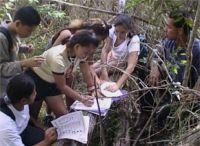
Students learn basic mapping concepts, including how to read topographic maps
and how GPS (Global Positioning Systems) and GIS (Geographic Information
Systems) are used in conservation. They also learn various techniques to monitor
plants and animals. During the field trip, they practice these techniques on the
plot that they adopt for the duration of the program. Data will be collected for
analysis back in the classroom.
|
|
Module
3:
Invasive
alien species control
|
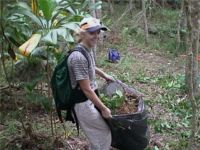
Students learn the impact that invasive alien species have on native ecosystems,
and, in particular, on Hawaii’s natural communities. They also learn how they
can help protect sensitive habitats from the spread of these species. Finally,
they devise and implement a strategy for the removal of alien species in their
plot.
|
|
Module
4:
Native
restoration
|
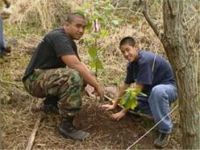
Students study aspects of different natural community types. They learn about
various techniques used in restoration and begin the restoration process of
their plot to a natural native community by out-planting native plants and
developing strategies to enhance their chances of survival. They also re-monitor
their plots and modify their maps to reflect the changes made. Finally, they
compile the information they learned throughout Project Stewardship and
understand how the modules fit together.
|
|
Hoike:
Presentation
of Final Projects
|
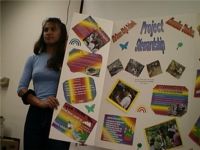
As part of the curriculum, students are responsible for producing final projects
that reinforce the concepts learned during Project Stewardship and share
insights with other students about stewardship at their field site.
Project Stewardship concludes with the hoike, a celebratory wrap-up, during
which students make class and final project presentations. The goal of the hoike is to celebrate accomplishments of all students involved and to share
information among schools. This event brings together all participating
students, teachers, volunteers, resource managers and staff. Students are also
informed on the various opportunities available to them should they wish to
pursue interests sparked by Project Stewardship.
|
[top]
|