
PROJECT PINEAPPLE.
An Easy Ride through Indochina.
Lift the carpet. Remove the bombies. Repair the damage.
Hanoi 19th March 2009 - HCMC 30th April 2009.
Images of Laos
Construction Materials
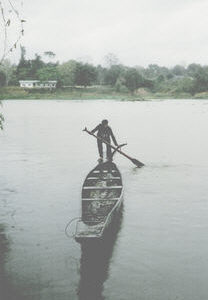
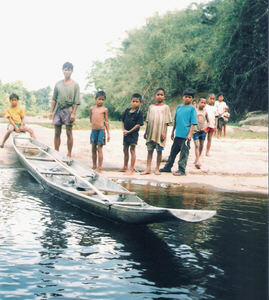
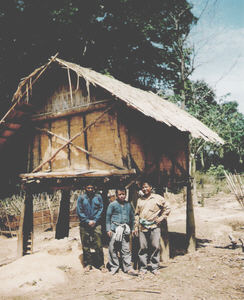
Traditional Laos boat and building styles. The hull of the boat is made from dumped aluminium fuel tanks, and the stilts of the
rice store from cluster bomb casings left over from the Vietnam War. Such materials are very plentiful throughout most of Laos, from
Luang Phrabang in the North to Attapu in the south, near the border with Cambodia.
Village Life
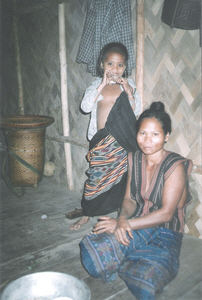
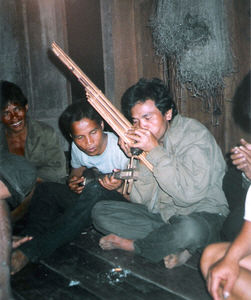
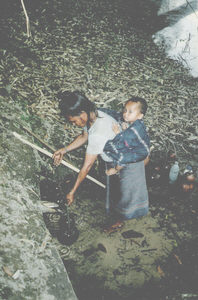
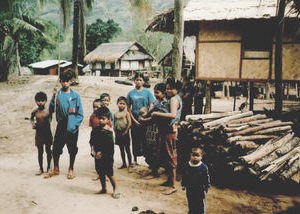
The life style of up-country Laos people is very simple. For the most part, they live without electricity and mains water
supply. Their poor diet leaves them small of stature, much as their cousins across the Mekhong river in Thailand used to be.
The traditional bamboo mouth organ in the center picture is known as the "Kaen" or "Khaen", and is popular throughout North East Thailand as well as Laos.
The traditional bamboo mouth organ in the center picture is known as the "Kaen" or "Khaen", and is popular throughout North East Thailand as well as Laos.
Pigs, Dogs and Small Children
(The Unexploded Ordnance Problem)
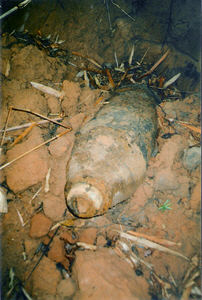
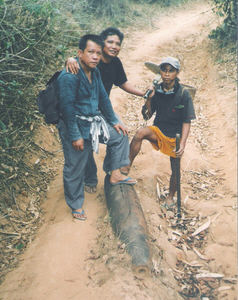
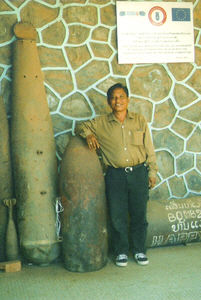
"Laos is per capita the most heavily bombed nation in the world. During the Vietnam War years, the United States flew more
than half a million bombing missions, delivering more than two million tons of explosive ordnance, in an attempt to block
the flow of North Vietnamese arms and troops through Laotian territory. The ordnance dropped include more than 266 million
submunitions (known as "bombies" in Lao) released from cluster bombs." - (uxolao.org)
UXO sweeping is performed by local people with quite simple equipment (center picture) though a lot of unplanned clearance is done by pigs, dogs, and small children.
UXO sweeping is performed by local people with quite simple equipment (center picture) though a lot of unplanned clearance is done by pigs, dogs, and small children.
The Simple Life
According to figures published by the US Department of State, the
population of Laos is estimated at around than 6.7 million people (2008), of whom around 78% are employed in subsistence
agriculture (mainly rice farming). Average per capita income is around $710 per annum, literacy around 69%. The country is mountainous and entirely
landlocked, bordering Vietnam to the east, Cambodia to the South, Thailand and part of Burma to the West, and China to the North.
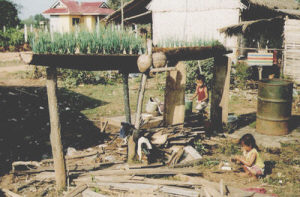
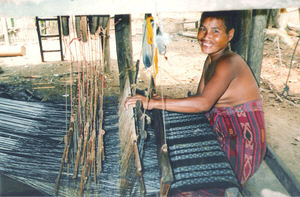
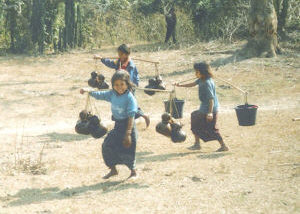
The villages are constructed almost entirely of local materials, including locally collected bomb debris such as the planters shown above left. Children contribute to the family economy by such tasks as water carrying and buffalo herding. The village are skilled in traditional weaving (above right) with styles similar to the Lao of North East Thailand.
The villages are constructed almost entirely of local materials, including locally collected bomb debris such as the planters shown above left. Children contribute to the family economy by such tasks as water carrying and buffalo herding. The village are skilled in traditional weaving (above right) with styles similar to the Lao of North East Thailand.
What it was all about
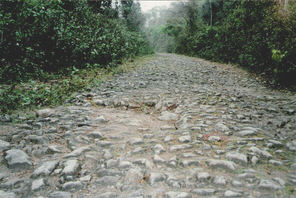
Part of the Ho Chi Minh Trail in 2003. Remarkably well constructed and durable, it remains a memorial to a war that we in the west are perhaps beginning to forget.
It will not be forgotten by the people of Laos any time soon. The unexploded munitions that still claim lives and limbs every year were constructed with the best technology of the time, highly resistant to corrosion and degradation.
The people of upland Laos might still find daily reminders of the Vietnam War in three or four hundred years time.
It will not be forgotten by the people of Laos any time soon. The unexploded munitions that still claim lives and limbs every year were constructed with the best technology of the time, highly resistant to corrosion and degradation.
The people of upland Laos might still find daily reminders of the Vietnam War in three or four hundred years time.