
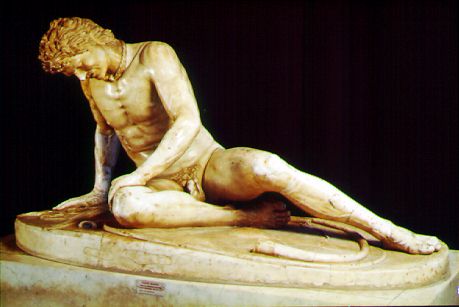
The Dying Gaul.
Roman marble copy of a bronze from Turkey c. 230-220 BCE
a. How does the pose show drama,
emotion,?
b. Explain how the Classical ideal is
disturbed by the posture.
c. What motion is going to happen next?
d. Is this statue posed in contrapposto?
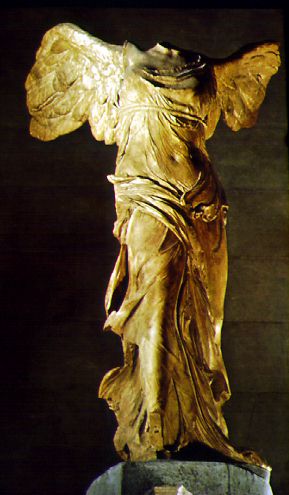
190 BCE
a. In what way does the sculptor show
great technical skill (virtuosity) ?
b. What is there about this statue that
makes it not Classical?
c. What invisible force is implied by
the posture?
d. Is this statue posed in contrapposto?
e. What is about to happen?