 |
|
|
|
|
|
|
|
|
|
|
|
|
|
|
|
|
|
Greek Statues: Classical Ideals |
|
|
P. 7 |
|
|
|
|
|
|
Sculpture in classical style shows expressions and body language of self-control, calmness. The lack of passion places this style in the categories we have discussed of left-brain-Apollonian. We will examine an artistic clock with a long pendulum that begins to swing from Apollonian to Dionysian, from left brain to right brain, and we will also call these polarities CLASSICAL and ROMANTIC: Cool reason and emotional passion.
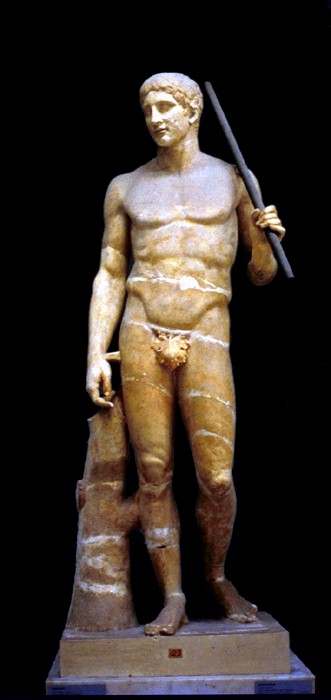
5th Century BCE: Classical Greek statues show IDEAL FORMS, images of humans more perfect than real life.
|
|
|
|
Polyclitus, Doryphorus (Lance Bearer). Marble copy of a bronze c. 440 BCE. 6"6" high. The figure represents the Ideal male athlete in contrapposto pose, proportional body, controlled yet relaxed, attentive to his surroundings, ready to act. |
|
|
|
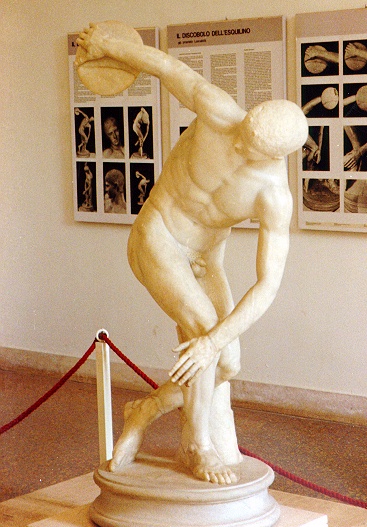
Myron, The Discus Thrower. Roman Marble copy after a bronze original c 450BCE. Life-size. Classical restraint, contrapposto, balance, proportion, harmony/unity, idealized beauty. There is a slight move from the severe restraint of Classicism in the vitality of the posture. Myron shows you implied motion before the Discus thrower reached this position, and what you can expect after he moves from this position.
a. Locate the two opposing arcs.
How does the body positioning create these two arcs?
b. How do these two arcs give the body a lifelike
vitality?
c. Which seems more important in this sculpture, the
feelings of the athlete, or the balance of the
composition? |
|
|
|
|
 |
|
|
|
|
|
|
 |
|
|
|
|
|
P. 8: The Dying Gaul & The Winged Victory |
|