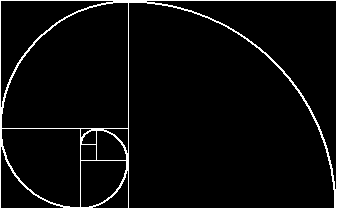
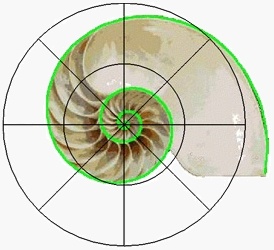
Greek Philosophers (except Socrates) studied nature, contemplated the nature of being,
of existence. Nature was seen as filled with mathematical ratios; of proportions that conformed
to THE GOLDEN MEAN. Parts of our bodies also can be seen to contain this proportion, the
ratio of 1: phi (1.618).
It is these proportions that were essential to the Classical Greek ideal of aesthetics as well as
to the ideal of how to live together in moderation. This ration was used in the construction of
the Parthenon and buildings constructed throughout the succeeding centuries. It was also used to determine the ideal proportions of statuary.
Golden Mean or Golden Section, golden mean or golden section - A proportional relation (ratio)
obtained by dividing a line so that the shorter part is to the longer part as the longer part is to
the whole. Another way to describe this: a proportion between the two dimensions of a plane
figure or the two divisions of a line, in which the ratio of the smaller to the larger is the same
as the ratio of the larger to the whole: a ratio of approximately 0.618 (phi) to 1.0.