
Q. Why do you think Agriculturalists (people who grew crops) built more
permanent structures, created art in a greater variety of forms, and in
larger sizes than hunters?
"Traditional Art" was made before outside influences. European influence began in the 15th C, and colonization occurred during the late 19th C.
Q. What reasons related to outside influence would cause African artists to
change their traditional art forms in a significant manner?
Q. Do you know of any European artists whose art works were influenced by
the African Art they had seen?
Q. Can you suggest the time period when this began?
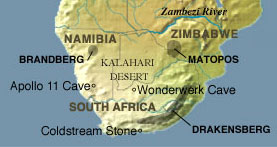
Imagine yourself, your family and friends living in the in the equatorial forest
of the Kalahari Desert. You migrate across a large area, carrying your
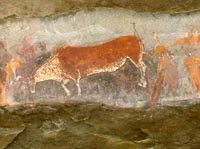
belongings with you. The permanent art you leave is engraved and painted
on cave walls across your migration path. There are more than 15,000 rock
art sites in the Kalahari Desert.
Q. How would the art objects, which includes all useful items, differ from
the art of people who stayed in one place? What would be one very
important of useful art object you would need to create and use as
you migrate?
Q. What do you think the value of caves and the meaning and purpose
of these cave paintings could be?
Empathize with these people.
Q. Why would the Shaman have to enter the spirit world?
The answer will tell you a lot about African rock art. These are some of the
overall characteristics of what we call collectively, "African Art".
A) A close connection between art and environment.
B) Art expresses spiritual concerns and dynamic forces of life.
C) The power of animals is shown by their signature characteristic as a symbol that can stand for the entire animal.
ANIMALS CONTAIN LIFE POWER.
A mask or statue will show the signature survival element of an animal and will contain more power by the addition of media to the artwork.
Q. What are the signature elements of the lion - something
that could represent the presence of that animal and its
power without showing the whole creature?