High Value Key - hues which are light in value and tints.
Middle Value Key - medium value hues and darker tints.
Low Vlaue Key - the darkest hues as well as shades.
Primary Colors:
Primary Yellow (equal parts Lemon Yellow and Cream Yellow)
Primary Red (equal parts Scarlet and Magenta)
Primary Blue (equal parts Cerulean Blue and Cobalt Blue)
Secondary colors:
Violet (equal parts Cobalt Blue and Magenta)
Orange (equal parts Scarlet and Lemon Yellow)
Green (equal parts Cerulean Blue and Lemon Yellow)
Tertiary Colors are made by mixing 2 parts Primary Color to 1 part Secondary Color
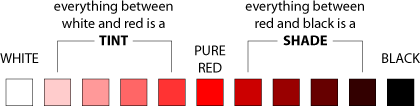
Shade - altering a color by adding black produces a shade.
Inherent Value - the light or dark value of a hue at it's maximum saturation or intensity.
Saturation - The purity or intensity of a color, also refered to as chroma.
In class you should have started the red tint and shade scale. Using this as your guide create the tint/shade scales for the other primary colors. Use the value scale and the red tint/shade scale for a comparitive guide for the others.
Mount them into your workbook and do some research into the symbolism and meanings of each. Document your research and place this on the page with each color in your workbook as well. Remember there should be one page for the value scale and one page for each tint/shade scale.
Cut or clip values and colors (tints and shades) from magazine images to support and decorate the pages of each color.