|
|
The Treaty of Versailles and Subsequent Hyperinflation in Germany: Finding the Culprit (continued) Germany felt betrayed by Woodrow Wilson and the idealistic internationalism embodied in his Fourteen Points, which the Paris Peace Conference participants stated would constitute the cornerstone of the Versailles Treaty. Instead, the final draft, which was imposed without negotiation, violated 19 out of the 24 Wilsonian terms of peace, including self-determination, uniform disarmament, and border adjustments according to nationality. On June 22, 1919, the National Assembly in Berlin, astounded by its unforgiving provisions, voted 237 to 138 to sign the Treaty granted that it would not (1) recognize the war guilt clause, or (2) deliver any alleged war criminals. Wilson responded at 9:30 that evening, “the time for discussion has passed” and that he would not “accept or acknowledge any qualifications or reservations.”9 The following day, Germany was faced with the ultimatum of either signing the Treaty or an Allied invasion at 7 PM. Finally, after extensive consultation with his ministers, President Ebert dispatched the German representative at Versailles Baron Haniel von Haimhausen to present the note accepting the Treaty scarcely two hours before the impending assault. As people poured into the streets of Paris in celebration, German civilians sang “Deutschland �ber Alles”, students at the University of Berlin held patriotic demonstrations, street processions in every major city sang war songs and cheered the war heroes of the Second Reich, Cavalry Corps soldiers burned French battle flags, armed mobs attacked shops, robbed passersby, and fired from rooftops, and in Hamburg, hungry citizens stormed the city hall. The outcome left Germany with a simmering resentment that metamorphosed into militarism and rendered the rest of Europe wholly disillusioned and convinced that the Fourteen Points could not be practically applied. As one pastor articulately conveyed, “This war educated our German people to peace, this peace has educated it to war.”10 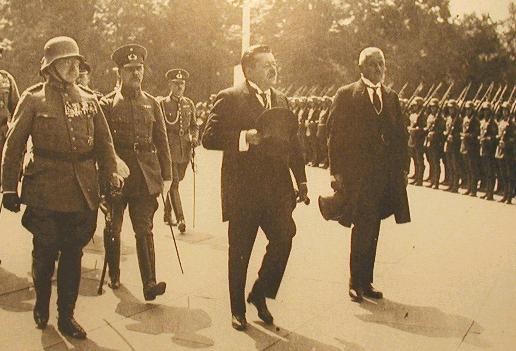 Footnotes
 
Copyright ©2001-2003, Allegra H., all rights reserved. Please contact me via e-mail if you wish to reproduce this material.
|