the Prestoni art banner

 Home      bio       Grand Canyon      Big Bend     ART
 

More Bio

         When I was born, the world was depressed.   The depression had deepened, and there was the coping with reduced resourses.  Mama had quit her teaching job when she and Dad got married.  They both just turned thirty.  I asked Dad how he had popped the question, and he hedged, framing the answer in that formal language that used to make me so mad, because I had no idea what he was really talking about. Formal English that kids do not use! Something like:  "Honey, we have been acquainted  since we grew up."   (Just a short three blocks from each other.)  "We are approaching maturity, and it seems the affections are there, in place for each other, and since we have no other serious prospects, we might as well tie our fortunes together.  Either that, or I might as well move away, and find someone else!"  I did not believe that.   Even at the young age of 5 or 6 I thought that was bull.

        It seems that there were no fortunes, but Mom was better connected.  Pa, my grandfather, free from debt, and with property and income to maintain comfort, took the generous look at the situation.   Nana and the Richmonds and Maurys were somewhat elitists.  Snobs, but benevolent Presbyterian snobs. at least.  Christian snobs.  It was said, the family was shocked, because Daddy's family was not well employed, but rather poor and unconnected.  My grandfather, Dad's Dad, had died two years before, and circumstances were hard.  Aunt Ellen, Bobu, told me that Grandma had taken him to a cabin in the country, as he succumbed to cancer.  I guess at her family farm in the Bethpage Church comunity in the county.  There, some charity visits were made, as she remembers taking food to the couple.  But he definitely received a good burial in  the town cemetery, and the church service buletin for the funeral is in the family archives.
 

Uncle Arther, Dad's older brother, was married and living in New York.  There is no mention of him in the wedding write-up.  In fact, Dad's family was looked down on by her family. And there was some resentment there.  Dad's younger brother was working in town, but not part of the same social race that Dad ran in.  He seemed to be a lonely, moody, handsome man.  He and dad looked a lot  alike.  But he was so dark, his nick-name, that lasted for life somehow, was Nig. Given name Byron Kimmons, for our uncle who lived in the country.   (Daddy remember's hearing one of his fathers old girl friends, and really a special friend of Dad's as long as she lived, saying when she passed Grandma and little Byron on the street say, "Who did Arthur Miller marry anyway?   That boy looks like a Nigger!")  So, it was Nig from then on!!!   Interestingly enough, Mama called Grandma "Mrs. Faggart", the rest of her life.  They were never close.  And Grandma had her own ideas about Mama's family and life, but only addressed them indirectly.  As I got older, I visited her often and she told me many great things about her life.  I will get some of them down later.

           When Mom told the family of the engagement, according to what Ibel told Janie, Pa let it be know that they were not to let the diffenence in their family situation have any effect on the treatment of my father.  My impression was that he was in favor of the union.   He seemed to take a dim view of the snobbery of the Richmonds.  Daddy, with his intelligence and wit, and two years at Davidson College behind him, was still making 29 dollars a week clerking at Gibsons Drug Store, where he had worked since High School.  At least 14 years at that point, since he graduated at 16.  The members of Dad's wedding party were from some of the respected members of the  business and social community in town...... The write-up of the wedding with all the sartorial details is quite revealing! Dad did have friends in high places, and was quite the blade around town, if not a real dandy.

 
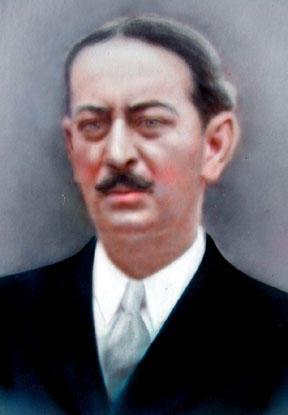
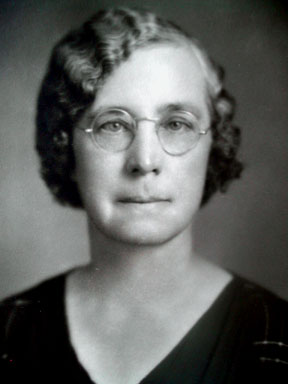
Arthur Miller Faggart and Ninna Kimmons Faggart
Paternal grands.


Grandma dipped snuff,  and dad and his  brothers began smoking pretty young.

Hosted by www.Geocities.ws


    I am born.    On a late February  day in 1936, in the town of Concord, North Carolina, my mother, married a respectable nine months, was delivered of the male infant she had carried, and named him for his Dad.  Thanks, Mom and Dad for not cutting my foreskin!.


Two days before,  Mom had slipped on the ice on a friend's front porch after playing bridge that afternoon.  (I blame my mental problems on that fact.  I was always crazy as a bed bug.)   The usual miracle of sperm-meets-egg had occurred, I am led to believe, after the May wedding.   The honeymoon trip was to the Virginia mountains.   I never learned whose car was borrowed for the trip.   If it was my Grandfather's it was a fine 1932 Hudson, a make he always drove.  Dad hung on in those depression days to clerking at Gibson's Drug Store, owned by Parks Lafferty, on the Square in Concond,  the corner of what was then Depot Street and Union, where North Union and South Union are united.  The year was l936.  Roosevelt had been President for four years.  Mom gave up her 50 dollar a month teaching job, and Dad made a big $29.50 a week at the drugstore.  So going was strained. But eggs were a dime a dozen, bread 15 cents a loaf, milk was a quarter a gallon, etc. etc. At first, they rented an apartment from a neighbor, but after I was born, they soon returned to live upstairs in Pa's big house, 25 N. Georgia Ave, where Mom's home was open to us, and my grandparents were in comfortable retirement: not very wealthy, but enough for a colored cook/maid/laundress, who came early, fixed a big lunch,  and I think also prepared supper.  Her name was Non Parks, and her husband, James,  a dignified Uncle Tom, wore a suit for his custodial job at the First National Bank.   I think she was paid 8 dollars a week.  And could take home all the leftovers.  I don't know how much James made, but together, they sent their daughter to college.   Not a usual fete for "Darkies" in those days.
 

                 Non,  (pronounced "non",  as in non-conformist)  was very important to the family, as she had been a servant in my Grandfather's house since Mom and her sisters and brother were young.   Another person important to the house-hold was my great aunt, who lived next door with my great uncle.   Only they were brother and sister.  Mary William Richmond and Lewis Maury Richmond were very big in our lives.  Mary William was called "Willie" by family and friends, and "Bulldy", by Mom,  who like me, was the oldest of her siblings, and got to name the kin.   I changed that to "Boo"  or "Bu".   Mom's Mom, Janie Richmond White, I called "Nana", and Dad's Mom I called "Grandma".  She was Ninna Kimmons Faggart, and quite a striking woman.   She lived alone a few blocks away, losing her eye sight. This was very sad, as she was a great and compusive reader. She lived above cousins, J.F. and Blanche Harris.  Their two Daughters, Norma and Jeanne were among my favorite playmates.
 
        Sometime before I was five,  Mom had another pregnancy which miscarried.  I wonder what my miscarried brother would be like.   I think I was told much later that the fetus was male.   The war began on Daddy's birthday in l941.   I was five and remember the expressions of shock, and dismay.   The family gathered at the radio hungry for any news.  Pearl Harbor became the two most used words.  I learned another word.   Duration.   We were stuck in a fierce rain storm inside Gibson's, one day.   The streets were flooding, and Mom said something to the effect that we may be stuck there for the duration.  I asked what that meant, and did not understand the definition that was offered.  Except it had something to do with the war everybody was concerned about.  Mom met friends at Gibsons a lot.  It was next door to Robinsons, their favorite dress shop, and just down the street from the A and P,  which probably put Uncle George out of business, as he ran the grocery side of Richmond-Flowe, while Uncle Maury ran the haberdashery on the other side.    You could get your groceries delivered.  Nana would call every morning, and Shirley, the delivery man (!) would bring them in the back door.  He was white and cheerful.   He kidded me, and asked about my girl friend.
       Dad was 35 when we declared war on Japan and German, smoked unfiltered Camels since birth, but went to Fayettville to enlist.   He was rejected because of a heart murmur and, I guess, his age.   His complaint was that he was too young for the first world war, and too old for the second.  (He continued to smoke till he died at 85.  Heart failure.  In my arms, he died, after I had fussed at him for some trivial thing or another.  I had just fixed him breakfast.  That was April 30, 1991.)


 Wedding Photos

       Marriages.    All the surviving White siblings got married within a five-year span.   Mom, Jane Elizabeth White, and Dad, Preston McKamie Faggart, in 1935, her brother Jack,  Chalmers Lindley White,  married Martha Craig Pegram in 1934,   Isabel Maury White married Horace Hamilton Smallridge, in 1937,   Ellen Richmond White married Lauren Barker Askew in 1939.    I was 3 at the last one, a wildly out-of-control yard ape.   I remember vaguely being kept in the background by a teem of aunts and uncles..

Lauren came from Kentucky to work at GMAC. He drove fast GM cars, Chevys or Pontiacs. He was big boned, a bear, that was what his family called him. Quite different from the smalled boned, diminuative Richmonds and Maurys, and even bigger than the sturdy Whites. He was cheerful, enthusiastic, energetic, in mark contrast to the introspective, slow-moving, meditative tendencies of the family his wife came from.

Bio continued
Hosted by www.Geocities.ws

1