| Part 3: In the Lab |
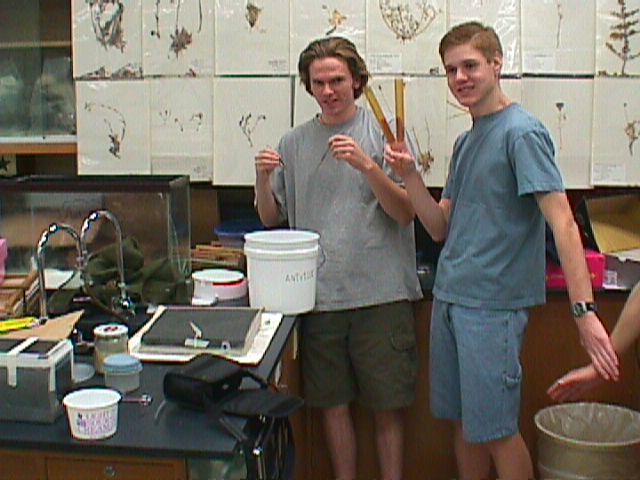 |
| Figure 11: Me (left) hold a probe a pair of tweezers, and Alexander (right), the peace-maker |
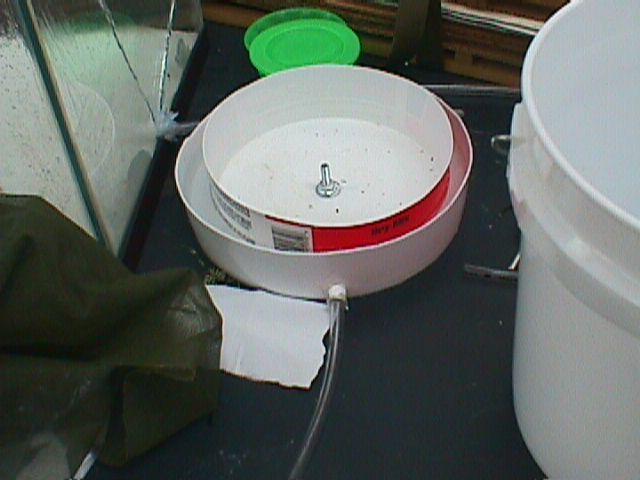
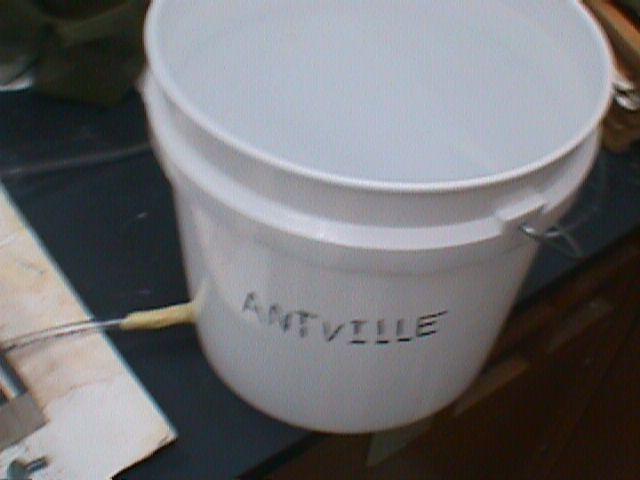
| So on to the lab we went. After we had dug up the colony, we carfully transported it to the lab (my Adv. Bio. teachers room). We did everything that we could in order to ensure the comfort of our little bundles of joy. We maintained a decent humidity within the nest via the water holding tank, however, we found that these particular ants like minimal humidity. This makes sense since their natural environment was so hot, dry and airid. After numerous attempts at feeding them, we finally contrived a diet that they all seemed to be content with (more on this in the food section that will come later). The appearance of the artificial nest went through a few changes after it had benn set up in the lab. One of the first things that we did to the nest itself is we made a black paper covering. This made the ants feel much more at home than they had beforehand. Besides, the brood develops better in the dark anyway. We then added a new arena that was tall enough for our mateable ants (the winged males and pre-nupial queens) to fly around and hopefully mate in, if they so pleased(see figures 12 and 13). |
 |
 |
| Figure 12: moated arena |
| Figure 13: The new arena for mateing and other stuff they like to do. We later named this arena "Antville," because it was booming with ants when compared to the other arena. For some reason it's just more popular than the other. |
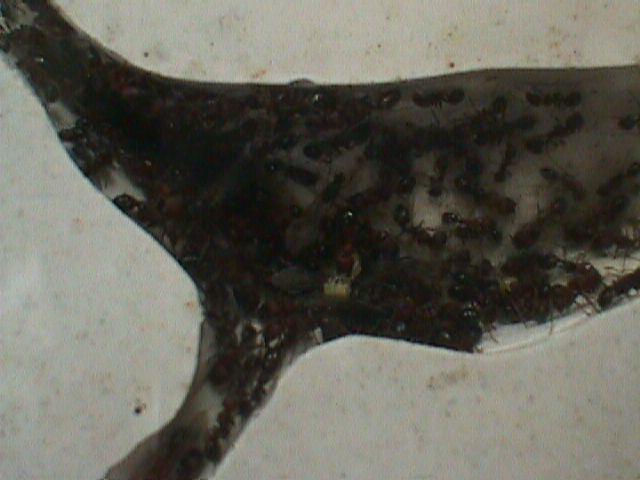
| During the course of the next 3 to 4 weeks the ants flourished. Although we lost an estimated 400 individuals via death and/or escape, the colony still managed to stay healthy as a unit. The first weekend of keeping the ants in the lab we lost about 250-300 ants because they managed to find a way out of the nest while we were gone for the 2 days. Upon our return we noticed that our population had become very puny, and we also notice dead ants strewn about the room. After this incident we learned that one of us would have to take the entire colony home every weekend in order to keep an eye on them and patch up thier escape work(in the netting that covers the arenas. The nest itself in totally escape-proof.). After another week, we returned to the original nest site in the wild and collected about 200 more ants to replace the ones lost in the escape. This second collecting excursion proved to be very beneficial because it was during this collection that we obtained our males and pre-nupial queens( see figures 14 and 15). It was interesting to observe the behavior they showed in the nest regarding the placment of their brood. they seemed to favor a particular chamber in the nest right next to the water tank. It is obvious that this was done in order to maintain the proper brood developing humidity(see figures 16 and 17).. |
 |
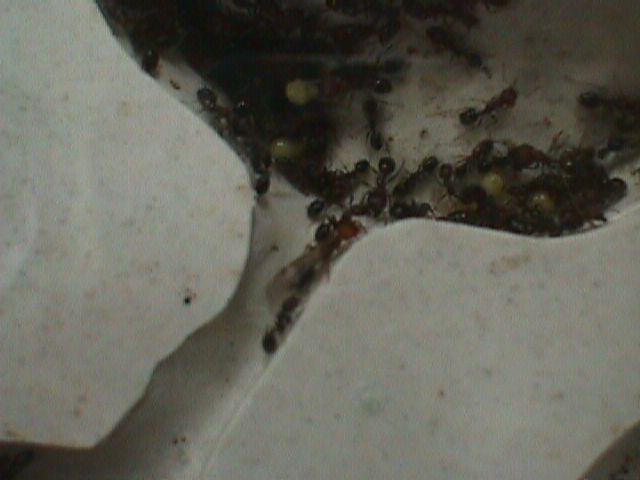
| Figure 14: This lively chamber is full of every caste. The winged ants with the tiny heads are the males, and the winged ones with the larger heads are the pre-nupial queens. |
 |
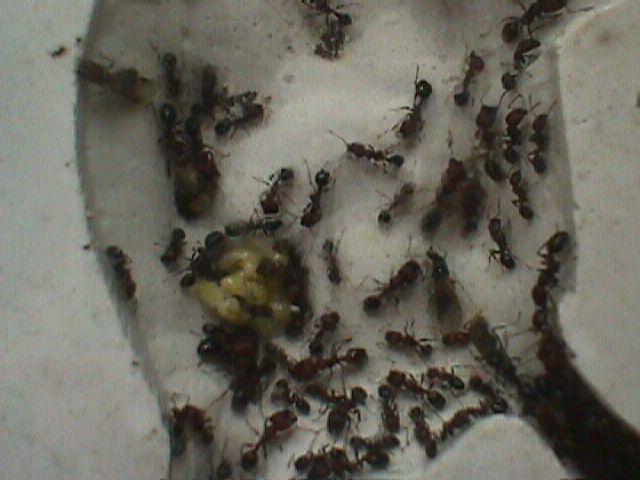
| Figure 15: The ant in the center of this photo is a pre-nupial queen. Note how much larger her head is than the that of the male's. Also note the redish orange color of her head, this trait has only been found in queens. |
 |
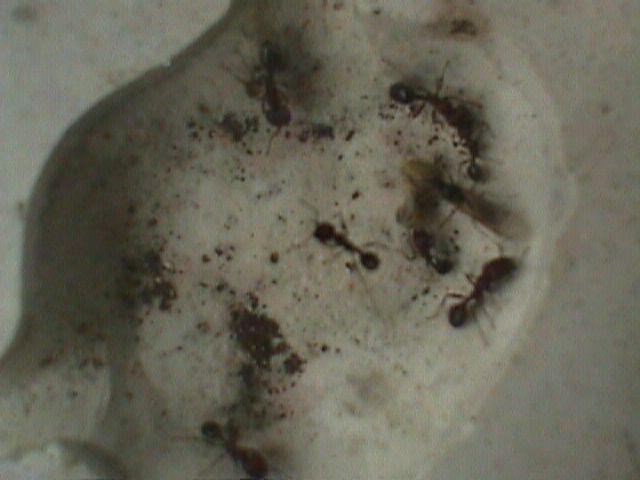
| Figure 16: The ants appear blury in this photo because of the condensation on the glass. This chamber is the most humid of the nest, this is why the brood is piled in this particular spot. Note the greyish colored brood right above the pile, it is farther along in it's development than the others, it will soon be a worker major! |
 |
| Figure 17: The single brood in this photo is also in it's later more advanced stages of development, and yet another major will be born. Note the trophallaxis being desplayed between the worker major and worker minor toward the top of photo. |
| On to Part 4--------> |