| Physical Risks Hemorrhage - Sometimes women will bleed heavily during an abortion or a few days afterwards. Occasionally it is necessary to give a transfusion to replace the lost blood. Sometimes it is necessary to do a second curettage procedure or hysterectomy to stop the bleeding. Infection- A uterus is susceptible to infection right after an abortion. Infections are even more of a risk if you have Chlamydia or Gonorrhea. Symptoms are pain and fever. Sometimes part of the fetus is left in the uterus, this can cause infection and will require a repeat d&c. If untreated, a very serious infection can develop and could result in infertility. Perforation- Sometimes the tools of abortion are accidentally pushed through the wall of the uterus during an abortion. If the instrument damages one of your internal organs, it may be necessary to do major surgery to repair the damage. Effects on Later Pregnancy- Severe injury to the cervix may occur and may result in the early loss of a later wanted pregnancy. The risk of miscarriage in later pregnancies is higher after an abortion. There is also a greater risk for an ectopic pregnancy. Continued Pregnancy- The fetus may be growing in your fallopian tube rather than in your uterus. An abortion procedure would miss this and the continued growth of the fetus in your tube is dangerous. And there have been cases where although the baby was in the uterus, the abortionist somehow missed it....READ ANGELA'S STORY Breast cancer- Studies have shown an increased incidence of Breast Cancer among aborted women. Death- Death has occurred after abortion, though this is rare. When abortion is done after the first three months of pregnancy, the risk of death increases. The cause of death by abortion is usually from heavy bleeding or from complications with anesthesia (the drugs used to help relieve pain). Emotional Risks Some women experience an immediate feeling of relief following an abortion, but many find themselves later coping with feelings they did not expect. They may have a difficult time talking about these feelings. However, many women who have had abortions experience similar feelings. Some psychologists have labeled these problems as Post Abortion Stress. The symptoms of Post Abortion Stress span a wide range and can affect men who have lost a child to an abortion as well as women. Long-term grief reactions Guilt Anger Flashbacks Sexual dysfunction Memory repression Anniversary reactions Suicidal ideas-READ BELINDA'S STORY Hallucinations Difficulty keeping close relationships Increased alcohol and drug use |
 |
 |
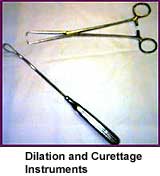 |
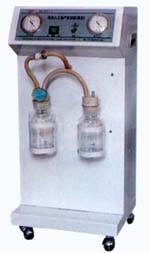
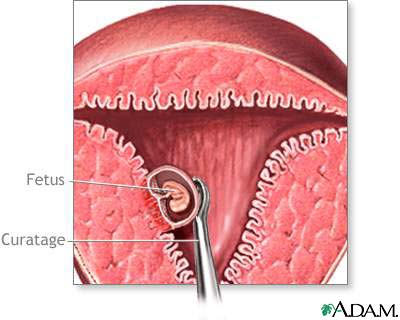
| Before 14 Weeks~ Suction Aspiration: For this procedure you lie on your back with your feet in stirrups, and the doctor applies a shot of anesthetic to your cervix to reduce pain. Your cervical muscle is stretched with cone-shaped rods until the opening is wide enough to allow the abortion tool to pass into your uterus. Then the doctor guides the suction device through the cervix and into your uterus. When the suction machine is turned on you feel the strong force of the vacuum which is used to pull the placenta and fetus into parts small enough to pass out of your body through the suction tube. During the surgery the doctor cannot see the inside of your uterus and operates by touch alone, trying to detach the fetus from the wall of the uterus with the powerful suction tip. Dilation and Curettage(D&C): The doctor opens your cervix, as described above, but in this case the abortion is done with a loop-shaped knife which he uses to scrape the wall of your uterus, cutting the fetus and placenta into smaller parts and pulling them out of your body through the cervix. After 14 Weeks~ Dilatation and Evacuation(D&E): Because the bones of the fetus are larger and stronger by this time, the doctor uses a medical instrument resembling pliers to pull the fetus into smaller parts and removes those parts from your body through the cervix. This procedure requires that your cervix be opened wider than with "Suction" or "D and C" methods, and there is greater risk of harm to your reproductive organs. After 16 Weeks~ Saline or Prostaglandin: This is injected into the amniotic fluid that surrounds the fetus in your uterus. To do this, the doctor inserts a long needle into your abdomen until the tip of the needle penetrates the uterus. He then injects one of these substances into the amniotic fluid. Saline is a poisonous substance that eventually kills the fetus. Prostaglandin causes the muscle tissue of the mother to push the fetus out of the uterus. Both saline and Prostaglandin methods would require you to "give birth" to a dead fetus. the labor that proceeds birth is usually long and painful. Late-Term Abortion~ Dilatation and Extraction: Laminaria (a type of seaweed that expands when moist) is used to dilate the cervix over a two-day period. On the third day, the membranes are ruptured. An ultrasound is used to locate the lower extremities. The doctor then uses large forceps to grasp a leg and pull it down into the vagina. After the body is delivered, the skull is lodged at the cervical opening. The doctor makes an incision in the base of the fetal skull, inserts a suction catheter and evacuates the skull. This technique may be safer than a "D and C" abortion because the fetus is not dismembered in the uterus; however, damage may occur due to extensive stretching of the cervix during the procedure. |
 |
 |
 |
 |
 |
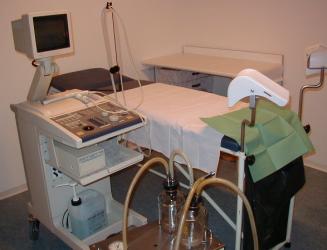
| Bed with stirrups- ultrasound machine, and suction apparatus with collection jars |
| On this page you will find information on: Abortion Methods- Tools Used- Physical Risks- Emotional Risks- And links to additional information |
 |
| move mouse over picture to see a REAL fetus(actually, an embryo)-Click on fetus to see more pics |
|
|
| Links to Abortion Info |
| D&C Tools |
 |
| Suction Apparatus With Collection Jars For Fetal Tissue |
| Online Support |
| Helpful Resources |
| What does My Baby look Like Right Now? |
| True Stories From Women Who Experienced an Unplanned Pregnancy |
|
|
|
|
|
|
| Seach This Site: |