|
– To make more light & middle distillates from heavier ends by pyrolysis, or thermolysis. 2. Chemistry of Thermal Cracking 1). Free radicals (not ions) are the active species Neutral species; unpaired electrons 2). Free radical chain reactions Initiation R–H ®R1• + R2• homolysis – homolytic bond cleavage Propagation R1• + R–H ® R1 – H + R • hydrogen abstraction–favored at high pressures R1• ® olefin + R - bscission – favored at low pressures Termination R4• + R5• ® R–R Radical Combination 2R4• ® olefin + alkane Disproportionate 3). Isomerization C – C – C – C – C – C ® C – C – C – C – C – C -not favored b – scission ® C = C + C – C – C – C - faster than isomerization
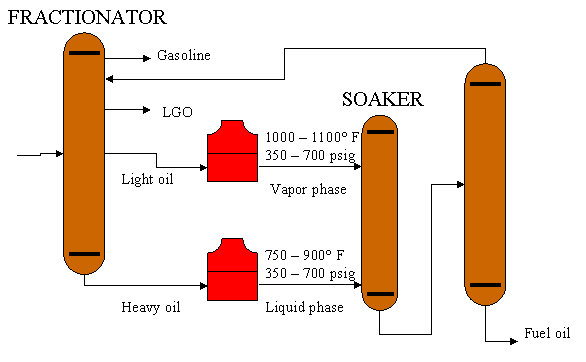
Need to separate light & heavy oil, because of differences in their thermal reactivity. Heavy oil (longer chains) is more prone to produce free radicals, so it doesn’t need to be heated to as high a temperature as light oil does. Heating heavy oil to high temperatures create problems with coking in the reactor. Vapor phase Low pressure (<200 psig) High T’s (1000 - 1200° F) Low gasoline yield High octane # (aromatics & olefins) Extensive coke formation High gas yields Materials problems Liquid phase High pressure (350 – 1500 psig) Low T (750 - 950° F) High gasoline yields Low octane # Low gas yield
Products include paraffins, olefins, naphthenes, and aromatics. Shorter straight chain alkanes (such as C2, C3 ) amount is relative much |
|