|
7- Catalytic Cracking
to increase the octane # of gasoline, while maintaining yield from high-boiling stocks using catalysts.
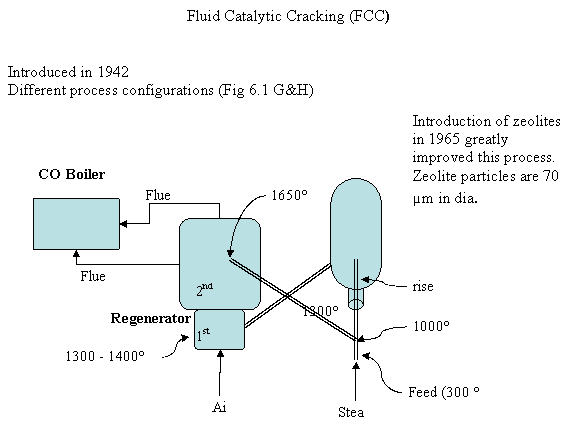
1). Batch reactor catalytic cracking to produce light distillates (1915) • Catalyst: AlCl3 - A Lewis acid, electron acceptor Alkane - electron (abstracted by AlCl3 )-> a carbocation(+) -> ionic chain reactions to crack long chains 2).Houdry (1936) - a commercial process • Continuous feedstock flow with multiple fixed-bed reactors Cracking/catalyst regeneration cycles • Catalyst: clays, natural alumina/silica particles 3). Thermoform Catalytic Cracking (TCC) (1942) • Continuous feedstock flow with moving-bed catalysts • Catalyst: synthetic alumina/silica particles • Higher thermal efficiency by process integration 4). Fluid Catalytic Cracking (FCC) (1942) • Continuous feedstock flow with fluidized-bed catalysts • Catalyst: synthetic alumina/silica +zeolites (1965) 4. Process diagram
5. Feedstock and Products Feedstocks: • straight – run gas oil • vacuum gas oil • atmospheric residue • heavy ends (coker gas oil, DAO) • vacuum residue Pretreatment: • deasphalting – to prevent excessive coking on catalyst surfaces • demetallation (Ni, V) – prevent catalyst deactivation • hydrocracking – to prevent excessive coking
Products from Catalytic Cracking n-paraffins, i-paraffins, aromatics, naphthenes, and olefins. I-paraffins come from ionic reaction, is branchesd chain, have high Oct.# C3 – C4 gases C5 – C10 isoparaffins (gasoline), olefins, aromatics, napthenes > C10 – light cycle oil > C14 – decant oil 6. Comparison between thermal and catalytic cracking Catalytic cracking is differences wrt Thermal Cracking • uses a catalyst • lower temperature • lower pressure • more flexible • different reaction mechanisms - ionic vs. free radical • High thermal efficiency • Good integration of cracking and regeneration • High yields of gasoline and other distillates • Low gas yields • High product selectivity • Low n-alkane yields • High octane number • Chain-branching and high yield of C4 olefins • High yields of aromatics
|
|