After lunch at the kibbutz (with real brownies!) we move to the opposite side for a film. We learn that �gush� means �block of settlements,� and that the thirty-five are signified by the Hebrew letters assigned to that numeral��lamed hey.� The film very effectively presented the story of the settlers from 1943 to 1948, from their efforts to establish themselves to their efforts to defend themselves, and finally to their defeat by the Jordanians, who shot most of them after they had already surrendered. The presentation ends with the story of the fall of Gush Etzion: the wounded settlers huddle in a bunker, and the Jordanians order an Israeli woman to throw a live grenade inside. She refuses, so they do it themselves, then blow up the whole building, killing over fifty injured people. When the film is over, the screen lifts to reveal a hole in the floor with smoke rising from it�this is the original bunker blown up by the Jordanians. We are invited to walk around it. We travel next to the yeshiva of Alon Shvut. Upstairs in the women�s gallery we observe a few men studying below. The study method is active peer mentoring; students are expected to argue the meaning of texts with each other. From there we walk to the synagogue, which has rectangular windows vertically aligned to face Jerusalem.
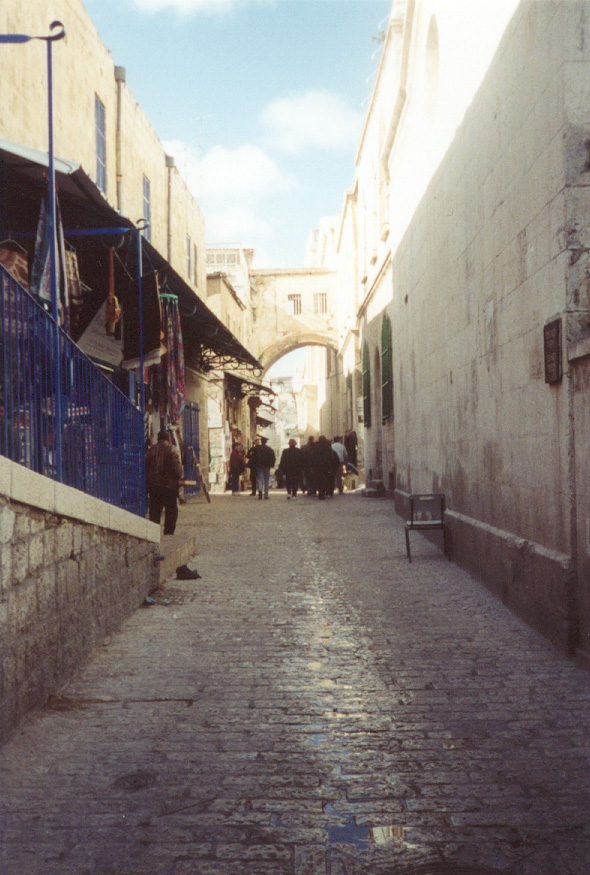
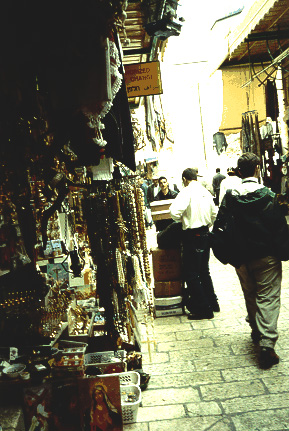
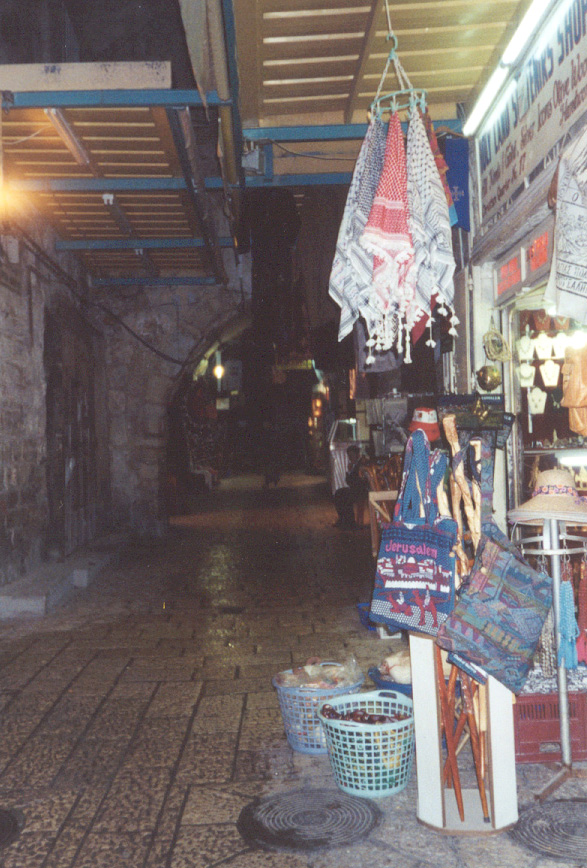
It is time now to board the bus and head back to the Kings hotel, where we check in again. After settling in, a few of us meet and take cabs to the Old City to shop in the market. From Emir I buy a Turkish coffee set, and from George, who has the only Catholic store in the area, I buy a stole for Anthony. Walking further, I meet Joseph, who gives me a black onyx. Despite studying to become an Armenian priest, he is quite courtly. We have a brief but good theological discussion, and then our group makes its way past wandering monks and priests, merchants standing outside smoking and carts laden with cloth and metal and stones and spices to the taxi stand for our ride back to the hotel. |