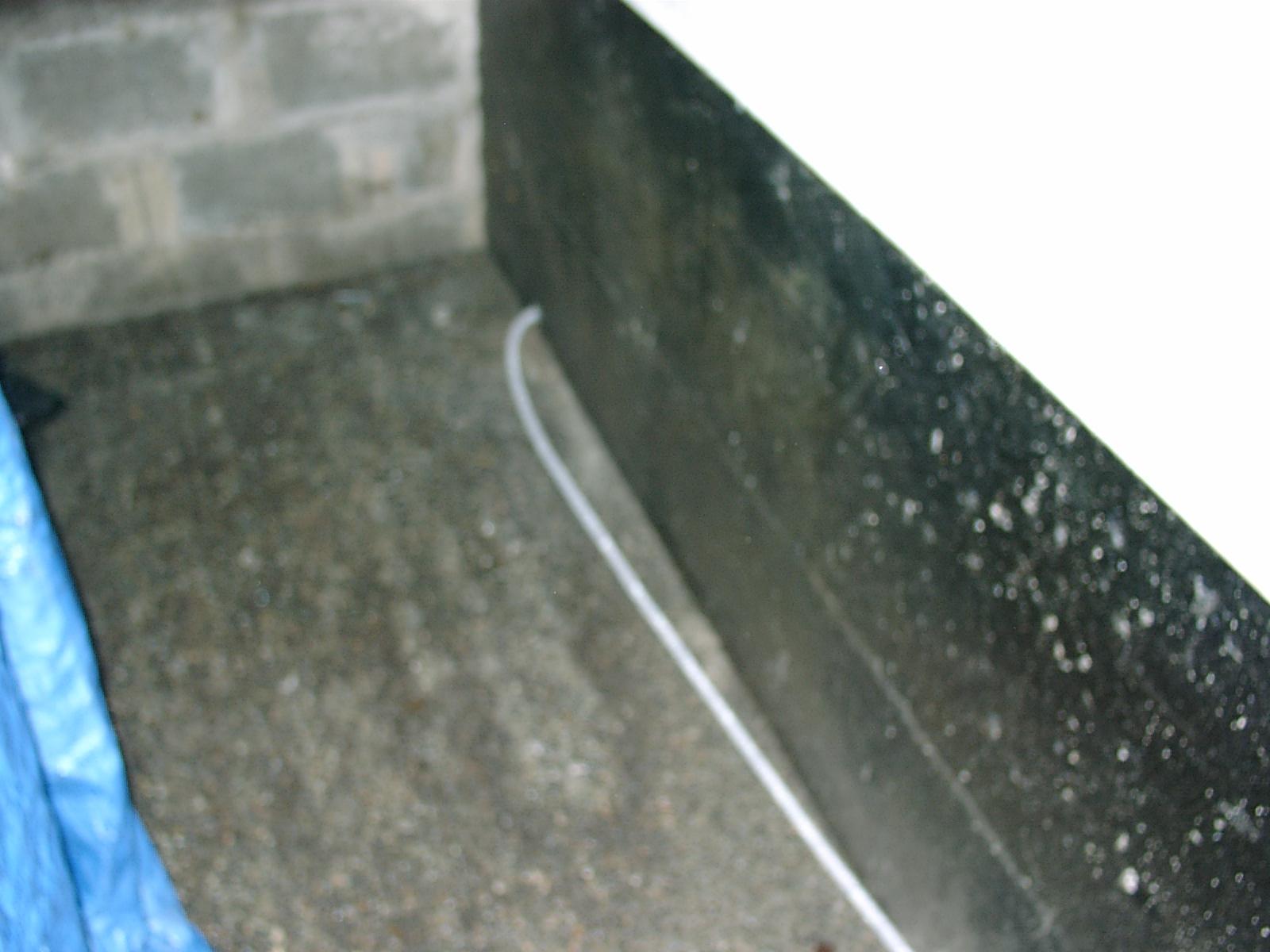
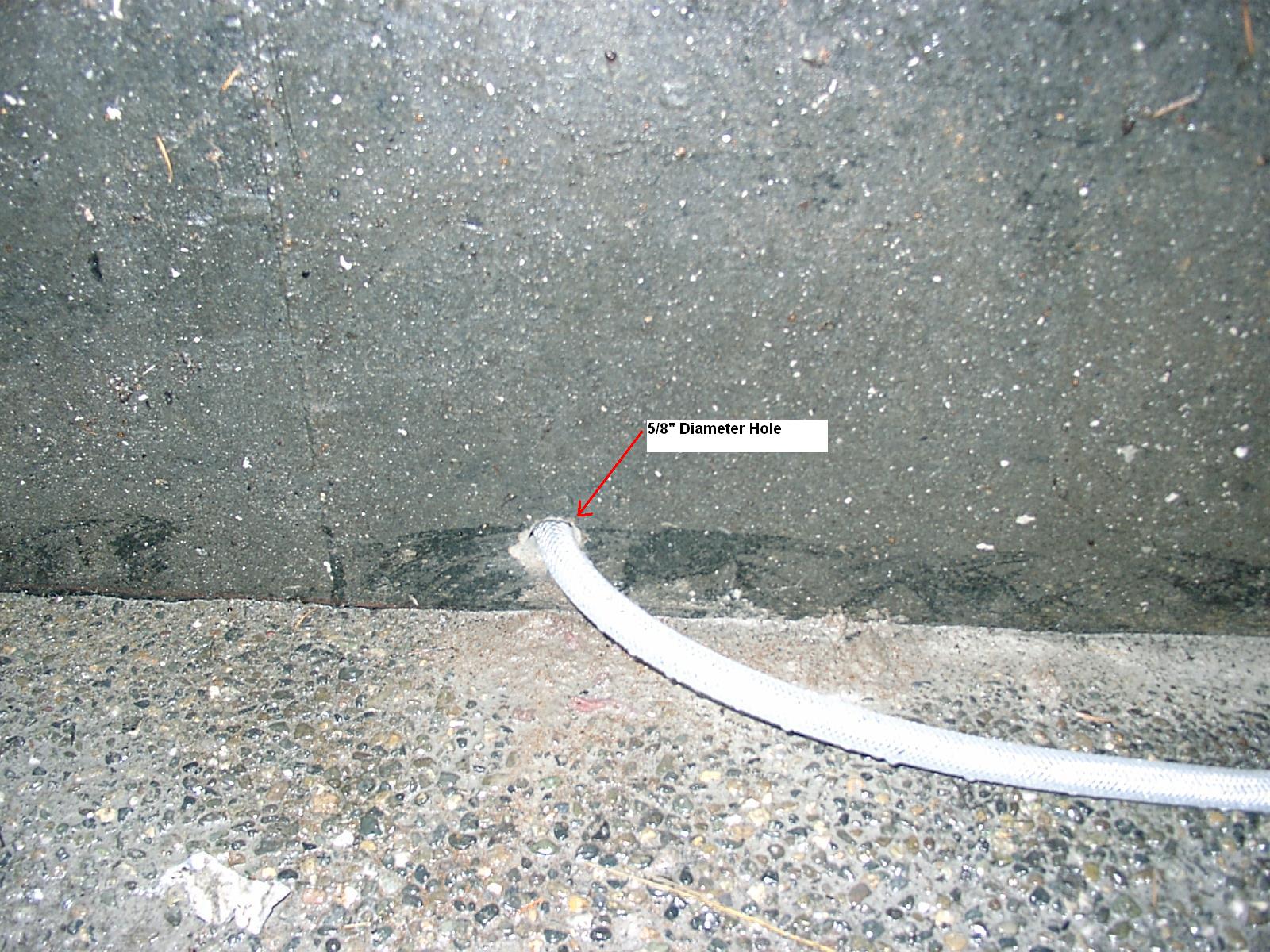
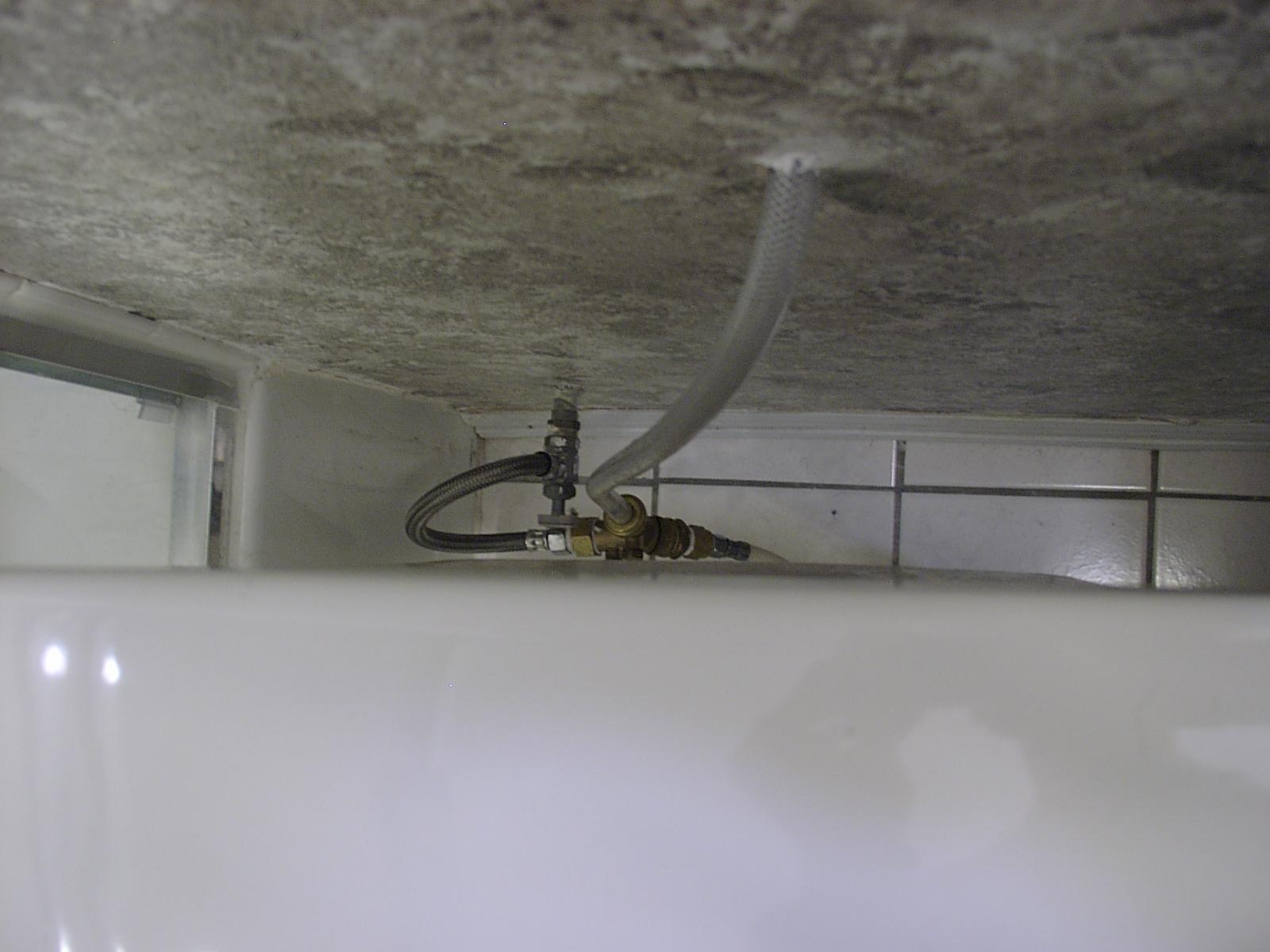
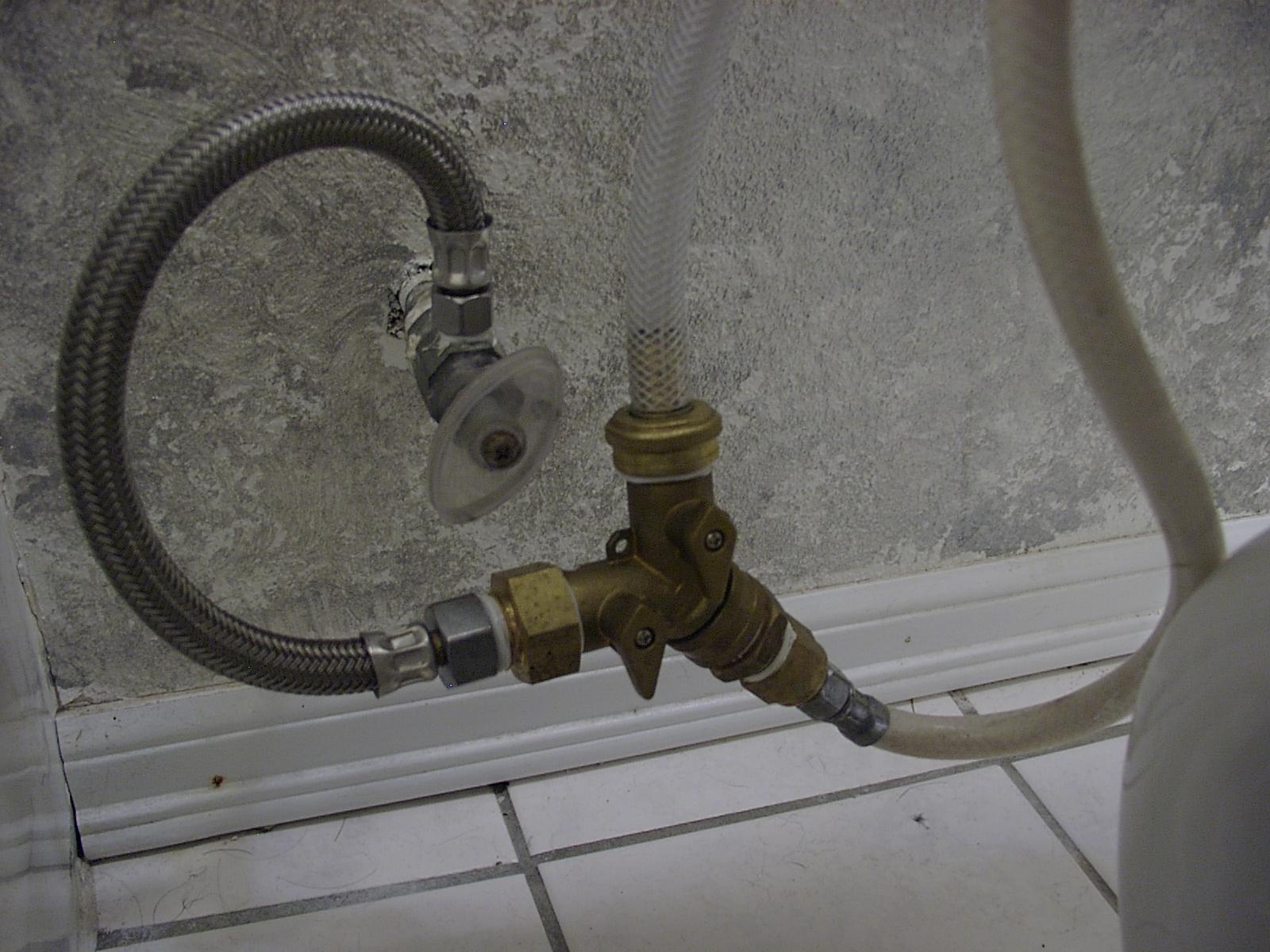
This is a view under my porch and shows the supply line running through my foundation in a spot I measured to be behind the toilet. Drilling this hole was not fun. If you're passing through a plywood wall, life will be easier for you. In either case, you'll need a 12" long 5/8" diameter drill bit for either wood or masonry. If you're drilling through concrete, I highly recommend buying or renting an impact hammer drill. If drilling through plywood, make sure you're not drilling on a vertical stud.
In my case, not even the 12" length of the drill bit was enough to make it all the way through the foundation wall, insulation, and drywall. I had to use an 18" long piece of steel rebar to contact the drywall. I slowly twisted this rebar while it rubbed a clean hole through the drywall.
To get the hose through this long hole, you'll need a 24" long piece of wooden dowel of 3/8" diameter or less. Feed 18" of this dowel through the end of the vinyl tubing. This will give it the rigidity you need to pass it through the long hole. Once on the other side behind your toilet, you can pull the dowel out all at once, or a small section at a time and saw off small pieces till it's all gone. If you have to do this, as I did, remember to leave a small bit of dowel sticking out of the tubing to continue pulling more out!
You can patch up any gaps on the walls around the tube on the inside with spackel, and on the outside with silicon sealant. This prevents cold air from drafting in and any insects from making a new home.
I've chosen not to insulate my supply line. It rarely goes below freezing for very long around Seattle. Hardware stores sell pipe insulation that might delay supply line freezing if you're in an area more prone to colder weather. |