| Rain Barrel to Toilet Installation |
 |
| A Practical How-To Guide |
| Page 2 |
| Calculating Your Harvest Potential |
| Preferably, pick a downspout that drains from a large section of your roof. Your harvest potential will be based on this roof area and also the annual rainfall for your area. The roof area should be calculated as seen from directly above, not the total square footage of the slope. The calculation is as follows (all length units are in feet or inches): Annual Rainfall (inches/year) 7.481 gallons Roof Area (Length x Width) x ---------------------------- x ----------------- = Gallons Per Year 12 (inches/foot) cubic foot Example for my house: (13 feet x 15 feet) x (37 inches/year divided by 12) x 7.481 = 4,498 gallons per year! 4,498 gallons per year (divided by 1.6 gallons per flush) is 2,811 flushes per year from just a small section of my roof! Keep in mind though that this is only the potential. Long periods of rain will give you more water than you can use, causing excess to overflow out of your barrel and down into your downspout system again. You can increase your usable harvest by using a larger barrel or by hooking multiple barrels together. This will let you use rainwater for longer during periods without rain. Annual rainfall for your area can be found by clicking here. |
| Buying Your Rain Barrel |
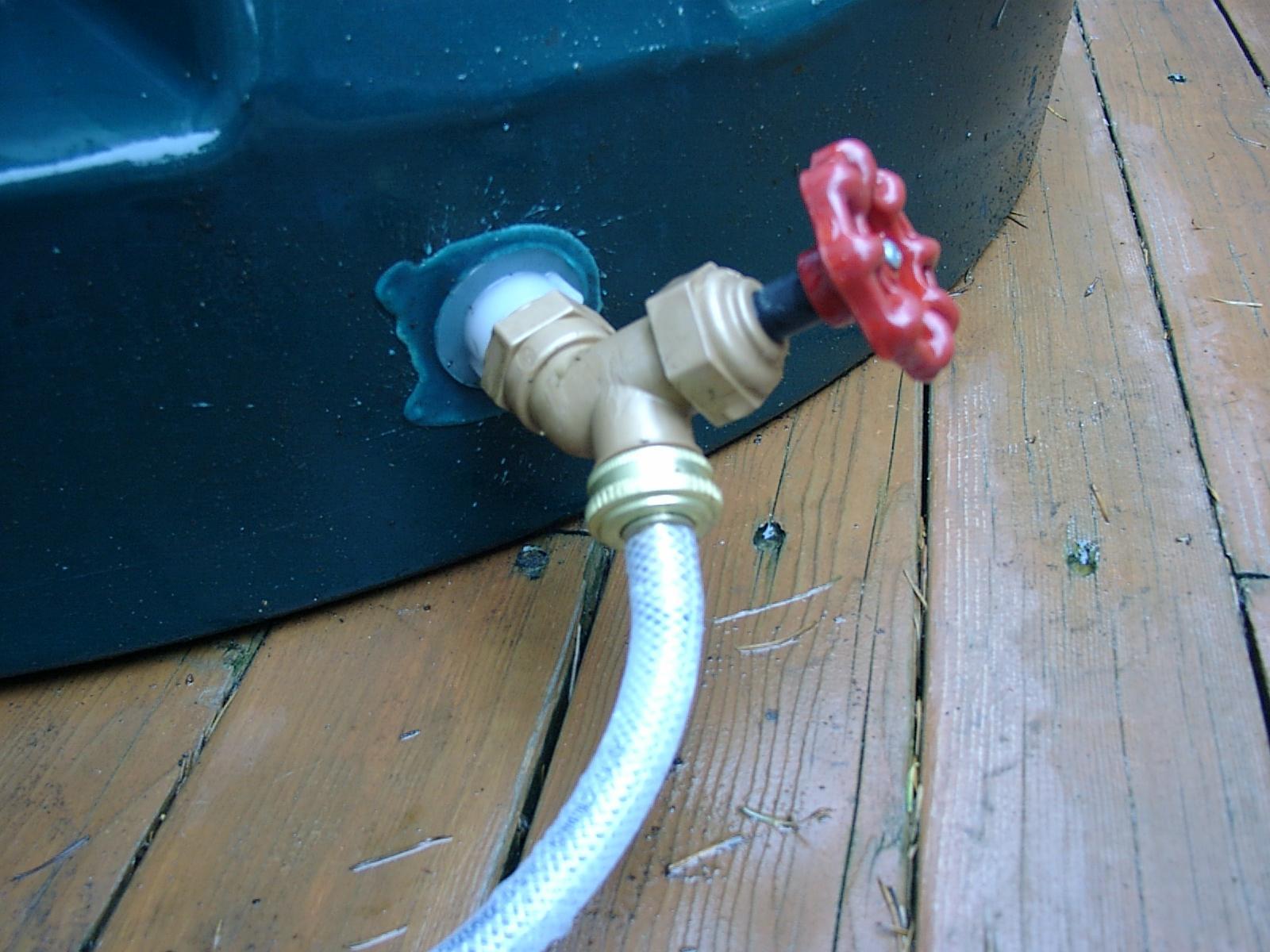
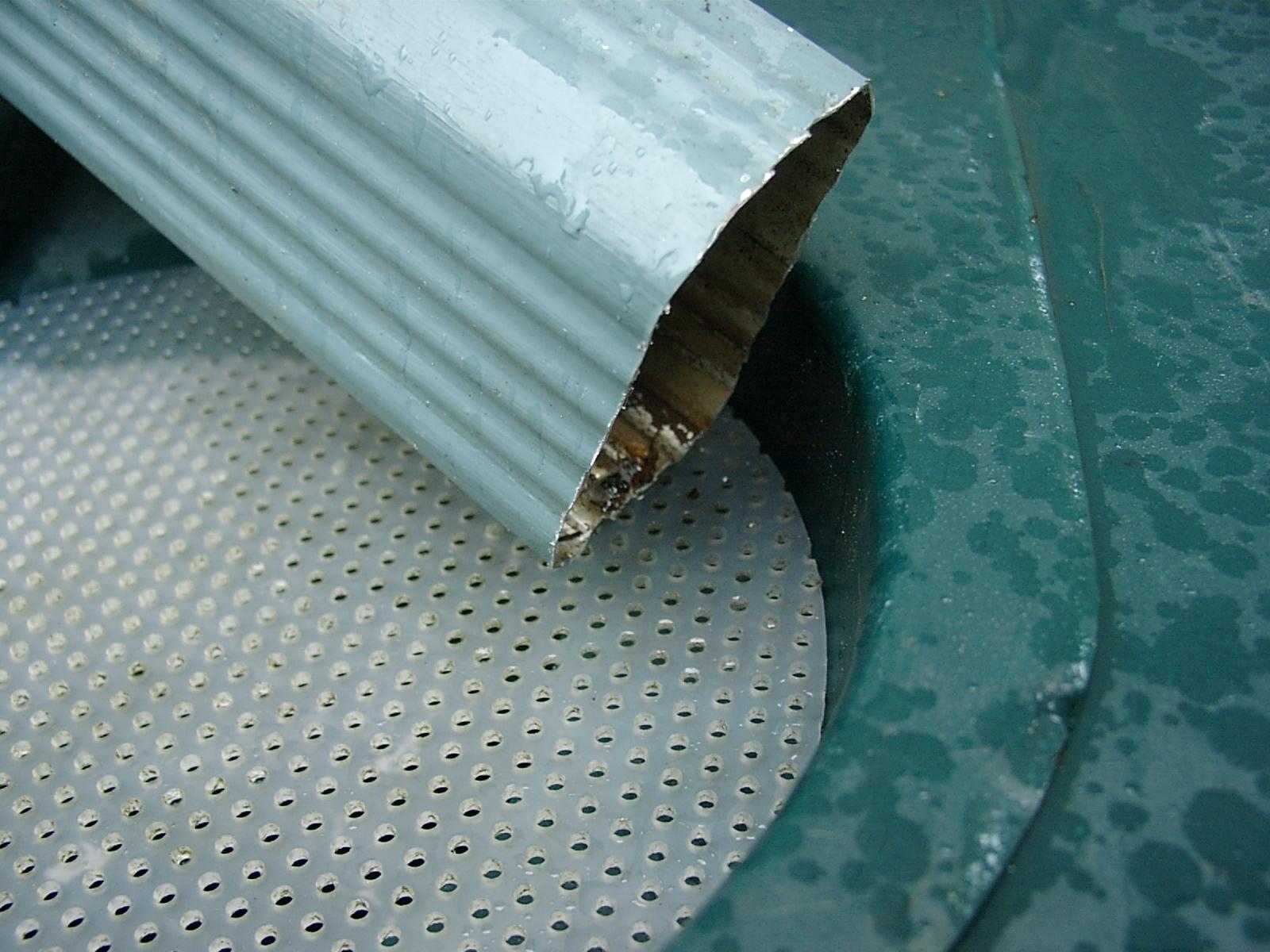
| You can buy or make your own rain barrel. There are many styles to choose from. A keyword search on the internet for "rain barrel" will fetch you lots of results. The main feature to have for this installation is a water spigot with a normal 3/4" diameter garden hose attachment at the base as shown below. This spigot must also have a closeable valve. Also important is a screen to filter out the debris which will inevitably be carried off your roof with the rainwater. You may want to double this with insect screening to keep mosquitoes and other insects from breeding in your barrel. Don't worry about color. Most barrels are made of plastic or metal and can be spray painted. |
| Most rain barrels that I've seen for sale range from 50 to 90 gallons in capacity. The more capacity you have, the longer you'll be able to use rainwater during times when it's not raining (mainly over the summer months). To calculate how many flushes you can get out of a full barrel, divide your capacity by the number of gallons per flush. Most toilets in the U.S. use 1.6 gallons per flush. Older toilets may use 3 or more gallons. To check yours, the number is sometimes printed onto the ceramic just behind the seat. For my system, I have a "Rain Pail" made by a company in Vancouver, B.C. I can't link to their website any more and they may have gone out of business. I got it for about $20 when King County bought a bunch of them for residents and offered them to us at this reduced cost. I'm good for 90 gallons divided by 1.6 gallons per flush = 56 flushes. |
 |
 |
| Lower water spigot with valve. |
| Debris Screen At Downspout Outlet. |
   |