| Evangelistic Mission to Trigal, Peru |
| I was invited by the charismatic group at Santisimo Sacramento to go with them to Trigal to evangelize to the people. Evangelism and charismatic worship do not really appeal to me, but I couldn�t turn down an opportunity to spend a week at such a secluded village in the mountains. So, my English speaking friend Zico and I packed up and went with 11 other people from the charismatic worship group on August 12th. |
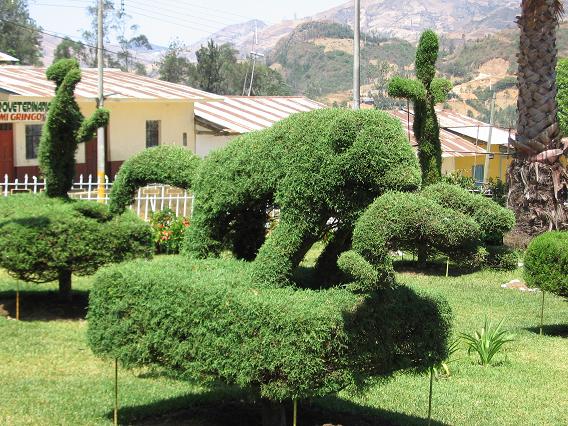
| After 9 hours of bus riding to get to Huarmaca, a city of about 40,000 near Trigal we had a day to bum around Huarmaca while our leaders arranged for a truck to take us and out supplies to Trigal. There wasn� much to take pictures of in Trigal, but they did have about 20 of those manicured shrubs shaped like people and animals. |
 |
 |
 |
 |
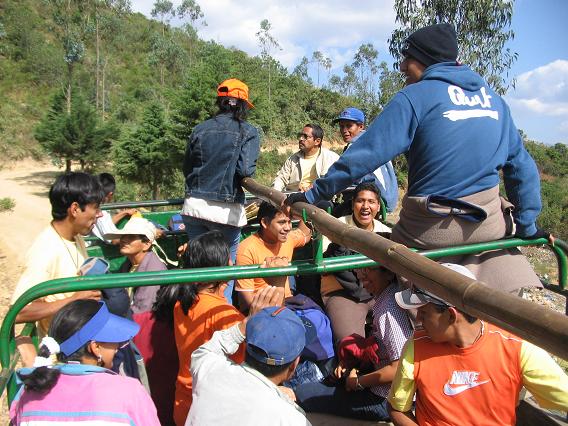
| We found a truck to take us and our supplies to the closest place that we could get to Trigal. It was certainly another world, the steep mountains were covered with fields of corn, wheat and beans. We had several hundred articles of clothing and prepackaged food to give out as well as about 800 lbs of baby formula and 5 pews for their church. After a two hour truck ride, we still had a two hour hike through the mountains to get to Trigal, fortunatly, we were met by people from Trigal with horses and donkeys to carry most of our supplies. |
 |
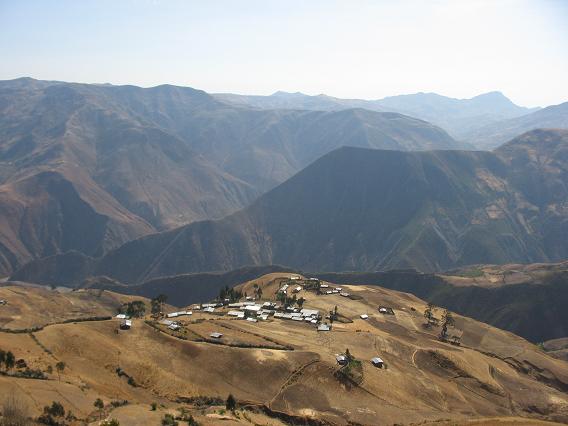
| The town of Trigal from high up on the mountains. The altitude of Trigal is about 7800 ft. |
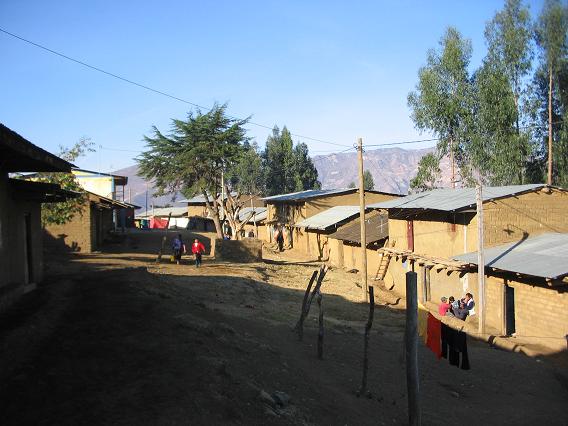
| "Main Street" I guess. There aren�t realy streets because there aren�t any roads to Trigal. Chickens, pigs, horses, goats, sheep and dogs continually roam the areas looking for food. |
| Trigal proper has about 100 residents and the mountains surrouding it is scattered with more homes. Homes are made of mud bricks and usually have metal or thatch roofs. Trigal has had electricic lights above the streets for 5 years. In October of 2004, the government started providing electricity to house. The will start building a road to Trigal in October. |
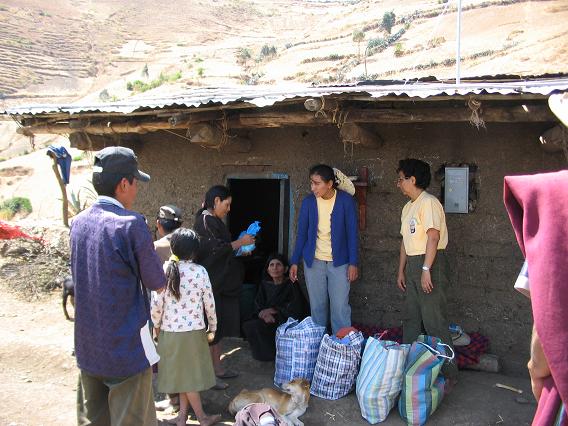 |
| I spent my first day in Trigal hiking up to houses on the surrounding mountain with a small group. We gave them clothes and packaged food and then prayed with them and talked to them about God. I wasn�t able to understand much so I just sat around and smiled and took pictures. Many of the people we spoke to were drunk on the local moonshine, ca�aza, an alcohol made from sugar cane. Alcoholism is a big problem in Trigal. I saw at least 8 men who had gotten so drunk they had fallen asleep on the ground outside. Most of the people we talked to were not practicing Christians. The priest from Huarmaca came to give the First Communion Mass, the only Mass for the entire year. |
 |
 |
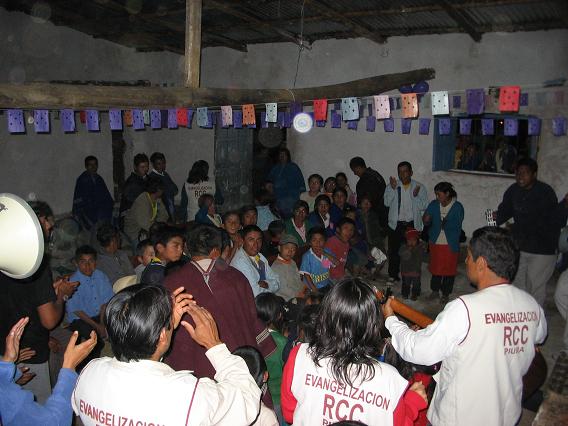
| Every day, there were worship services that lasted about three hours. I was surprised how many people came and stayed. We were there in the time between harvest and planting of the new crops and there was a fiesta going on at the time so many people were just standing around drinking anyway. I think many were just curious but many were really enjoying the worship services.. |
 |
| There is currently a school and education for primary and secondary schoolers. Older Trigalians recieved no education and the literacy rate among men is about 30%. They know almost nothing of the United States and had no preconcieved notions about me or the U.S. There are a few TVs in town since they have electricity. They carry battery operated radios. They can get stations from Lima and Piura with American and European music, but they mostly listen to traditional Peruvian music. Zico and I brought our digital cameras and as soon as they figured out that we would take their picture and show it to them, everybody wanted their picture taken. I spoke to one old farmer about his work, it sounds like he makes about $1500 per year, about half the average income of Peru.. Some people don�t have enough food for the entire year and there is a great need for prescription eye glasses. |
 |
 |
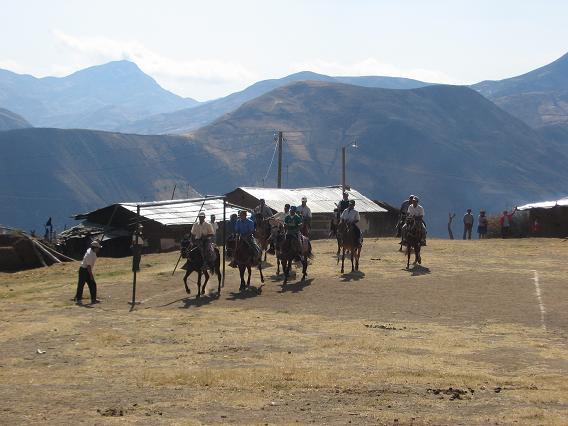
| As part of the fiesta, they had a horse "race" which looked to me more like "follow the leader", it might have just been and exibition. After the race, the lead rider held a live chicken by it�s feet and paraded around the field. Then he let another rider grab it�s wings and they rode in opposite directions and ripped the wings out of the live rooster. I don�t know why they do it, but it appears to be traditional |
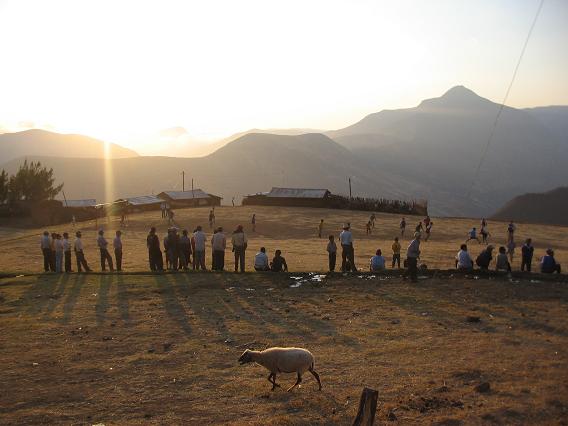
| Every evening, they play soccer which usually ends as the sun sets. Sometimes they play against other towns. On clear days, the sunsets are beautiful |
 |
| After four days in Trigal, the Trigalians saw Zico and I off just prior to us leaving the town. We had to hike 5 hours to a nearby town since we had not arranged for a truck to pick us up on the part of the road that is two hours from Trigal. When we got there, we found a guy with a truck and paid him to take us back to Huarmaca. |
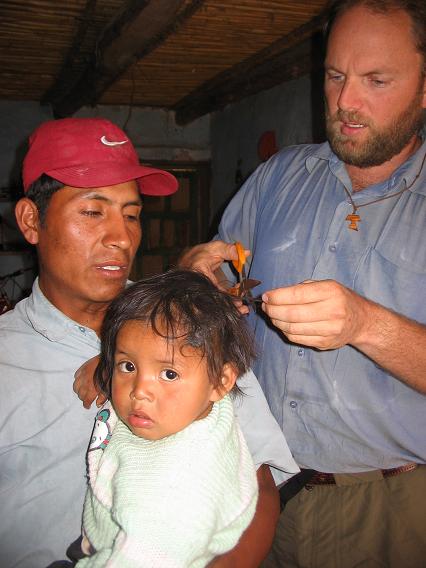
| A few of us set out early to find transportation for the rest of the group. Waiting for them to arrive in the nearby town, this guy asked me to be the Padrino de Pelo (Godfather of Hair) of his child. This is a tradition in certain parts of Peru and has no religious significance or responsibility. It basically consists of the Padrino giving the child his or her first haircut. Then the father fed us a lunch of chicken, rice and Tamales. He also gave me a live rooster. It is probably customary for them to give a gift to the Padrino and many rural people have nothing to give but animals. It is very rude in this culture to not accept a gift, so I accepted it. I named the rooster Francisco Julio Ceasar Javier Hugo Emerson, as it appears to be traditional in latin american culture to name someone with as many names as you can think of and those were the names of the men on our trip. But we just called him "Franky". Nobody in our group really wanted to take Franky all the way back to Piura, so we gave him to a lady on a bus, which is probably good for Franky as we would have just eaten him the first time we passed an oven. |
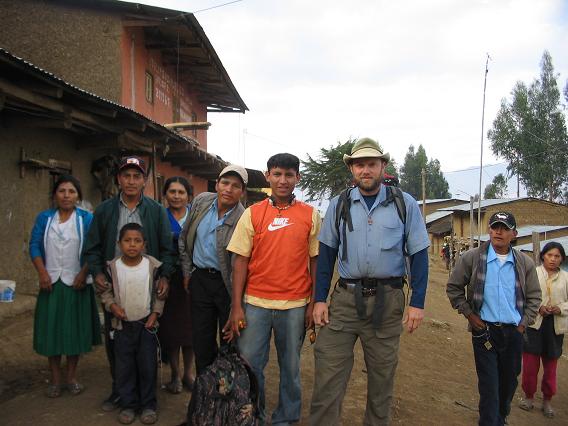
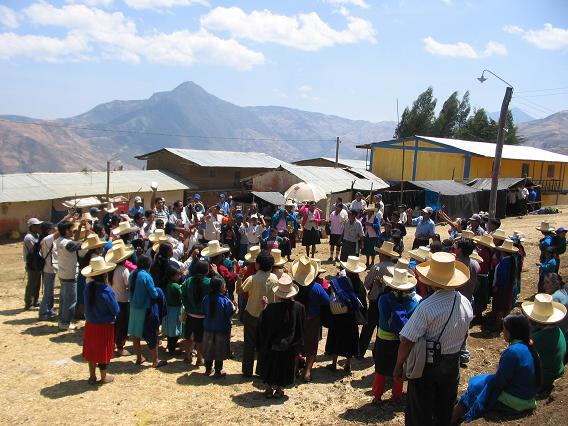
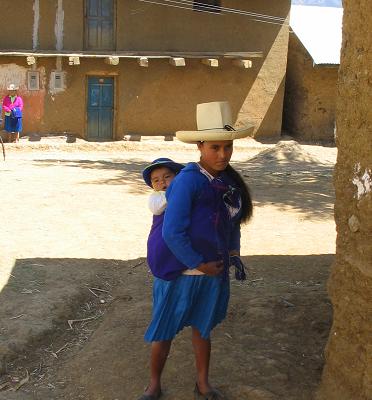
| The women of Trigal dress traditionally in bright colored sweaters and skirs with these big straw hats. Nearly all babies are carried on their mothers backs in what appears to be a blanket tied around the moms shoulter and waste. Men wear normal pants and shirts, younger men and boys wear ball caps, older men wear the traditional straw hats. |