| HOME | ||||||||||||||
| Preparation of Competent Cells | ||||||||||||||
| Yeast cells were grown to mid-log phase in YPD broth (~5 x 10^6 �V 2 x 10^7 cells/ml or OD600 of 0.8-1.0) and the cells. EZ 1 and EZ 2 (Zymogen Inc.) solutions were added to wash and resuspend. | ||||||||||||||
| The Yeast Two Hybrid System Screening Xb10 and Xb12 with the C64/ Moroberekan Rice Library | ||||||||||||||
![]() |
||||||||||||||
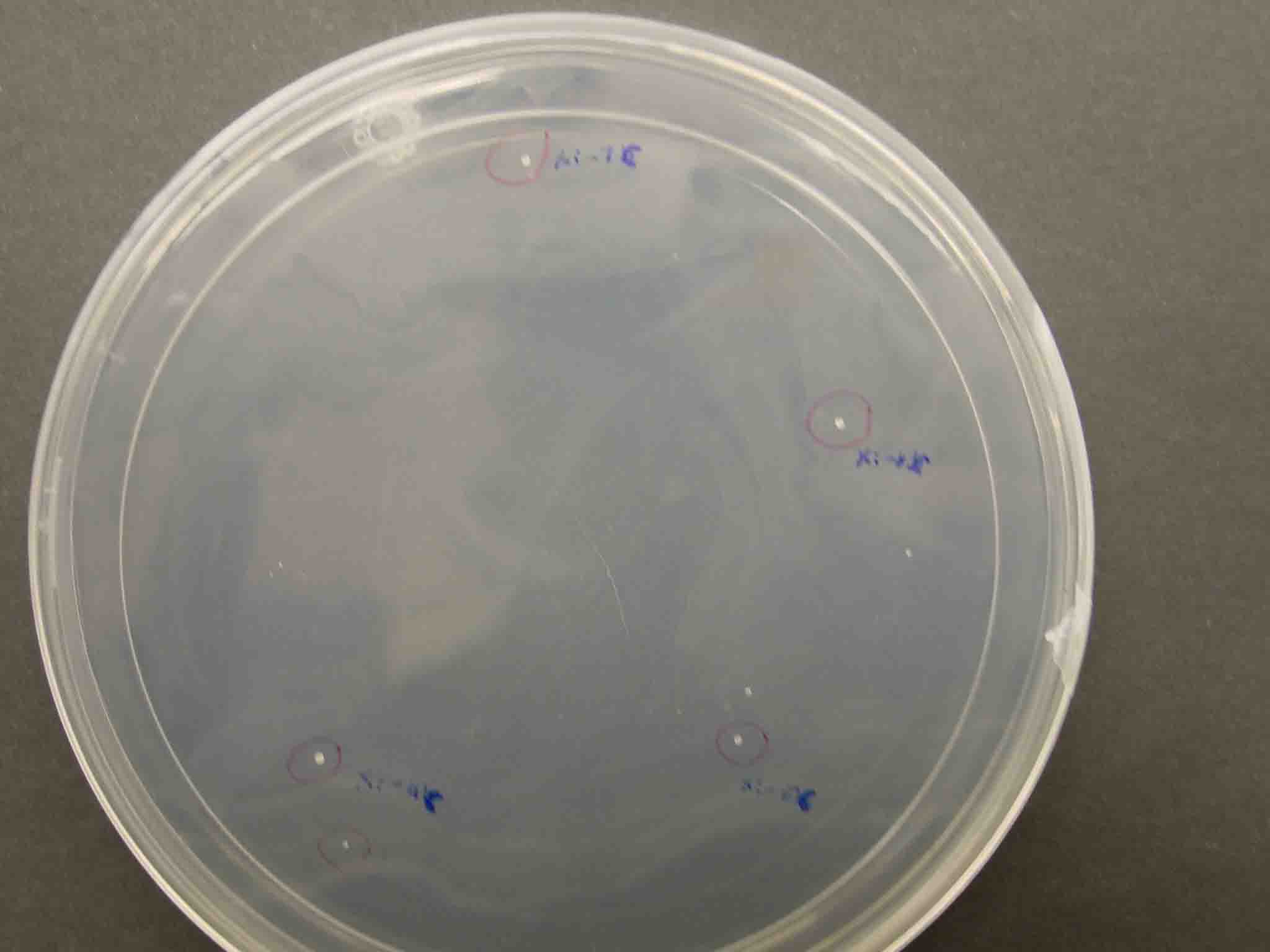
| Interacted Yeast Colonies | ||||||||||||||
| Xa10 and xa12 plasmid were extracted and transformed to the wild type yeast strain HF7C and fused to GAL4 DB to function as baits to screen for interacting proteins from the rice library fused to GAL4 AD. The protein baits were grown in YPD media and spun at 3000 rpm. TE/LiAC (10x TE buffer, 10xLiAC, H2O) was added to the samples, followed by the addition of the C64 and Moroberekan library DNA. ssDNA, competent cells, PEG buffer were added to the mixture and the sample was heat shocked and placed on 30 degrees Celsius shake. TE buffer is added to the bait/prey construct and the yeasts are plated on to 50 SD selection media plates, each library occupying 25 plates. The transformation mixture was plated onto 50 SD selection media. One hundred and fifty colonies were streaked on to SD plates to propagate, 40 were chosen randomly to have its prey cDNA extracted. Isolation of Plasmid DNA from Yeast In order to isolate the cDNA plasmid from yeast, one colony (His+, LacZ+) was inoculated into YPAD broth and grown at 30 degrees C for 2 days. The culture was peletted at full speed, lysed and extracted DETAIL HERE . The DNA was washed with ethanol after centrifugation and re-spun at 14,000 GO AWAY rpm for 10 minutes and supernatant decanted under a vacuum. The DNA was transformed into Escheria coli cells by electroporation according to the manufacturer��s instructions (Cell-Porator, Life Technologies, Rockville, MD, USA.) The E. Coli were transferred to LB Amp-50 media and allowed to grow. Two colonies were picked from each plate and placed on liquid LB amp media. Colonies are transferred to filter paper on SD plates and assayed for expression of the lacZ reporter gene by the detection of B-galactosidase activity with an X-gal containing solution. The streaked plates were allowed to grow overnight and then treated with liquid nitrogen before addition of substrate. |
||||||||||||||