|
|
 |
 See the following article that maybe some of it usefull for you... See the following article that maybe some of it usefull for you...
.
|
 |
FLORIST & COLECTOR's CORNER
. |
Sekali Runduk, Empat Anakan Didapat
Sekali dayung, dua tiga pulau terlampaui. Sepertinya ungkapan itu cocok menggambarkan cara perbanyakan Nepenthes gracilis dengan teknik merundukkan batang. Dengan teknik itu, anakan keluar dari pangkal batang tanaman induk dan ketiak daun. Alhasil, dalam 3 bulan minimal diperoleh 4 anakan...... |
Nepenthes Ampullaria,
Vegetarian dari Keluarga Karnivora
Tak ubahnya Lenny dalam film Sharke Tale. Ikan hiu itu lebih cocok disebut vegetarian karena suka makan tumbuhan dibandingkan memangsa ikan lain. Perilaku itulah yang tercermin pada Nephentes ampullaria. Meski kantong semar itu tumbuhan karnivora, tapi tak satu pun serangga, seperti semut dan nyamuk ditemui dalam kantongnya.... |
Nepenthes clipeata Survival Program
The genus Nepenthes includes a number of species which are highly endangered because of habitat destruction, fire and collection pressures. Probably no other Nepenthes species is as endangered as Nepenthes clipeata. First described by Danser (1928), Nepenthes clipeata is only known from the vertical cliff faces of Gunung Kelam, in Kalimantan Barat (Clarke, 1997). Explorations of the surrounding mountains have failed to find additional population (C. Lee, pers. comm.).... |
20 Landscaping Tips - Gizmo Creations LLC
Berisi 20 tips singkat mengenai home gardening yang bisa diterapkan di rumah anda. petunjuk-petunjuk singkat mengenai apa yang seharusnya dilakukan dan apa yang sebaiknya dihindari dalam pembuatan perawatan taman rumah.... |
LANDSCAPING & GARDENING TIPS
Following are a few tips to get you started on your landscaping.
And, remember, if you get stuck or overwhelmed just don't get bored to try and try again.
It may be able to save you some time and money by helping you avoid mistakes..... |
ARTS & CRAFT IN INDONESIA
Indonesian crafts as one of the art products has various styles, patterns and designs, inherited from ancestors with various cultural backgrounds.
|
.
FLORIST & COLECTOR's CORNER
. |
Nepenthes clipeata Survival Program
1 January 2004
. |
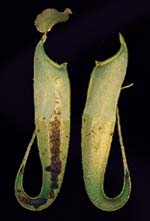
The genus Nepenthes includes a number of species which are highly endangered because of habitat destruction, fire and collection pressures. Probably no other Nepenthes species is as endangered as Nepenthes clipeata. First described by Danser (1928), Nepenthes clipeata is only known from the vertical cliff faces of Gunung Kelam, in Kalimantan Barat (Clarke, 1997). Explorations of the surrounding mountains have failed to find additional population (C. Lee, pers. comm.).
Habitat Stresses
Despite its great rarity, Nepenthes clipeata does not grow in any sort of national park or forest reserve.
|
 |
Prior to 1980, population stresses due to field collection were not significant because few people visited the remote cliff faces of Gunung Kelam. Subsequently, collectors began to visit the mountain frequently and collect large numbers of plants through the 1980s. Local guides, enlisted by tourists, became impressed by the plants and harvested specimens for their villages near the foot of the mountain (R. Cantley, pers. comm.; C. Lee, pers. comm.). Such plants rapidly perished and were replaced by new, freshly gathered specimens. Despite these significant pressures, populations of this plant were small but stable as recently as 1990 (Clarke, 1997). No plants were observed during a search for the species in 1993 (J.-P. De Witte, pers. comm.). Simpson (1995) reported that M. Jebb estimated that as few as 15 plants may have remained in the wild by that date.
Conditions have changed within the last five years. Drought conditions in 1997-1998 resulted in significant plant mortality. A new season of drought began early in the next decade. Interest in this plant by collectors has increased. The CITES protection status of Nepenthes clipeata will be recommended to be upgraded from Appendix II to Appendix I by the CPSG (Carnivorous Plant Specialist Group, of the IUCN's Species Survival Commission). If this is done, it is unclear how this change in status will affect the wild populations of plants. (It is possible it may drive the legal trade of artificially cultivated plants underground, encouraging black market sales and other illegal activities.)
In situ Population Viability
The combination of threats from drought, fire, and collection by visitors and native people is so severe that the plant is likely to become extinct in the wild within 10-20 years (C. Lee, pers. comm.). In situ conservation, always the preferred option, appears to be unrealistic and unworkable because the single known location for this plant is not likely to be a viable habitat in the long term-repeated burning has caused major community changes to the mountain flora, and these burns are likely to continue. In situ conservation would only be viable if these anthropogenic changes were to stop and the native mountain community were to be restored. There is no governmental interest or financial mechanism for this to happen, so it is likely the mountain sites for Nepenthes clipeata will continue to degrade. Status in Cultivation
In broad terms, Nepenthes clipeata specimens in cultivation fall into categories of "white market" and "black market."
White market plants include those that have been legally collected by botanical gardens, or by carnivorous plant horticulturists who usually are interested in introducing plants into in vitro cultivation for rapid propagation. (Note: the in vitro cultivation methods used for Nepenthes clipeata is not tissue culture in the usual sense, because tissue culture strictly refers to maintaining a culture of undifferentiated cells and in vitro propagation refers to production of whole plants from cell cultures derived from explants [generally seeds].). White market plants have been collected both as live plants and as seed. Two main categories of white market plants exist:
- Plants that were collected as live plants or cuttings. While it is difficult to introduce live Nepenthes plants into sterile in vitro culture, it is possible.
- Plants that originated in cultivation. Supposedly, both male and female plants are in cultivation at Munich Botanical Gardens and perhaps elsewhere, and cross-pollination between these plants has occurred on at least one occasion. (The first plants were placed into in vitro culture from Munich seeds in the spring of 1997 (Wistuba, 1998). These plants are now approaching maturity.) However, it is possible that the cross-pollination may have been compromised by pollen from other Nepenthes species in the Munich collection, and the genetic purity of the progeny should be viewed cautiously. (Nepenthes clipeata is quite distinct morphologically, so fortunately most hybrids should be easily detectable once the plants have matured.) Other fortuitous flowering events will inevitably occur in the future, and such opportunities must be carefully exploited.
It is unknown how many genetically distinct lines of white market plants exist in cultivation, but estimates place the number at three to four (A. Wistuba, pers. comm.). Both male and female plants have been grown at the Munich Botanical Gardens in the past.
Black market plants include those that may have been collected illegally and without appropriate export/import documents. It is unknown how many genetically distinct black market plants are presently in cultivation. Some of the apparently white market plants in cultivation may have had their origins as black market plants.
Nepenthes clipeata Survival Project Objectives
It appears that the long-term viability of wild populations of N. clipeata is low. Therefore, it is imperative that ex situ conservation measures be implemented. The Nepenthes clipeata Survival Project (NcSP), under the auspices of The International Carnivorous Plant Society, has been devised to maximize the genetic diversity of this species in cultivation.
.
|

Sekali Runduk, Empat Anakan Didapat
Oleh trubus
Selasa, 09-Mei-2006, 15:28:08
.
|
Bandingkan bila tanaman dibiarkan secara alami mengeluarkan anak. Induk dari biji berumur 2 tahun setinggi 50 cm butuh waktu 1 tahun untuk melahirkan 1 anak. Sementara dengan cara direbahkan, waktu perbanyakan lebih singkat. Dalam 3 bulan diperoleh lebih banyak anakan. Maklum sekali merebahkan muncul anakan dari pangkal batang, ketiak daun, dan tanaman baru hasil rundukan itu sendiri.
Kelebihan lain, dengan teknik merundukkan batang, dominasi apikal berkurang. Dominasi itu menghambat tunas di ketiak daun dan pangkal batang. Akibatnya tanaman hanya tumbuh satu ke atas. Bila ia berkurang, tunas-tunas lain yang dorman terpacu untuk tumbuh.
.
|
 |
Selain itu, dengan merunduk risiko kematian nepenthes dapat diminimalisir. Ini karena tanaman baru dipisahkan ketika akar serabut di antara ruas daun telah terbentuk dengan baik. Perbanyakan dengan cara merunduk dapat dilakukan pada hampir semua jenis nepenthes berbatang panjang. Syaratnya, tinggi tanaman minimal 50 cm dan batang cukup lentur sehingga bisa dilengkungkan ke bawah.
Perbanyakan dengan teknik merunduk dapat digabung dengan setek batang. Setek batang dilakukan pada tunas yang tumbuh di ketiak daun setelah rundukan telah berakar dan dipisahkan dari tanaman induk.
Menurut M Apriza Suska, hobiis di Bogor, tunas di ketiak daun tumbuh bila batang yang dirundukkan dilukai. ?Sedangkan jika tidak dilukai, anakan hanya muncul di pangkal batang saja,? ujarnya. Itulah yang terjadi pada Wahyu Adi Hobiis di Malang, Jawa Timur. Penasaran? Berikut cara perbanyakan periuk kera dengan cara merundukkan batang.
- Pilih tanaman induk dewasa, kira-kira umur minimal 6 bulan dengan panjang batang minimal 50 cm.
- Siapkan satu pot berisi media campuran cocopeat dan arang sekam, perbandingan 1:1, atau sphagnum moss. Letakkan pot ini sejajar dengan pot berisi tanaman yang akan dirundukkan. Nepenthes yang akan dirundukkan ditaruh di tempat teduh.
- Lukai batang nepenthes pada jarak 30 cm dari pangkal batang. Pelukaan batang merangsang pertumbuhan akar serabut lebih cepat. Luka berbentuk segitiga pada satu sisi itu ditempelkan ke media. Bagian luka dibuang sekitar 1 /4 dari diameter batang.
- Lengkungkan batang kantong semar ke pot ke-2 dengan bagian luka berada di bawah. Lalu jepit batang yang direbahkan dengan kawat atau lidi agar tidak bergeser.
- Tutupi bagian yang luka dengan media lalu siram sampai jenuh. Penyiraman seperti biasa, satu hari sekali, agar media tetap lembap. Nepenthes menyukai kelembapan udara antara 50 -80%. Semprotkan vitamin B1 dengan dosis 70 ppm setiap hari agar tanaman lebih segar.
- Akar serabut di antara ruas daun yang dilukai tumbuh satu bulan kemudian. Kantong semar itu dapat dipisahkan dari tanaman induk 2-3 bulan kemudian.
- Tunas di ketiak daun dan pangkal batang muncul 3 minggu kemudian. Potong batang di antara ruas daun setelah tunas di ketiak daun memproduksi daun pertama dengan panjang 2, 5 -4 cm atau 2 -3 bulan setelah tanaman rundukkan dipisahkan dari induk. Lalu tanam setek itu di pot berdiameter 8 cm berisi media. Perlakuan itu sama dengan perbanyakan dengan setek batang.
- Kini kantong semar yang Anda koleksi telah beranak pinak.
(Rosy Nur Apriyanti)
|
Nepenthes Ampullaria, Vegetarian dari Keluarga Karnivora
Oleh trubus
Jumat, 18-August-2006, 10:00:08
.
|
Umumnya periuk monyet punya 2 atau 3 jenis kantong: bawah, atas, dan kantong peralihan antara kantong atas dan kantong bawah. Namun, mayoritas ampullaria hanya memiliki kantong bawah saja. Kantong atas sangatlah jarang ditemukan, dan bila ada, bentuknya abnormal. Itu pun diperkirakan hanya terjadi pada tanaman yang stres.
Kantong
Bentuk kantong bawah ampullaria berbeda dengan spesies lain. Kantong bulat dengan mulut lebar. Tutup kantong kecil memanjang, berlawanan arah, sehingga air hujan dapat masuk ke dalam kantong.
|
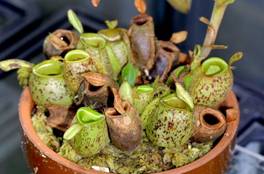 |
Karakteristik seperti itu tidak ditemukan pada jenis kendi kera-nama lain nephentes-lainnya, kecuali pada kantong atas N. lowii dan N. ephipiata. Warna kantong antarsubspesies ampullaria sangatlah beragam, mulai polos putih, hijau, kuning, merah, hingga merahburgundi tua. Ada juga yang memiliki bercak cokelat, merah, hijau, dan ungu. Warna bibir kantong-peristom-juga bervariasi, kuning, hijau, hingga merah.
Tinggi kantong tanaman dewasa berkisar antara 5-10 cm, tetapi ada juga yang mencapai 15 cm. Ampullaria memiliki kelenjar penyerap hara dalam kantong berkisar 2.000-3.000 per 1 cm2. Namun, tidak terlihat adanya kelenjar sekresi nektar pada kantong atau bagian tanaman lain. Kelenjar itu biasa dimiliki spesies pasok kamelo-sebutan nephentes di Kalimantan Selatan-lainnya. Karena itulah jarang sekali ditemukan serangga atau binatang lain di dalam kantong. Melainkan hanya serasah daun dan ranting, serta terkadang kotoran burung.
Ampullaria yang sudah mulai merambat ke atas, pada pangkal batangnya muncul tunas-tunas baru membentuk kantong-kantong tanpa lembaran daun. Ia tampak seperti kantong keluar dari tanah dan membentuk karpet kantong yang sangat menarik.
Habitat
Ampullaria salah satu spesies nepenthes yang paling luas penyebarannya. Mulai dari Thailand, Semenanjung Malaysia, Singapura, Sumatera, Kalimantan, hingga Papua. Ia ditemukan Dr William Jack pada 1819 di Singapura. Dokter bedah asal Inggris itu memberinya nama Nepenthes ampullaria pada 1935 lantaran bentuk kantongnya oval seperti ampul.
Habitat ampullaria di alam cukup beragam, meliputi hutan yang rindang, hutan kerangas, rawa gambut, rawa berpasir, dan hutan araucaria. Ia tumbuh mulai dari ketinggian 0-2100 m dpl. Pada daerah hutan yang cukup lebat, akar ketakong-nama lain nephentes-itu dapat merambat ke atas pohon lainnya hingga 15 m.
Nepenthes ampullaria tak hanya indah dipandang mata, tapi juga memiliki banyak manfaat. Batangnya yang kuat dan lentur biasa digunakan untuk mengikat barang-barang, seperti sangkar burung. Akar ampullaria dipakai penduduk Sumatera sebagai obat sakit perut, dengan cara meminum air rebusannya.
Cairan dari kantong yang masih tertutup digunakan sebagai obat sakit perut dan mencegah ngompol dengan cara meminumnya. Untuk mengobati luka bakar, cukup dengan mengusapkan cairan itu ke kulit. Air yang terdapat pada kantong ampullaria juga dapat mengobati sakit mata.
Masyarakat Pulau Jawa biasanya menggunakan daun kelapa sebagai pembungkus ketupat. Namun, di Sumatera, Kalimantan, dan Semenanjung Malaysia, kantong ampullaria keringlah yang dipakai. Hal itu karena bentuk kantong semar itu bulat, besar, dan tidak ditemui serangga di dalamnya. Kantong cukup bersih digunakan untuk bungkus ketupat.
Budidaya
Ampullaria termasuk jenis nepenthes yang paling mudah ditanam. Bahkan di Inggris, ia sudah dibudidayakan sejak 1841 dan dipajang di pameran tahunan Royal Horticultural Society pada 1843. Tanaman dataran rendah itu menyukai suhu panas dan kelembapan tinggi.
Ia menghendaki cahaya matahari tidak langsung sehingga harus ternaungi. Naungan 50-90% cukup baik untuk pertumbuhannya. Bila cahaya terlalu terang, daun dan kantong dapat terbakar. Jika terlalu gelap, kantong tidak dapat terbentuk. Kalaupun terbentuk, ukurannya kecil dan warnanya pucat. Kelembapan udara harus lebih dari 65%. Jika kurang, kantong tidak terbentuk, daun akan menggulung dan mengering.
Di negara-negara subtropis seperti Amerika serikat, Jepang, serta negara-negara Eropa, Nepenthes ampullaria menjadi tanaman favorit yang biasa ditanam dalam terarium. Itu karena ia tidak memerlukan banyak sinar matahari untuk membentuk kantong.
Nepenthes ampullaria dapat ditanam pada media cocopeat, pasir, gambut, cacahan batang pakis, kompos daun, spagnum moss, zeolit, arang sekam, rockwoll, atau campuran dari media-media tersebut. Ampullaria menyukai lebih banyak air dibandingkan nephentes lain. Karena itu pastikan media selalu basah, tapi tidak tergenang. Sebaiknya pH media dan air penyiraman berkisar 4,5-6. Jika pH terlalu tinggi, warna daun pucat, dan akhirnya tanaman tidak dapat bertahan lama.Hindari pemupukan, meskipun Nepenthes ampullaria dan nepenthes lain dapat dipupuk dengan dosis rendah. Pupuk berlebihan menyebabkan daun dan kantong terbakar. Selain itu juga dapat memperpendek umur kantong. Pada umumnya kantong dapat bertahan 3-8 bulan bila tidak terlalu banyak diberi makan. Ampullaria diperbanyak melalui penyemaian biji, setek batang, pemisahan anakan, dan kultur jaringan.
Meskipun Nephentes ampullaria tergolong karnivora, tapi ia tidak memiliki kelenjar sekresi nektar untuk memikat serangga datang. Karenanya hanya serasah daun dan ranting saja yang ditemui dalam kantongnya. Para ahli berkesimpulan Nephentes ampullaria berevolusi menjadi tanaman vegetarian.
(M Apriza Suska, praktisi tanaman hias)
|
FLORIST & COLECTOR's CORNER
. |
20 Landscaping Tips
Gizmo Creations LLC
. |
-
Consider the use of skyline or background trees not only as a setting or frame for the house, but also to add depth to the landscape. This is the reason taller trees are most often used to the rear of the property and smaller ones to the front.
-
For ease of maintenance, use lower growing shrubs under windows, the effect will be pleasing and more natural if the shrubs reach their ultimate height naturally, without any pruning or with very little pruning.
-
Between windows, use taller shrubs. Remember in your selection of shrubs that plants of similar leaf textures group well together.
|
|
-
Don't leave so much foundation exposed that the house will appear barren. On the other hand, don't overpower the house with a complete planting of shrubs in depth.
-
Plant larger, taller plants or small trees just beyond and slightly to the front from the corners to make the house appear larger and soften the vertical lines of the house.
-
Plant foundation shrubs far enough apart so that they can mature naturally. Use a large, sweeping curve for interest in planning the shrub border. Good design adds interest even during the coldest days of the year when plants may not be at their best. During their early growth shrubs may be inter-planted with annuals for interest.
-
Set shrubs far enough away from the foundation so that the plant may grow naturally on all sides. Check the drip line of the eaves and avoid planting where shrubs may get bombarded by water falling off the roof.
-
Allow ample planting space around the entire house, if at all possible. And, if possible, keep necessary walks three to four feet from the foundation.
-
Deciduous trees do a fine job of cooling your house in summer and admitting light in the winter.
-
There are usually three strategic areas of the house that need shade; namely the southeast, southwest and northwest corners. Plant trees at least one-third of their ultimate spread away from the foundation.
-
Orient the shade to the setting sun in your local area. In other words, since the sun reaches its farthest north location during the warmest months, shade trees on the northwest corner should be so located as to give shade in a particular area (a patio, for example) at the time of day when shade will be most needed.
-
Avoid tall plantings in the parkway or toward the intersection of corner lots. Many local ordinances prohibit tall plantings or parkways. However, a ground cover or a low shrubs effect may be desirable to add depth.
-
Low porches that are only a step or two above the ground usually do not need to be bordered by shrubs. Often a ground cover or very low growing shrubs will provide the softening effect that is needed.
-
In your planning, be sure to provide a convenient place for a service area that is screened from general view by fence, shrubs or vines.
-
If immediate or future needs call for it, be sure to provide adequate play areas for children or pets.
-
If you want a vegetable garden, plan a separate area for it and remember most vegetables grow best in full sun and in rows that run north and south.
-
Keep in mind that some plants require regular attention while others require very little attention. If you are inexperienced, start with a few easy to grow varieties.
-
Plan to screen unsightly objects, such as trash cans, clotheslines and power poles. Use hedges, fences or trellises that can be covered with vines.
-
Decide the best way to get the results you want. Large, comparatively expensive specimen plants give an immediate effect, but smaller, less expensive stock may be trained easier and, if necessary, may be moved easier. But beware of cut-rate, low quality plants.
-
Remember that home landscaping is never finished! Plant growth changes and occasionally functional demands will necessitate minor alteration. Your original plan will be a blueprint to build on.
|
LANDSCAPING & GARDENING TIPS
Following are a few tips to get you started on your landscaping.
And, remember, if you get stuck or overwhelmed just don't get bored to try and try again.
It may be able to save you some time and money by helping you avoid mistakes. |
• A healthy landscape starts with a plan. Gather ideas you like from residential, commercial and public gardens. And remember a plan is meant to change over time to incorporate new ideas and fix problem areas.
• Trees provide a long term framework for your landscape. They provide structure, screening, shade and year round beauty.
• Include flowers, vines & groundcovers in your landscaping to provide focal points and add splashes of color. Flowers can be planted in beds, grown in containers, or mixed in amongst trees and shrubs.
|
|
• Match your landscape to your lifestyle. If you enjoy working in your yard, add vegetable, annual or perennial flower beds. If you are not the gardening type - and texture and color with a few container plants or with a small area filled with annuals.
• Know your yard's (micro) climate. Every location has a distinct climate caused by the unique typography of the land, location of the buildings, proximity to water, wind patterns and other local factors.
• Don't fight your site! Take your local "micro" climate into consideration. For example, keep heat sensitive plants away from south facing walls, which get intense sun. That way you will not have to counteract excessive heat with additional watering. |
Arts and Crafts in Indonesia
Indonesian crafts as one of the art products has various styles, patterns and designs, inherited from ancestors with various cultural backgrounds. Traditional or spiritual values from many tribes are reflected in the colors, forms and typical crafts from certain regions which display various meanings related to the ethnic or particular region of origin.
Woven cloth is found all over the country, with different motifs, patterns and colors according to their respective region. The noted songket and ikat weaving are made in Sumbawa, Flores, Kalimantan, South Sumatra, West Sumatra, Bali and East Timor.
|
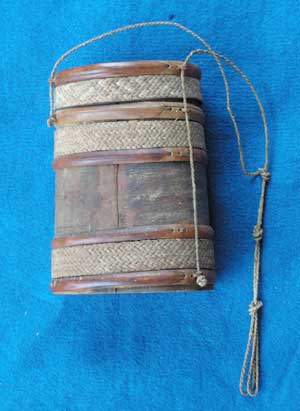 |
Meanwhile, basketrys are found in virtually all parts of the country, and many places in Sumatra, Kalimantan and Sulawesi are well-known for their rattan baskets.
East Nusa Tenggara and Bali are famous for their plaiting of lontar leaves, while Java is widely known for plait work of bamboo and pandanus leaves, in the form of baskets, bags, hats, mats, wallets and household articles.
Earthenware and ceramics have been developed more and more artistically throughout the archipelago Silverware is found in Kota Gede, Yogyakarta and Bali, while Sumatra and Sulawesi are famous for their filigree silver work.
|
|
 |
| |
|