| Back to Homepage |
An introduction to pictish art.
In recent years historians have written less about the migrations of peoples and more about the migrations of cultures; the association of cultural influences and trade routes more than the wholesale movement and importation of cultures by mendicant populations.
Whether the Picts were an alien race who arrived in Britain several hundred years B.C. (as legend would attest), or if a European Celtic culture arrived and was adopted by Scotlands indigenous Iron Age population, or a combination of these two is an issue yet to be resolved by archeologists, linguists and historians. It would be interesting to think that recent advances in genetics might soon go some way towards answering these questions.
Whether Pictish culture grew out of the European Celtic La Tene culture, whose pottery preserved and expanded upon the rectilinear patterns of greek frets, chevrons, zigzags, and crosses of earlier periods and in whose metalwork exquisite curvilinear volutes would begin to define an homogenous and sophisticated style. Or whether the Pictish artistic style grew more gradually, perhaps in less well preserved media, woodwork or even tattoos is difficult to say. It is undoubtably true, however, that the Pictish 'school' of design was enormously sophisticated and well-defined, and can tell us a great deal about Pictish culture, for example, about their knowledge of geometry.
The early pictish art which has survived to the present day consists, for the most part, of sculpturally incised symbol stones and a range of beautiful silver and bronze artefacts. Latterly ( 4th & 5th century) the pictish artists, under the influence of the Christian Irish artistic and cultural rennaissance turned their efforts towards the creation of devotional sculptures, the cross-slabs sarcophagi and ultimately the intricate illuminated manuscripts, sadly few of which have survived the various religious reforms of the ensuing centuries.
The applications of Pictish design were many and various, spanning centuries chronologically, many miles geographically and both pagan and christian philosophies spiritually. There are designs, however, which appear consistently, which are unique to pictish art and which developed into an extraordinary apogee, the evidence for which can be seen in the books of Kells and Lindisfarne.
These designs can be loosely arranged chronologically into several linked categories.
The "V rods"," Z rods", "mirrors", tuning forks" etc.
The evolution, construction and methods of joining many-coiled spirals.
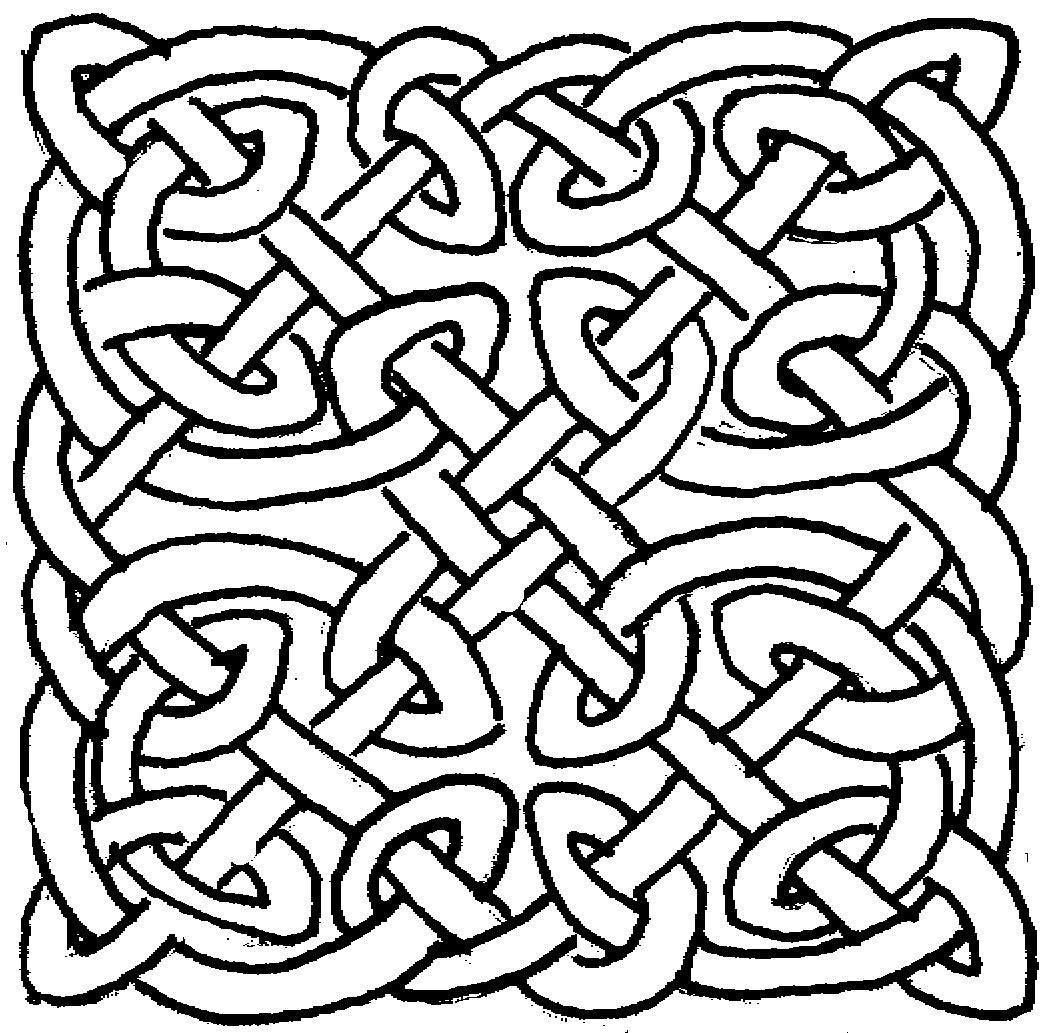
The geometry of the construction methods of the diagonal interlocking key patterns.
Construction theories.
The development of Knotted human and animal forms.
The depiction of Plant Forms.
For more information regarding the history and archeology of pictish art please refer to the links section of these pages.
