| Back to Homepage |
Key Patterns
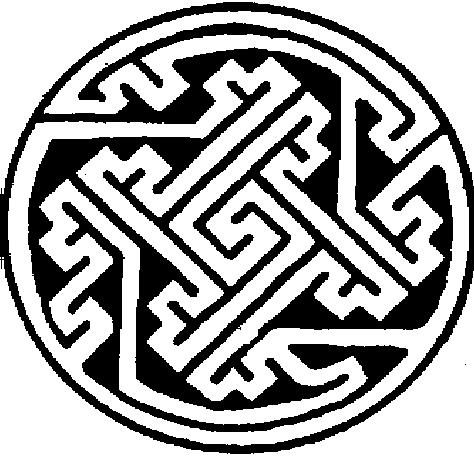
George Bain, in his 'Celtic Art, The Methods of Construction' refers to the similarities between the Pictish key patterns and some key patterns found in Chinese art in the periods prior to 1000 B.C. and far older, to the square and diagonal key patterns engraved on mammoth ivories found in the Ukraine and Yugoslavia and dated to the period B.C. 20,000 to B.C. 15,000. Many of these are pannelled like the key pannels of the ornamented stones found throughout Pictland, and also in the illuminated manuscripts.

J.Romilly Allen was of the opinion that the essential difference between the key patterns used by the Celtic peoples of Britain and Ireland, and those found in (particularly Greek) antiquity was the introduction of the diagonal form of key by the Celtic peoples.
The typical square form of "Greek" key pattern is found only rarely in the Celtic oevre and less so in the Pictish. The characteristic diagonal form, however, is remembered to this day in the diagonalised cross of the saltire, used since the days of Kenneth MacAlpin as a symbol of Scotland.

In the key pattern, we find again the geometry of the interlocking spiral pattern. It can have a clock-wise or anti- clockwise motion, took great skill to design, and was undoubtably of enormous significance to those who passed the secrets of it's construction from generation to generation. Whether the key pattern grew out of the spiral or visa versa is interesting to conjecture.

