|
Mechanics | Electricity | Optics & Waves | Thermal | Atomic Physics | Download | Link | Miscellaneous |
The Story of Aloe Vera
|
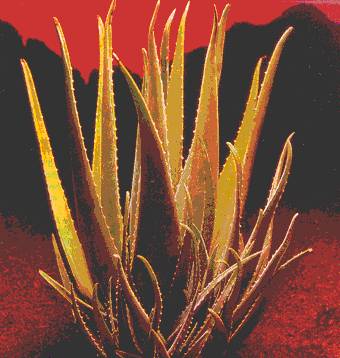
Referred to as the "Wand of Heaven" by American Indians, and called "The Doctor In A Pot" by Christopher Columbus, Aloe Vera is certainly not an ordinary garden plant. Records of the effective use of Aloe Vera for health and medical purposes have been traced back as early as 3,500 years ago in the Ebers Papyrus, an early Egyptian writing of the 1500s BC. Pedianos Dioscorides, a famed Greek physician who lived some 2,000 years ago also wrote in his medical manuscript, lengthy descriptions of the use of Aloe Vera for various medical conditions, both externally and internally. Legend also has it that Alexander the Great in 333 B.C. conquered the island of Madagascar on the advice of the great philosopher, Aristotle solely for the purpose of obtaining sufficient supply of the plant to rub on the wounds of his soldiers. Even the Egyptian queens Nerfertiti and Cleopatra was said to have attributed their beauty to the frequent use of the Aloe Vera. Aloe Vera is also mentioned in the Bible several times, for example, in St. John's Gospel, but this was in fact, Lignin Aloe, not Aloe Vera. Lignin Aloe is a tree whose scented bark was used for incense as well as an ingredient used in embalming the dead. Based on the above and various other historical documentation from different parts of the world, it is without doubt that Aloe Vera is one of the most popularly used herb in traditional treatments. In the modern world, Aloe Vera is perhaps most commonly known for its potency as a healing and soothing agent for cuts and burns. However, researchers believe that there is more in store for us in Aloe Vera than just aiding wound healing. Anecdotal evidence gathered from testimonials by satisfied users and laboratory experiments suggests that Aloe Vera can be helpful in treating or relieving a wide range of human ailments ranging form inflammatory and skin conditions to gastrointestinal and immune system related problems. Since the "rediscovery" of Aloe Vera in the 1910s, a wide range of researches has been conducted all over the world on various species of aloe. While no single element has been conclusively identified to be responsible for treatment of any ailments, generally most researchers believe that the synergistic effect of hundreds of compounds found in the Aloe Vera is responsible for the positive effects noted from applying and consuming Aloe Vera. A general analysis of Aloe Vera shows that it contains over 200 nutritional compounds which include 20 types of amino acids, 12 antraquinones, 12 vitamins, 8 enzymes, 20 minerals, 4 plant steroids, monosaccharides, polysaccharides, saponins, salicylic acid, lignin and hormones. The synergistic actions of these compounds are believed to provide Aloe Vera its anti-inflammatory, wound healing and immuno-stimulant properties which in turn help strengthen our body's own healing and defense system to overcome various medical conditions.
|
The Known Constituents of Aloe Vera & Their Beneficial Properties
|
CONSTITUENTS |
PROPERTIES |
| Amino Acids (20 out of the total 22 types, including 7 types of essential amino acids) | Amino acids are the basic building blocks of protein which are used by the body for production of all sorts of cells and tissues. |
| Antraquinones (aloe emodin, aloe ulcine, aloetic acid, aloin, antracine, anthranol, barbaloin, chrysophanic acid, ethereal oil, ester of cinnamonic acid, isobarbaloin and resistannol) | In the relatively small concentrations found in Aloe Vera together with the gel fraction, antraquinonones exhibit antibacterial, antifungal & antiviral activities. They also display analgesic (painkilling) properties and can stimulate wound-laxatives and may be toxic in higher concentrations. |
| Enzymes (aliiase, amylase, alkaline phosphatase, bradykinase, carboxypeptidase, catalase, cellulase, creatine phosphokinase, lipase, nucleotidase, peroxidase, protease) | Generally, enzymes are catalysts which aid in our metabolism processes, helping in the breakdown of food sugars and fats, aiding digestion and enhancing nutrients absorption. |
| Hormones (auxins & gibberellins) | These plant hormones are known to display wound-healing and anti-inflammatory properties. |
| Lignin | Lignin is a cellulose-based substance which has penetrating ability and can act as a carrier for other nutrients and components, hence enabling deeper penetration for better effect. |
| Minerals (calcium, chromium, copper, iron, magnesium, manganese, potassium, phosphorus, sodium and zinc) | Minerals are essential for good health and are generally required for the thousands of processes in our body. Some of the minerals are also needed for building stronger bones and teeth. |
| Monosaccharides (glucose & fructose) | Sugars. |
| Polysaccharides (acemannans, glucomannans, mannose, polymannose) | Display immuno-stimulant properties, i.e. they are believed to be helpful in stimulating production of antibodies and white blood cells. Also exert anti-inflammatory actions which can be helpful in alleviating rheumatism/arthritis and other inflammatory conditions. |
| Salicylic Acid | An aspirin-like compound which has analgesic action. |
| Saponins | Saponins is a soap-like substance that can help in the cleansing of body tissue and mildly antiseptic. |
| Sterols (campesterol, lupeol, beta-sitosteral) | These plant steroids are basically anti-inflammatory agents. Lupeol also possesses antiseptics and analgesic properties. |
| Vitamins (A, B-Complexes, C, E, choline, folic acid) | Vitamins A, C & E are antioxidants that can help neutralize free radicals. B Complexes and choline are involved in the metabolism of amino acids. B12 and folic acid are needed for production and development of red blood cells. |