| The Dustbowl |
 |
 |
| During the early 1920's farmers saw several opportunities for increasing production. New technology and crop varieties were reducing time and cost-per-acre. Farmers found it necessary to expand their acreage to pay for new equipment such as listers and plows which were bought on credit. Farm expansion also helped off-set low crop prices. Agriculture was affected when the national economy went into decline in the late 1920's due to the Great Depression. A drought that began in the early 1930's worsened the already poor economic conditions. The depression and drought hit the farmers in the Great Plains the hardest. Many of those farmers were forced to seek government assistance. The Work Progress Administation reported that 21% of the rural families were recieving federal emergancy relief. |
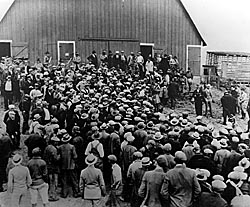 |
| Even with government help many farmers had to leave their land. Some farmers even voluntarily deeded their farms to creditors. Other farmers faced foreclosure by banks while others had to temporarily leave their farm to find work in order to provide for their families. At the peak of the farm transfers (1933-1934) 1 in 10 farms changed possession. |

|
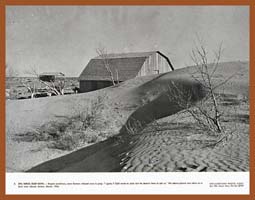
| Those who lived in the drought regions were forced to endure severe dust storms, dimished incomes, animal infestations, and the physical and emotional stress of an uncertain future. |
 |
 |
 |
| by Student C |