An IDP is, for the most part, exactly what its name implies:
a plan for development unique to a particular employee. There
are three important guidelines to remember in the creation of
an IDP:
•
Incorporate Employee Input. There are two important components
to a development plan’s success: employee input and employee
buy-in. Employees typically know their career aspirations, the
areas in which they perform strongly, and the areas that require
improvement. Managers learn these aspects after observing, assessing,
and discussing with the employee his/her performance.
Creating an IDP without employee input can hamper employee buyin
and decrease the chances of the plan improving performance.
• Leverage employee strengths while mitigating or improving
one or two areas where the employee may not be as strong.
Managers may select these areas of focus after assessing the
needs of the team or the organization and aligning employeedevelopment
goals with those needs. IDPs often focus on the skills and knowledge
employees need to fulfi ll their current jobs as well as those
they will need to perform at the next level. Finally, goals
must be achievable: expecting employee performance to turn 180
degrees is not only unreasonable, it can discourage the employee.
Creating a plan for incremental improvement, on the other hand,
makes goals attainable and increases the likelihood of employee
buy-in.
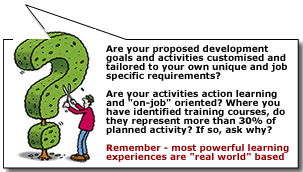
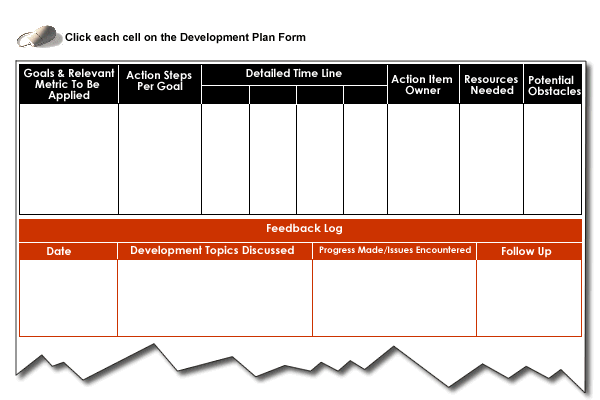
• Create a plan for meeting goals. That said, IDPs
should not consist only of a “laundry list” of training
courses. These plans should include a mix of development opportunities:
specifi c training courses, on-the-job experiences, stretch
roles, and potential mentoring relationships. The plan requires
that the manager assists the employee in meeting his/her goals,
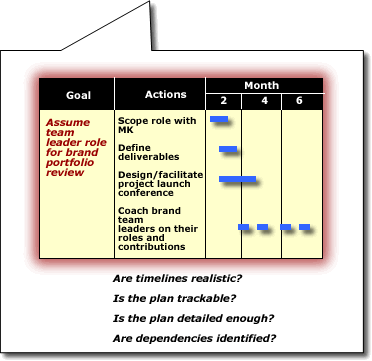
that the employee fulfills an agreed-upon timetable for completing
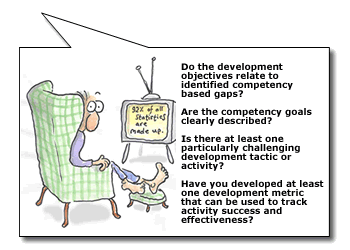
these development opportunities, and that the employee understands
the standards for measuring results.