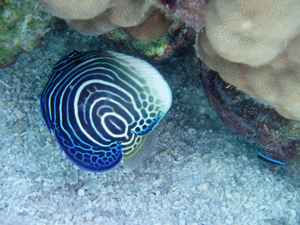
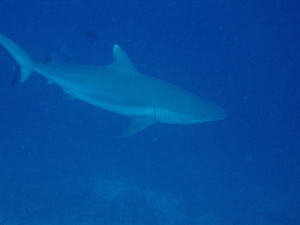
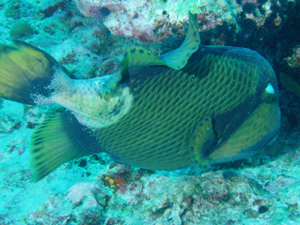
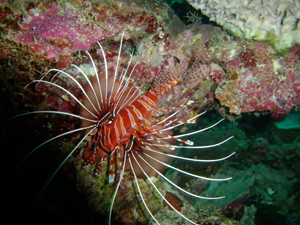
This oceanic white tip shark looks menacing. I saw him swimming in the 'blue water, away from the reef edge. I followed him down to 35 mtetres to try to get a close up, but in the interest of my personal safety, I had to be content with this image. Titan Trigger Fish are very territorial. They build a nest on the reef and protect a vertical water colomn directly above it. Divers are advised to avoid invading their space particularly during the breeding season. There are several species of lion fish, their colours vary from red to black. These beautiful fish are very easy to photograph. They cling to the coral and are fairly in-active. Don't be deceived into trying to touch the very attractive frill; it's extemely poisonous! I took this photograph whilst on holiday last January with my wife Sandra. We spent six days on Heron Island which is part of the Great Barrier Reef. The scuba diving was fantastic with lots of sharks, giant turtles and many species of fish such as this Baramundi Cod which are unique to this area.
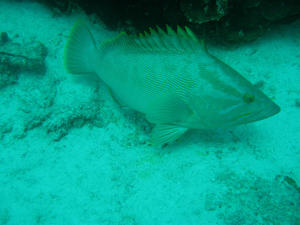
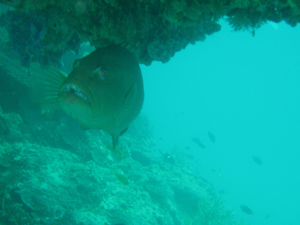 Coral Trout are amongst the strongest predators on the reef. Each has its own territory which it defends quite vigourously. Their habitat stretches from the first few metres to the sea bed. They have a wicked set of teeth which they use to good effect, whilst hunting smaller species. They particularly like caves and wrecks where they can hide if frightened.
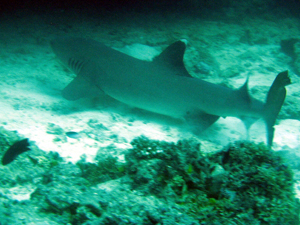 White Tip Reef Shark up to two metres in length can often be seen during the day, resting on the sea bed. They can be approached with caution but will quickly swim away if disturbed. Their feeding time is during the night and they hunt the reef for small fish and crusteceans.