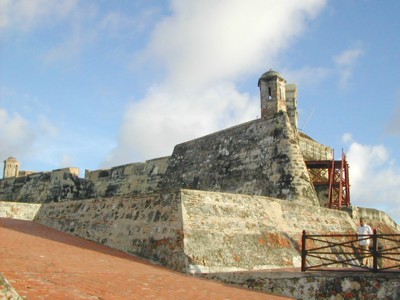
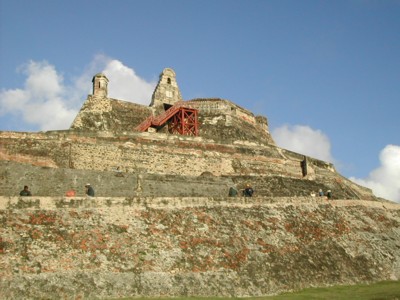
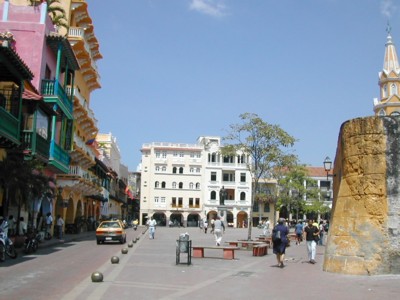
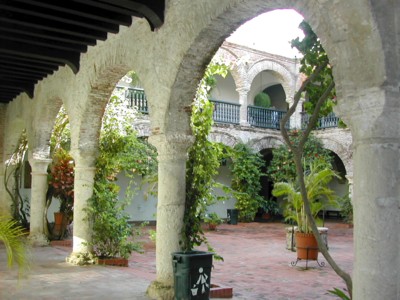
As Cartagena was rich in Spanish colonial history, it made for many interesting explorations. It was exciting to see firsthand the extensive fortification system created by the Spanish over the 300 years to keep out its enemies and the pirates. We visited the Naval Museum (Museo Naval del Caribe) which showed the progression of the fortresses over the years as engineering and firearm technology improved. We visited the San Felipe de Barajas Fortress (Castillo San Felipe) where tunnels were created like a maze so as to confuse the enemy while Spanish soldiers lay in wait among the many side alcoves, ready to ambush if needed. We took a boat ride out to the Bocachica forts of San Fernando and San Jose that protected the main channel into Cartagena. When touring these two forts it was interesting to see how the chain used by the Spanish to stop ships from entering the harbor was kept just below the water surface as the tide fluctuated. The San Fernando Fort also provided insight into how the soldiers lived.
Besides the forts, we also visited the Augustine convent (El Convento de la Popa), the Gold Museum (Museo do Oro), and Saint Pedro Claver�s Monastery and Church. El Convento de la Popa, situated on top of the highest hill overlooking the city, offered a spectacular panoramic view of the entire Cartagena area. The Gold Museum displayed an interesting overview of the Zenu society (pre-Hispanic) with their amazing flood control system, weaving, and beautiful gold ornaments. Saint Pedro Claver�s Monastery and Church offered a glimpse into the life of this amazing priest who was called the �Apostle of the Blacks.� He took one of the first steps to help liberate the slaves in Cartagena. |