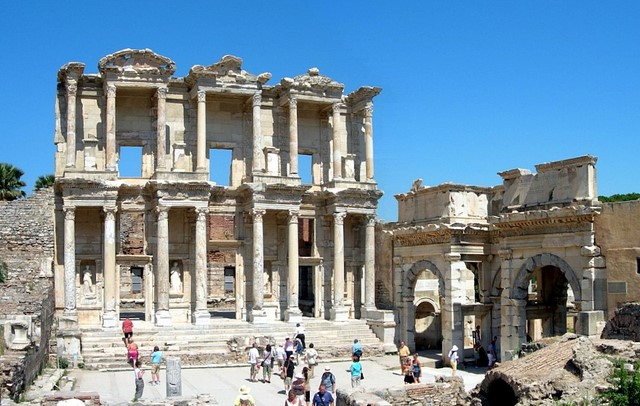
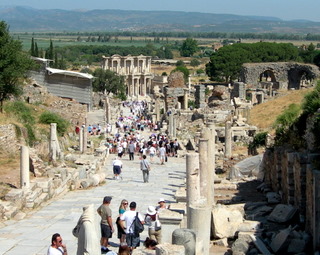
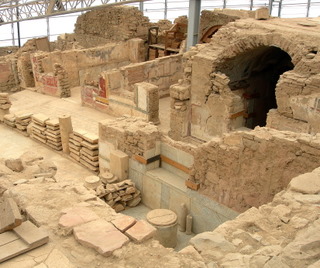
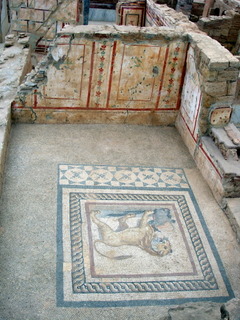
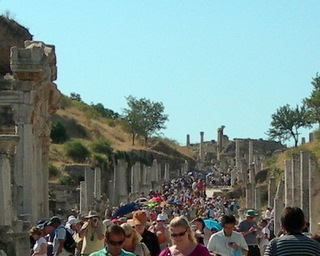
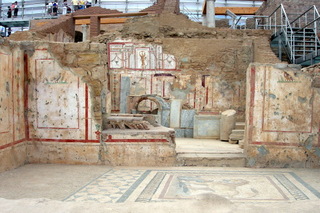
| During the Roman period, Ephesus (Efes) had been the Roman provincial capital of Asia Minor and the chief port on the Aegean Sea. The city flourished during this time, growing to around 250,000 at its peak. The majority of the present day archeological ruins at Ephesus dated from this period. Most majestic was the Library of Celsus (built around 115 AD and restored in the 1970�s). Some niches could still be seen around its walls where scrolls had once been kept. The Gate of Augustus, next to the library, once led into the large agora (marketplace). Halfway up Curetes Way in the enclosed gray covered building stood the Terraced Houses, once homes of the wealthy. This archeological site was impressive; in general, these homes, decked out with elaborate wall paintings and mosaics, had been two stories. If we had any frustration with our visit to Ephesus, it was due to the throngs of tourists. We knew that Ephesus was a popular tourist destination, especially with cruise ships, but we were unprepared for the �sea of people� heading our way from the upper entrance at Ephesus when we started walking up Curetes Way from the library. At times it felt like we were swimming upstream, almost unable to catch our breath, and we actually had to find a quieter spot at Ephesus for awhile. |