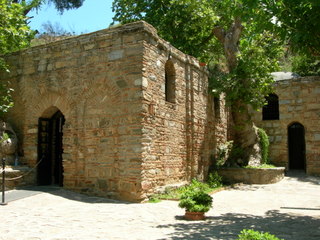
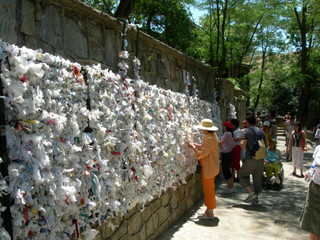
| To the Christian church, Ephesus was important. Apostle Paul lived in Ephesus for 3 years and while here wrote his letters to the Ephesians. The Third Ecumenical Council was held in Ephesus in 431 AD. And supposedly, Virgin Mary spent the last years of her life 5 miles from Ephesus. When Jesus was on the cross, he asked Apostle John to look after his mother, Mary. When John came to Ephesus around 37 AD, he brought Mary with him. Today there was a modest stone house and chapel built on the site where allegedly Mary had lived and ascended into heaven on August 15. We visited this reverend site; total serenity pervaded the area. Interestingly, this site was also revered by Muslims as Mary was the mother of the prophet Jesus. Below the chapel, bits of white cloth had been tied to the wall where Turks had come to make a wish. |