
|
|
|
|
Of late, I have come up with a list of my personal favourites for movies, books and creative works. Go through my list and if you share the same sentiments - please respond by signing my guest book or pop me an email. Movies I adore:
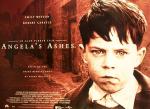
1. Angela's Ashes (1999) directed by Alan Parker An authentic look into the life of Frank McCourt in the impoverished town of Limerick, Ireland. How his instinct for survival carried him through all odds against him till he wrote this story that won him the Pulitzer Prize. Anyone read this book and the sequel, "Tis: A Memoir"? Frank has certainly been an Irish 'mascot' in US with his astounding stories. As he said, "writing is a way to make an insignificant life significant." To me, its up to us to see the significance of every circumstance we go through and only by reflection, they be meaningful. Read his interviews by following the link below: http://www.pbs.org/newshour/bb/entertainment/jan-june99/mccourt_index.html
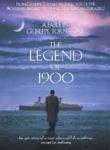
2. Legend of 1900 (1999) directed by Giuseppe Tornatore Another acclaimed work of Guiseippe Tornatore with great details of artistic
shots in photography and script. Zooms into the life of 1900, a baby left by his
parents in a ship, probably to lighten their load before they reach
the lands of Americana. But, little do they know this boy has hidden talents of
music as he opens his ears to listen to the symphony around him. The only sound he hasn't listen is the
sound of sea from land as he has never ever set foot on ground or should he? I
like the sociological question posed: That life can be less complicated when
there are less roads and streets - but a fixed amount of people within a ship.
Yet if we do not come out of our comfort zones, we miss out on life's joys and
music, though 1900 may be afraid that that music isn't such a symphony to the
ear. You'll be caught at the seat watching the jazz piano duel between 1900 and the inventor of jazz, Jelly Roll Norton. Politics probably was in the way for this film to be nominated for Best Picture in the Oscars. Anyone saw Cinema Paradiso - the best from Tornatore?
3. Children of Heaven (1999)/ Bacheha-Ye aseman(1997) directed by Majid Majidi A film depicting a story of 2 poor siblings from Iran, a pair of sneakers and the trauma revolving it. When I first saw it in the cinema, I connected with Ali immediately - the shyness imposed by wearing an old shoe to school/party. And I ran with him in anguish through the narrow alleys of an Iranian village till the large highways his shoes took him. As another fan summed up the movie: Brilliant in its simplicity!
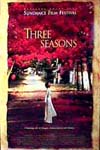
4. Three Seasons (1999) directed by Tony Bui Another story of life but this is artistically presented to delve into the very feelings and world views of the characters involved and the different lives they live. Set in Ho Chi Minh, Vietnam the story unfolds with 4 people - an American searching for a daughter he left behind, a Lotus flower plucker with good values implanted by her mother, a prostitute who sees a new Vietnam in the hotels she enters and a street kid who holds dearly to his only possession - a case full of merchandise. It engages you to this rich picture about Vietnam and challenges us to see their world views and that ours are not the only legitimate ones worth living. http://blackcatmedia.com/threeseasons.html
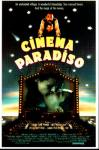
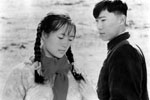
5. Cinema Paradiso (1989) directed by Giuseppe Tornatore I went through great lengths to look for this movie, after watching Legend 1900 and was pleased to obtain a copy of the 3 hours director's cut. Having high expectations still left me feeling satisfied that this was as usual, a well-crafted work of Guiseppe Tornatore. The movie was set in the background of the cinema industry in Sicily, from the days when a reel of films need to be churned by hand on the projector. The story looks at Toto, a handsome Italian boy who grew up to be a hunk, and how he churns his own reel of life as he questions the value and meaning of love. Would he be like the soldier who waited day and night for the princess to say yes? Is love as ideal as the movies made it to be? Toto was fortunate to have Alfredo, a mentor and father figure after his dad left for war, and together with Alfredo they traveled through the movies and their own would be movie. The movie brought me along as well on a journey back to reflect on my own reel of life, in meaningful retrospection and rich reflection. Was Guiseppe telling his own story as Toto? A life well reflected is always worth a good story! (humming to the music score of Cinema Paradiso). 6. The Road Home (2001) directed by Zhang Yimou The Road Home is about our home and what it means to us. And this movie reminds us of that road we need to take, to journey back home. Its about valuing love and being faithful. Its about the rich meaning of home the Chinese culture holds - the sentimental value that has been eroded by the material value so easily purchased in the capitalist market. A broken bowl is not replaced, but repaired painstakingly by nailing the pieces together. The finest cloth woven with care and love. The story centers around bringing home a body from the hospital, carrying it by foot, with the believe that this way it will never forget the road home. This story was told by the son who came back from the city to the mountainous village of Shanhetun when his father died. As he begins recalling life in the village and the passion of his parents, he begins to realise that the home means more than a place to sleep. Of course, besides the meaningful story, the well crafted cinematography - another acclaimed work of director Zhang Yimou, you'll get to see the beautiful Zhang Ziyi, being in itself could make this the Best Picture. :) I applaud the good camera shots taken here! Can still picture Zhang Ziyi with the yellow autumn leaves in the background. You'll never want to see Crouching Tiger, Hidden Dragon after seeing this :).
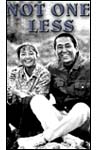
7. Not One Less (2000) directed by Zhang Yimou Zhang Yimou once again paints a picture of China - this time zooming in on the mindset of a 13 year old girl (Wei) who displays determination that knows no boundaries and I must say this is a trait commendable of the Chinese. As I begin to follow closely, I realised that the determination of Wei was driven by poverty. Not one
less is an order followed simply by the motivation of an extra 10 yuan. Yet to
Wei, she trusted Teacher Gao's words and is determined to earn that money no
matter what, even going to a new village to teach lessons she is not good at or
venture into the big chaotic city with its set of rules and regulations. And it
is sad that this 'one mindset' shaped by poverty can cloud the goal, meaning and
purpose of every other task done. Yet, this mindset brought Wei overcoming all
trials with a fearless attitude and with a bit of luck, she brought media
attention to the high plains of Shuiquan village and the much needed financial
assistance to rebuild the old school. Simply brilliant to be able to capture this rich picture! I salute the director for his ingenious in portraying Chinese values such as sheer determination in this movie, faithfulness in The Road Home (2001) and the scorn of infidelity in Ju Dou (1991). And in each picture, rich symbols are used, masterly cinematography depicted, a touching story told. I'm proud of Zhang Yimou, a fellow Chinesemen.
8. The Little Chinese Seamstress(2002) directed by Dai Sijie Set in 1971, the story begins with heavy steps up the Phoenix mountains in China - a place to be dreaded as a ‘detention camp�Eto reeducate Ma Jianling and Luo. During the times of Mao Ze Dong, intellectuals were sent to villages to live a life of a peasant and to understand what it means to serve the common good of the impoverished people of China. Both the two young men find it unthinkable how they could suppress their intellect in the small Dumpster village, toil in hard labour in the mines, and perform dirty work of carrying shit up the mountains to fertilise farms. All this begin to change when they met a daughter of a tailor, who was full of curiosity of the outside world and had the same bold vigor of youthfulness. Together they stole a suitcase containing literary classics by Flambert, Dumas, Tolstoy and Balzac. And then, began Ma’s opportunity to rekindle his passion for literature in the high open mountains, and Luo’s determination and ambition to reform a peasant girl. A wonderful story, delving deep into the minds of the Chinese, painting pictures of conflict in ideology, yet above all, knitting them together is the love of the Chinese for their homeland and love they could have for each other. I loved how the mountains led Ma to sell his violin and precious writings for the simple pleasure of making someone happy. That people matter more than things and technicalities. And how Luo took joy in hard work to serve others, and later in years, shaped his ambition to be a professor. Humorous scenes include a modified primitive dentist chair which successfully filled the teeth of the village chief. Truly a beautiful movie, with more insights compared to the other good ones from China I had watched.
9. X2: X-Men United (2003) directed by Bryan Singer Checking on the hype of X Men 2 on the Internet made me think it's one of the movies in the 21st century with a huge fan crowd and generously high rating. While most of my other movie reviews are less contemporary, I'd like to put X Men 2 in the list simply for its hearty entertainment. X Men 2 is about mutant superheroes (from the comics published by Marvel Comics) from two rival parties uniting to survive the annihilation of an mutant hating human and the growing hate the world has against freak mutants. This movie has its story based upon the graphic novel 'God loves, Man Killls' where evangelist Rev. Stryker goes on a mission to kill all mutants. I was never an X Men comic fan minus the few X Men cartoons I have watched to be acquainted with the title and some of the characters. But the way this movie was made introduced X Men so well, that it stirred my interest to check out the characters on the net. X Men 2 has just the right number of interesting characters (mutants) to develop them in the movie and to create anticipation for the 3rd sequel. And most of the cast did justice to the characters with notable mention of Magneto and Prof. Xavier played by Sir Ian McKellen and Patrick Stewart. Ian demonstrates adequate charisma to fuel his character putting much power in his words, and revealing a surprisingly approachable Magneto. Magneto showed signs of leadership in knowing the potential of his team and giving sound direction to usurp their powers for his selfish motives of course. I particularly liked the part when Magneto commended the potential of Mystique in the jet and later was not hesitant to summon her for the big role of infiltrating Cerebrol 2 and be chosen among the other mutants. On the other hand, Prof. X demonstrated a gentle leader who mentors his team, giving them appropriate time to discover their potential and the right direction for themselves. Patrick’s reflective and cool countenance bodes well for this character. While little insights can be obtained from this movie, I am impressed by the potential of X Men in the coming sequels and how the story line can build up for much fan anticipation. For a detailed write up on the film casting and summaries of each mutant character in X Men, check out this site. http://movies.yahoo.com/shop?d=hp&cf=prev&id=1808406654 http://www.filmjerk.com/archives/0302/030203xmen.html
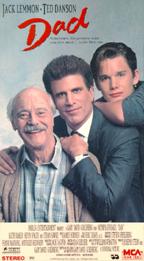
10. Dad (1989) directed by Gary David Goldberg Didn't expect such an endearing and heart warming movie from Hollywood. Hollywood should make more movies of this sort ... depicting life, culture and values. Two dads were featured ... Ted Danson's dad who is stricken with old age and seemed at first glance playing a minor role in the family and little remembered. Yet, as we delve deeper, we see a dad who went to work each day to a place he dreaded just for the family, a dad who suppressed his personality to create balance and harmony in the family, a dad with longings to show affection yet not given the opportunity. Then, there was Ted who had a son from his failed marriage. But, delving deeper he too loved family and loved his son very much but alienated into a world of career and rat race lifestyle. Beyond the seemingly superficial acts of fatherhood, Ted's son had never really had a chat with his father and knew the real person behind the suit. Was particularly engaged with Jack Lemmon's acting and how he portrayed a schizophrenic dad. Made me think much about how we fail to understand our dads and the problems they go through. And we begin to form value judgements, and preconceived notions, yet not giving them the opportunity to be the dad they want to be. Have a chat with your dad and go deeper into life. That's what we should do actually with every single soul in this planet ... and not judge the exterior ... if only we have the time
11. Shall We Dansu? (1996) directed by Masayuki Suo A comparison between the different dance attitudes between 'Shall We Dance' of Japan and 'Shall We Dance' of America can only be made with an understanding that traditional Japanese dance is more conservative in regards to pairing of men and women in a dance. In fact, in the 17th century, female dance performers were prohibited from the Kabuki dance by the government to preserve public morals and the males took their place. To a certain extent, attitudes towards dance in Japan may still be associated with these historical developments where the men felt shy in getting involved in dance to clear themselves from the image of a Kabuki dancer while the women may have doubts if their bold involvement in dance is accepted by men. In America however, where the culture is liberal and emphasizes creativity and expression of one self, dance is appreciated as an art. With the entry of immigrants from different parts of the world, dance cultures from Latin America, Cuba, Africa and Europe brought together new dance types such as Rumba, Waltz, Tango and others. These dances were accepted easily and there are little inhibitions between the male-female interactions. The Meiji Era brought modernization to Japan with higher openness towards Western knowledge and culture. Japanese who were bold enough to cross over the conservative cultural boundaries began to appreciate the Western type of dances and in late 20th century many dance studios mushroomed in the cities. Though, the Japanese in general are still relatively shy to express themselves freely and announce to the public of their boldness and seeming disregard to public morals and opinions. Hence, they are always careful to act appropriately to not bring shame to themselves or their family. Acceptance of new cultures is thus slower in a conservative society like Japan but differs greatly in liberal America. Relationship between man and woman also differs and influences the interaction in dance. In America, communication is bolder where individuals express themselves freely with little fear of causing displeasure to the other party. In Japan, respect and speaking appropriately is a virtue to be adopted and liberal expression of ones feelings may instead be seen as impolite. Hence, interactions and communication is based on an intuitive understanding of one another. Ones own feeling and passion may be secondary. In 'Shall we dansu?'(1996) movie directed by Masayuki Suo, the story reveals how passion enters the life of two different people. An accountant found that there is more to life than working in the office, while a professional dancer discovers the joy of dancing is not at being perfect but enjoying art. Both begin to realize that they need not carry this burden on their shoulders. The accountant finally brought passion into his life and realize he can even share it with his wife and daughter. The professional dancer realizes she can forgive herself of her mistake and that there is so much more happiness in life to be pursued. They both realize that doing something they like is not a taboo or an affair that is to be shun by the society. You can be happy with yourself and yet not hurt others.
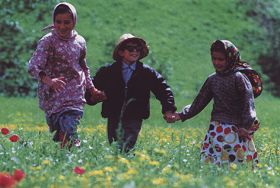
12. The Colour of Paradise(2000)/Rang-e khoda(1999) directed by Majid Majidi 'The Colour of Paradise' had been on my search list for a long time having watched the other 2 films by Majid Majidi (The Children of Heaven and Baran). I could finally get my hands on the VHS copy in Tokyo, albeit not being able to read the subtitles as well since the subtitle was also in a foreign language to me. But, the cinematography and acting was excellent, and the picture spoke for itself! As in all Majid Majidi's portrayal of life through his lenses, he uses the common nature and human elements that we so easily connect to and make them alive through the beauty and colour that this life offers. With high expectations for the movie, I was a little impatient in the first five minutes of the movie showing a school for the blind in Tehran featuring the sentimental blind boy named Mohammad. Then, came the touching moments of how Mohammad unbelievably picked a birdling from the ground far from him, climbed up a tree and placed it on its nest up the tree using his sense of hearing and touch alone. From then, I began to connect with the life of Mohammad and how he felt life and its colour. This is contrasted by his father, Hashem who was able to see, had a good business sense and possessed an able body but could not appreciate the beautiful colours of people and nature around him. Hashem could be in different shoes where he has no skills, no connections, no education or desire for education, no appreciation for arts or business such as the family in The Children of Heaven. Hence, he should be grateful for the beautiful life he is capable of but often he is too myopic to think about his misfortune of his lost wife and the difficulty in wooing the soon to be wife from a respectable lineage. The name of this movie can actually be translated to the Colour of God and can be interpreted as how Mohammad was able to sense God in everything he touches and hears. Yet, many of us who are too focused through our myopic lenses fail to see the colour in life, but more the numbers and specifications of things of this world. As we grow older, we rationalize more, we count more and begin to be less childlike to simply appreciate and love what is around us, which sometimes is not countable or capable of rationalizing. A reviewer mentioned that The Children of Heaven had far better quality than this movie. While it is easier to identify poverty in childhood and the desire in all of us to have better shoes, The Colour of Paradise brings us on a journey through greener pastures in Iran where able bodied Iranians run an independent life capable of colour and beauty. The delicate petals of flowers on vast green fields, the beauty of a growing child's pretty features, the sound of woodpeckers communicating with each other, the wind from the bus, the soft cool water from a running stream, the heartbeat of life of a birdling in one's hands finally released to its nest, the flight of chickens from their coop in an air filled with feather. Maybe Hollywood would portray a child who would be disgusted by the smell and sight of village life. But this movie is about beauty. And it is through the eyes of one boy who could not see.
Number of visitors benefited from this site : 
Sign Guestbook View Guestbook Archived Old Guestbook 1 2
|




 Email me at: