 |
|
|
|
|
|
|
|
|
|
|
|
|
|
|
|
|
|
|
|
|
|
|
|
|
|
|
|
|
|
|
|
|
|
|
|
|
|
|
|
|
|
|
|
|
|
|
|
 |
|
|
|
Day Two of the Fighting on the Island |
|
|
|
|
|
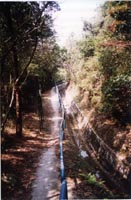
The next morning we left the shelters at Obelisk Hill and moved across Tye Tam Reservoir to Mount Butler. Here I must digress and describe the system of water collection in Hong Kong. The terrain of the Island, being so hilly, and so densely populated, provides no possibility of obtaining water except for collecting what falls as rain. To make the most advantage of the steep hills in every part of the Island, deep concrete drains have been built around the hills. These drains, known as catchements, are some four feet wide and about the same depth. They wind around the hills and lead to the reservoirs where the water is collected and treated before being fed into the water mains of the city. The reason for my digression will soon become clear. |
|
|
|
|
Home |
|
|
|
|
|
Disclaimer |
|
|
|
|
|
I Join the Army |
|
|
|
|
|
|
Here my thoughts are a bit hazy, but I recollect that I was with Colonel, then Major Price, who was second in command of the Regiment, on a road near the reservoir. We were under fire from the invading Japanese, and I thought my chances , at that point, would be better on the far side of the road. I dashed across followed by a spray of machine gun fire reminiscent of Rambo movies out of Hollywood. Major Price yelled, "Get down you damned fool. That bullet had your name on it." In my youthful bravado, and not realizing the danger I was in said, this is no lie, although I am not proud of my respones, "Yeah, but it didn't have E/29986 on it." My service number. Now ... I think that was stupid. |
|
|
|
|
Page 4 |
|
|
|
|
|
Page 5 |
|
|
|
|
|
Page 6 |
|
|
|
|
|
Page 7 |
|
|
|
|
|
Page 8 |
|
|
|
|
|
|
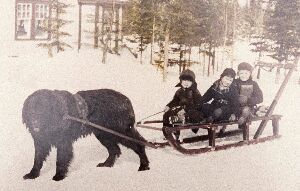
Special mention must be made of Gander, a Newfoundland dog, a huge, gentle, lovable animal, a favourite of all the men. We had adopted Gander as a mascot when we were stationed at Gander. The story has oft been told. Gander's bravery was duly recognized with the awarding of the Dicken Medal in the autumn of 2000 in Ottawa by Sir Roland Guy of the People's Dispensary for Sick Animals in England. A moving ceremony took place at the residence of the British High Command, Sir Andrew Burns. As a footnote, Fred Kelly, now gone, who had been in charge of Gander in happier times, received the medal on behalf of the Royal Rifles of Canada and handed it over to the Canadian Military Museum, where it is now on display. |
|
|
Page 9 |
|
|
|
|
|
 |
|
|
|
|
|
Page 10 |
|
|
|
|
|
|
|
Page 11 |
|
|
|
|
|
|
|
Page 12 |
|
|
|
|
|
|
|
Page 13 |
|
|
|
|
|
|
|
Page 14 |
|
|
|
|
|
|
|
|
|
Gander,then called "Pal",with some of the kids of the family who had him before we adopted him. Picture was taken at Gander Newfoundland. |
|
|
|
|
|
Page 15 |
|
|
|
|
|
|
|
Page 16 |
|
|
|
|
|
|
|
Page 17 |
|
|
|
|
|
|
|
|
|
Page 18 |
|
|
|
|
|
In My Memory |
|
|
|
|
|
|
Photo Gallery |
|
|
|
Rescue From The Water Catchment |
|
|
|
|
Click Here To Go To Part One
Home |
|
|
|
|
|
|
All water for human consumption in Hong Kong is collected from the rain in giant concrete ditches called "water catchments", described above. |
|
|
|
|
|
 |
|
|
|
|
During a heavy rain these ditches fill to overflowing.
On December 20, we were ordered to evacuate our pill boxes on Obelisk Hill and move across Tai Tam to positions on the other side of the reservoir. The Japs had moved rapidly from their landing at Lye Mun and had occupied a superior position at Tai Tam Reservoir. We were ordered to the top of the hill, Mont Butler, overlooking the reservoir from the north, and by walking up the catchement soon reached our objective. |
|
|
|
|
|
Click Here
To Go To
Part Two
Home |
|
|
|
|
|
|
|
Links |
|
|
|
|
|
|
|
|
Photo Courtesy of Jeff Yam |
|
|
|
|
|
|
|
|
|
There were Japanese in plain view in the plain below us, with mules, field pieces, and an armoured car moving across the bridge over the reservoir. We opened fire as soon as we saw them and sent mules and men cartwheeling, and the armoured car came to a halt half way across the reservoir. |
|
|
|
The Japs had a six inch mortars, and they were deadly accurate. They had us in view and launched mortar bombs at point blank range. Bullets whistled by my head, clipping the grass beside me. It was Winston Churchill who said, "Nothing is so exhilarating as to be shot at and missed." He was right. |
|
|
The fire was so intense that we were ordered to withdraw, but not before we had suffered some casualties with several of our company killed, and several others wounded. Among them was Jim Durrah, our Company Quartermaster Storeman. He received a bullet in the leg, just below the knee, which shattered the bone.
Here we were, a mile or so up the mountain. Night was approaching and it started to rain heavily. We had no medical supplies except "first field dressings" that everyone carried. Someone bound up Jim's leg and we carried him on a stretcher made up of two rifles and a blanket that somehow had found it's way to the top of the hill. The Japs now had the high ground and were sniping at us in the water catchment. We had to keep our heads down below the edge of the ditch. We were in trouble. |
|
|
|
Please mail me |
|
|
|
 |
|
|
|
|
|
|
|
|
|
|
|
|
Please View My Guestbook |
|
|
|
  |
|