 |
|
|
|
|
|
|
|
|
|
|
|
|
|
|
|
|
|
|
|
|
|
|
|
|
|
|
|
|
|
|
|
|
|
 |
|
|
|
It Makes One Wonder ... |
|
|
|
|
|
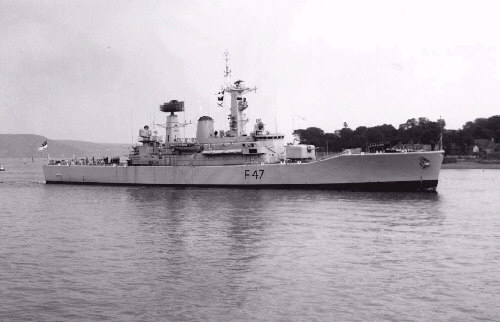
I must insert this brief side note to the story. In 1995 I received a letter from a chap named E.J. Bird, an ex Royal Marine, who had served aboard the "HMS Danae", and who had made the acquaintance of my cousin in Northampton, England. My cousin told him that I had been on the Awatea sailing for Hong Kong. Although I hadn't realized it, according to Bird, the "Danae" joined the convoy in Manila and escorted us to Hong Kong. |
|
|
|
|
Home |
|
|
|
|
|
Disclaimer |
|
|
|
|
|
|
Bird wrote, "I will now endeavour to explain why it might be of interest to you, and all the gallant Canadian men that survived the awful debacle that happend all those years ago. I remember quite vividly the days when we escorted you to Hong Kong from Manila, in the Phillipines, and the fact that we of the crew were well aware of the situation that awaited all of you. The whole detachment of Royal Marines aboard the "Danae" were, to say the least, absolutely appalled at the predicament that we were placing you in." |
|
|
|
|
I Join the Army |
|
|
|
|
|
Page 4 |
|
|
|
|
|
Page 5 |
|
|
|
|
|
Page 6 |
|
|
|
|
|
Page 7 |
|
|
|
|
|
|
 |
|
|
|
|
Page 8 |
|
|
|
|
|
Page 9 |
|
|
|
|
|
Page 10 |
|
|
|
|
|
Page 11 |
|
|
|
|
|
Page 12 |
|
|
|
|
|
Page 13 |
|
|
|
|
|
Page 14 |
|
|
|
|
|
Page 15 |
|
|
|
|
|
Page 16 |
|
|
|
|
|
Page 17 |
|
|
|
|
|
|
Mr. Bird went to the trouble of locating a picture of the "Danae" for me which is pictured here. The "Danae", above,went on to serve with distinction throughout the war taking part in the Normandy Landing on "D Day". |
|
|
Page 18 |
|
|
|
|
|
In My Memory |
|
|
|
|
|
Photo Gallery |
|
|
|
|
|
|
Hong Kong Arrival |
|
|
|
|
Click Here To Go To Part One
Home |
|
|
|
|
|
|
Our arrival in Hong Kong was a much different experience. As we sailed up to the dock in Kowloon we were greeted by three ancient aircraft. They were pusher props, their propellers faced the rear of the aircraft, and did not make much of impression of air power. |
|
|
|
|
|
There were dozens of small, and not so small, boys swimming around begging us to throw coins to them in the water. My Scottish upbringing protected me from such a scandalous waste of money.
We disembarked, formed up, and marched up Nathan Road to our barracks at Shan Shui Po, a distance of probably four miles. The route was lined with spectators, and although it was the middle of November, we found it quite warm marching along in our summer uniforms of shirts and shorts with our small packs, and our rifles at the slope. We were amused at the sight of the British soldiers watching the parade bundled up in their greatcoats. |
|
|
|
|
Click Here
To Go To
Part Two
Home |
|
|
|
|
|
|
Hong Kong, the Good Life Before
the Bombs Began to Fall |
|
|
|
|
Links |
|
|
|
|
|
|
Our first home away from home were the barracks at Sham Shui Po across the harbour from Hong Kong in the city of Kowloon. They were obviously old, having served a succession of garrison troops from the early days of the British occupation. They were of stone with a stucco finish, sparsely finished with not much more than an iron bed for each man. The bed was made in two sections that telescoped together to leave more floor space during daylight hours.
The mattress consisted of three "biscuits", or pads about two and a half feet square and filled with coconut fibre. To make up the bed for inspection the three biscuits were piled on top of each other on the shortened bed. A mosquito net was provided which, as it turned out, was a very valuable item as the camp was infested with malaria bearing mosquitos.
A small cubicle was located at the end of the barrack for the use of the section leader. But, the men enjoyed some unusual comforts too. We were surprised, and somewhat amused, to wake up the first morning with a servant polishing our shoes, shaving us in bed, and then making the bed for us. It turned out later, according to the best information I have, that those "servants" were, in fact, spies in the employ of the Japanese. So much for security, and another example of the naivete of the Military Advisors. |
|
|
|
Please mail me |
|
|
|
Please View My Guestbook |
|
|
|
 |
|
|
|
|
|
|
|
|
|
|
|
|
|
  |
|