The Samanid, Ghaznavid, and Seljuq
Dynasties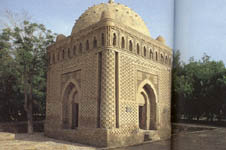
Under the Abbasid
caliphs, Persians had come to play an increasingly important part in the
administration and culture of the Islamic state, and as the Abbasid
empire fragmented, an Iranian dynasty of governors, the Samanids
(819-1005), arose in the eastern provinces of Khurasan and Transoxania. 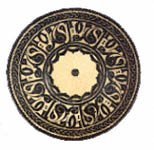 The
Samanids made Bukhara in Transoxania a leading centre of Islamic culture
and, in particular, they presided over a revival of poetry. It was a
Samanid ruler who commissioned the Shahnama (Book of The
Samanids made Bukhara in Transoxania a leading centre of Islamic culture
and, in particular, they presided over a revival of poetry. It was a
Samanid ruler who commissioned the Shahnama (Book of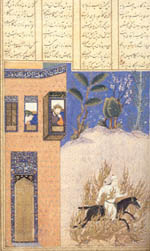 Kings), the poet Firdawsi's (935-1020) great epic of Persian history and
legend, which was to figure so largely in the artistic iconography of
the following centuries. Samanid culture was later greatly admired by
the Turkish Ghaznavids, who took over much of their former territory.
Besides ruling over Khurasan, Afghanistan, and most of Iran, the
Ghaznavids' repeated raids into India led to their eventually
establishing themselves in the Punjab; and they adorned their capital,
Ghazni in eastern Afghanistan, with Indian works of art.
Kings), the poet Firdawsi's (935-1020) great epic of Persian history and
legend, which was to figure so largely in the artistic iconography of
the following centuries. Samanid culture was later greatly admired by
the Turkish Ghaznavids, who took over much of their former territory.
Besides ruling over Khurasan, Afghanistan, and most of Iran, the
Ghaznavids' repeated raids into India led to their eventually
establishing themselves in the Punjab; and they adorned their capital,
Ghazni in eastern Afghanistan, with Indian works of art. 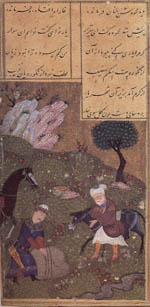 Mahmud
of Ghazna (998-1030) became a hero in the eyes of later generations of
Indian Muslims, and was a model for later Turkish and Mongol rulers - a
good Muslim who was also successful general and patron of the arts. Mahmud
of Ghazna (998-1030) became a hero in the eyes of later generations of
Indian Muslims, and was a model for later Turkish and Mongol rulers - a
good Muslim who was also successful general and patron of the arts.
The
downfall of the Ghaznavids came through their use of Oghuz Turks
recruited from the steppes to the north to serve as mercenaries. In the
1030s, under the leadership of the Seljuq clan, many of these Turks
rebelled and in 1055 the Seljuq leader,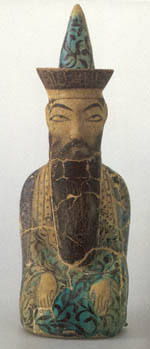 Tughril Beg (1038-63), having driven the Ghaznavids out of Khurasan,
entered Baghdad. He induced the Abbasid caliph to grant him the title of
sultan (literally "power"). The greater Seljuqs, as his
dynasty is known, ruled over Iran, Iraq, and most of Syria, albeit in
the name of caliph.
Tughril Beg (1038-63), having driven the Ghaznavids out of Khurasan,
entered Baghdad. He induced the Abbasid caliph to grant him the title of
sultan (literally "power"). The greater Seljuqs, as his
dynasty is known, ruled over Iran, Iraq, and most of Syria, albeit in
the name of caliph. 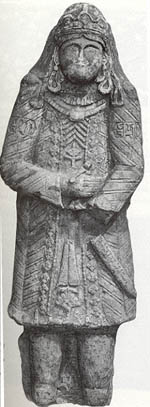 A
little later in the eleventh century a separate branch of the family
moved him into Anatolia and established the Seljuq sultanate of Rum on
what had previously been Byzantine territory. A
little later in the eleventh century a separate branch of the family
moved him into Anatolia and established the Seljuq sultanate of Rum on
what had previously been Byzantine territory.
The massive
recruitment of Turkish slave soldiers by the Abbasid caliphs, followed
by the rise of first the Ghaznavids and then the Seljuqs, 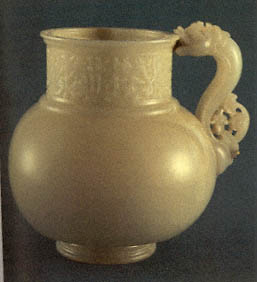 signified
the coming of the age of the Turks, who were to predominate in both the
armies and governments of the eastern Muslim lands for centuries to
come. In the far west, Spain was ruled by a succession of princes and
North African clans. signified
the coming of the age of the Turks, who were to predominate in both the
armies and governments of the eastern Muslim lands for centuries to
come. In the far west, Spain was ruled by a succession of princes and
North African clans.
Islamic Art
Robert
Irwin
|