|
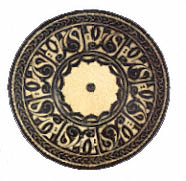
Iranian
Samanid bowl, 10th century.
Glazed stoneware, diameter 11" (27.7 cm).
Early Muslim potters made use either of Soda and Potash
glazes or of lead glazes. The former, an alkaline glaze, is very
transparent,
but it allows only a restricted range of colours. Iranian potters tended
to use
an alkaline glaze (and alkaline glazes tend to be used on frit ware,
when this
was introduced in the 12th century). Egyptians and Syrians, by contrast,
tended
to favour a lead glaze. This allows a wider range of colours, but those
colours
tend to run. |