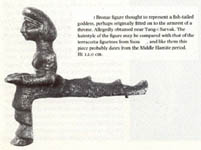
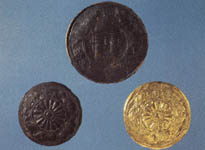
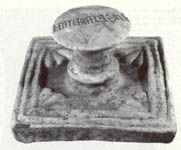
Elam Elam is the name given to the south_western part of Iran in antiquity. It includes not only the lowland area corresponding to modern Khuzistan, with the great site of Susa, but also the highland areas to the north and east, up to and including Tall-i Malyan (ancient Anshan) in Fars, just 43 km west of Persepolis. Because of its geographical position, being an extension of the alluvial plains of Mesopotamia, lowland Susa was sometimes brought within the cultural orbit of Mesopotamia, but in highland areas Elamite traditions and culture were more carefully guarded. At certain times the lowland area dominated the surrounding highlands, but at other periods the initiative came from the upland areas and the lowland zone, or Susiana, was removed from Mesopotamian influence. For many years Susa was regarded as the capital of Elam, but it is now clear that it was only one of several major centers, another being Anshan. Nevertheless, Susa remains the best-known and certainly the most extensively excavated site in Elam, which has to some extent distorted our picture of the region as a whole. The heyday of the Elamite state came during what is known as the Middle Elamite period (1450-1100 BC). Inscriptions were now written in Elamite (a language that is still only partially understood and has no known relatives), and many original works of art were produced. Many of the most impressive of these come from Susa and are now on display in the Louvre Museum in Paris. The Middle Elamite period witnessed the production of many terracotta figurines. A closely comparable figurine has been found at the site of Haft Tape, also in Khuzistan. Haft Tape was occupied, it seems, only during the fourteenth to thirteenth centuries BC. Chogha Zanbil, is a site 40 km south-east of Susa, which was founded by Untash-Napirisha possibly after Haft Tape had been abandoned. This may also have been a religious centre, as there is a ziggurat or temple tower at the site along with various other shrines and temples. In the seventh century BC, Elam became increasingly embroiled with the powerful Asyrian state to the west. This struggle is graphically illustrated in a magnificent series of reliefs from Nineveh in the British Museum, particularly those showing Ashurbanipal's campaign against Te-Umman and the rout if the Elamites at Til-Tiba on the Ulai river. Elam's days as a power to be reckoned with were now over. It is sometimes suggested that Elam is nothing more than an extension of lowland Mesopotamia, and that its art and architecture are entirely derivative from Mesopotamian prototypes. However, although it is true that lowland Elam was at times prey to Mesopotamian influence, this is much less the case in the highland areas and, as we have seen, at certain times - notably during the Middle Elamite period - the material culture of Elam can be sharply differentiated from that of Mesopotamia. Ancient Persia John Curtis |
|||
|