







There is much history behind the town of Pere Cheny. In 1873 Michigan Central Railroad completed the railway system between Gaylord and Jackson. About that time George Cheney got a land grant form the railway company to establish a stop on the railroad for gas, freight, water and passengers. It was prior know as Center Plains Township. Cheney built a sawmill, and later Cheney House, a Hotel to acomadate the number of fast rising settlers, lumbermen and tourist in the area. On December 1st, 1874 Pere Cheney received a post office. By 1877 the town had 2 sawmills, a general store, a wagon maker, 2 carpenters, a doctor, a hotel telegraph service, and daily mail. Lumber was the only product ever shiped from Pere Cheney. The cemetary was established on about 5 acres, in 1878, located south east from the town. By 1896 the population had droped from around 1500 people to around 55, 25 people in 1901, and 18 people in 1917. The post office was closed in 1912, and the land was sold off at a public auction on May 7th, 1917. The only reamaing families were farmers of the outter lying area of the town. Diptheria was spread through the town twice in its short life, once in 1893, and again in 1897. It took several lives, many from the same family at the saem time. The Barber family lost 3 children in less than 3 weeks over Christmas of the 1893 sickness. Many families moved out of the town into neighboring towns of Roscommon and Grayling, or further. There were several fires in Pere Cheney due to the sparks from the mills that were located behind and to the south the cemetary. There was no water supply near Pere Cheney, so the towns people had to use water wagons and shovel dirt to put out these fires. Sometimes they were not successful and had to let the fires burn out themselves. Most of what you will read says that townspeople from neighboring towns tried to burn the town down to stop the spread of disease, I have found nothing to credit that. Although some of the buildings burnt down due to a mill fire after the town had been deserted. The last famiilies in the town in 1914 were the Dumfrey's, Mr. Johnson who ran the general store and postoffice with his sister-in-law Mrs. Clark , and the Clover family as well as the Penn family who were Indian, and he was the cemetary grounds keeper for several years.
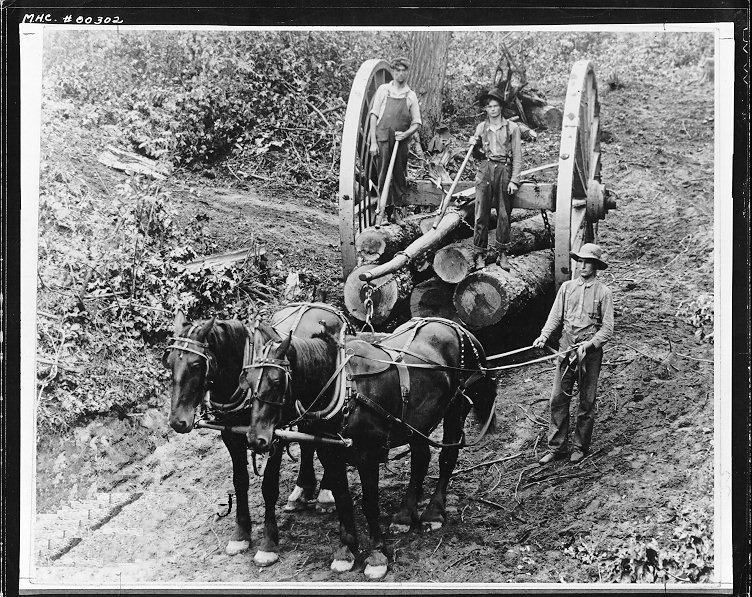
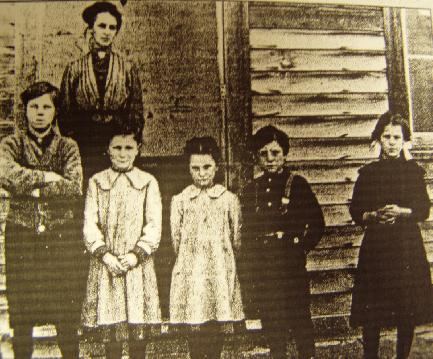
Copyright Michigan History Magazine 1990
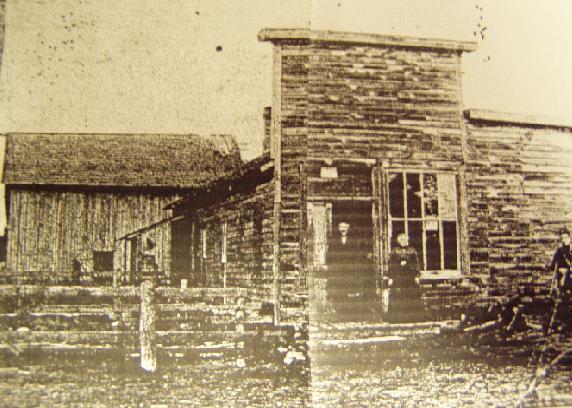
Copyright Michigan History Magazine 1990