| Chapter Three Penobscot Industries |
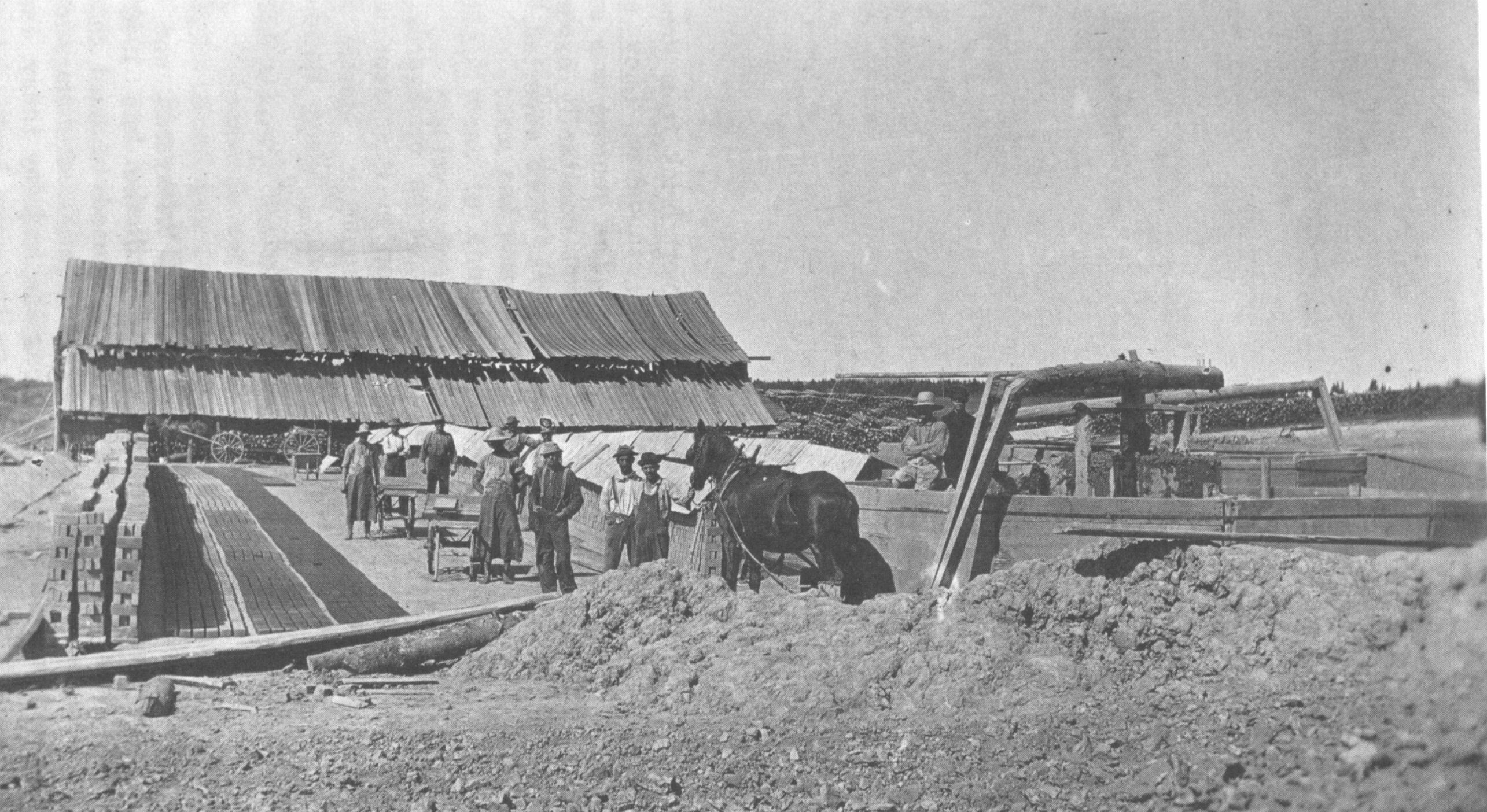 |
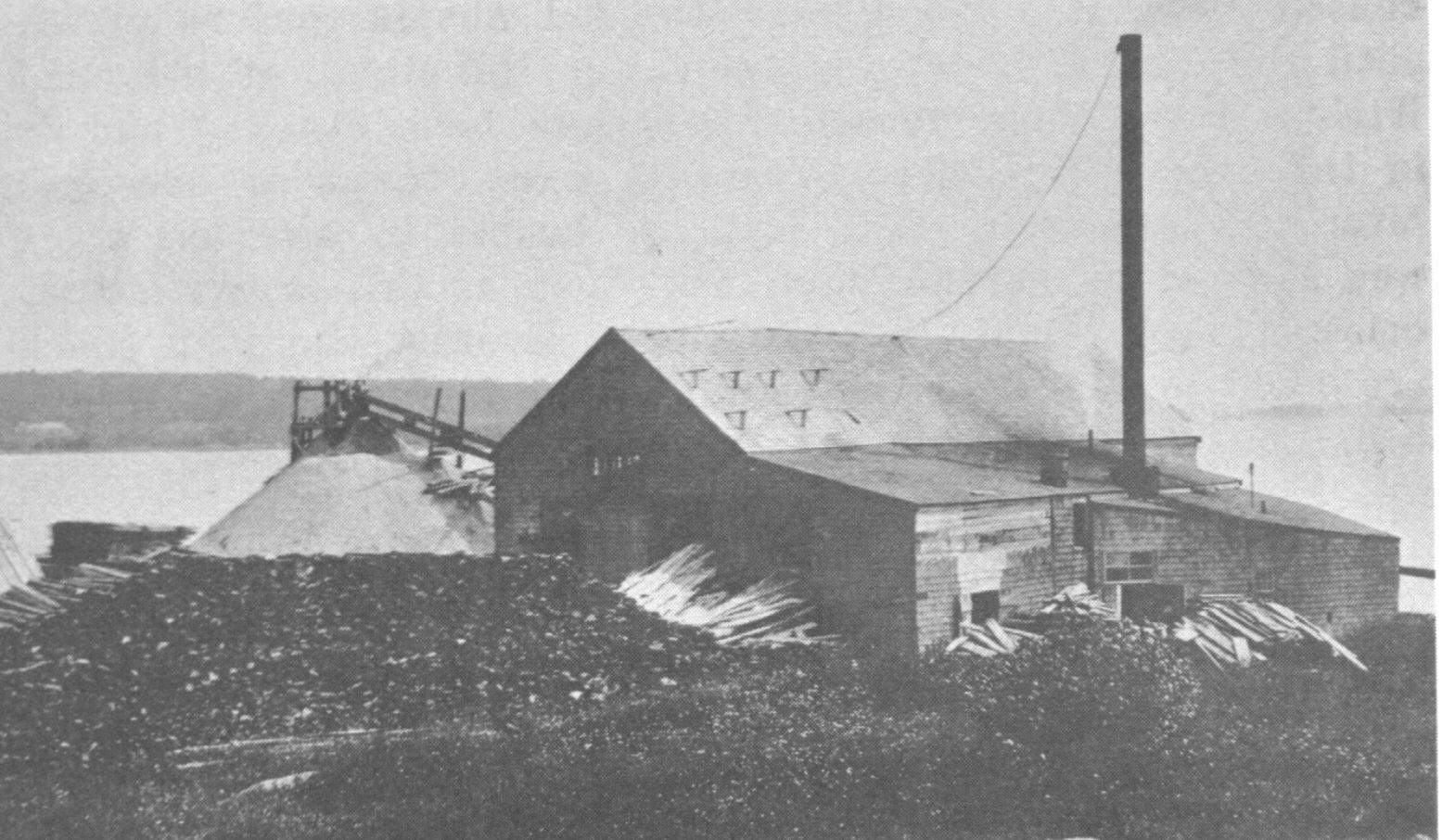
| Bricks For those who chose not to farm, the making of brick provided a means of support. It has been recorded that the first brick yard to operate in Penobscot was in the year 1807. John Leach and Falls Wardwell operated the yard and manufactured brick for sale within the town. Previous to this, bricks were imported from Mystic River, Massachusetts. The homes of Col. Jeremiah Wardwell built in 1790, was practically made from such brick. Wilbury Hutchins was the first to export brick from Penobscot to distant markets. In 1858, the schooner Lucy&Nancy was loaded with brick for Boston. The venture was successful so much that the business kept constantly expanding. In the year 1888, several million bricks were exported. At one time there were as many as seven brickyards in operation, principally because the clay soil in Penobscot was particularly adaptable to the making of fine brick. Martin and True Leach, Marks & Grindle, Bruce Gray, Elisha Bowden and Otis Wight & Son were a few of the owners. The making of brick continued in two brickyards, one at the bay and the other at the cove until the late 1940's. Those who worked in the yards were exposed to hard labor and small wages; from eighteen to twenty-five dollars per month plus room and board. As one drives along the highway today, remnants of an old "yard" can be seen on the river banks littered with discarded brick. Lumber The Woods of Penobscot have always provided employment for its citizens. Beginning in the middle 1800's, the demand for lumber prompted the erection of sawmills. In the year 1856 a mill owner by the name of Herrick is said to be the first to operate one. Its precise location is not known. In 1886 Grindle,Wight & Clement operated a mill located on the Blue Hill (Western County) road. Another was run by Haynes & Grindle. Water from Wight's Pond flowing into Winslow's Stream powered the water driven wheels. The Sewall Gray sawmill was well known in the community around the turn of the century. This mill was later purchased by S.B.Condon & Son and was in working condition until the 1960's . Located on the Blue Hill (Western County) road at the base of Wight's Pond, many lumber piles have been stacked and dried in the sun at this site. Yokes of oxen, teams of horses and later truck, were used to haul lumber to warves where it was shipped to distant locations. Even as this is written, memories of Fred Wight, Roland Grindle, Everette and Paul Hinkley are vivid in the minds of many people as regular employees of S.B. Condon. Only remnants of this mill remain today. At the head of the bay, the Authur Perkins sawmill was erected in 1910. It was located directly accross the highway from Clark Highschool. Students who attended this school can well remember the growing stacks of lumber, the huge sawdust piles and the whining saws as they studied their latin, French or Algebra lessons. This mill too, is a structure of the past and little remains of it. Those who worked the mills received wages of $15. to $18. per week, and the week was six days long. The busiest season for most sawmills extended over a period of six to eight weeks, from late spring to early summer. The balance of the year was spent in the cutting of logs and the transportation of them to the sawmills. Wood, used for fuel, also provided employment for many. The numerous varities of hardwood in the Penobscot area were used by most families to fuel their wood burning stoves and furnaces through the cold winter months. Some families owned their own wood lots and thus cut their own supply of wood. Those who diden's had to purchase wood; six to ten cords, from someone who sold it. S.B.Condon not only delt in lumber, but also in firewood. He who owned thousands of acres of woodland, employed men as woodcutters. if they were skilled at their job, and if they worked a long day with an ax and bucksaw, a cord of wood could be cut and piled up. For this gigantic effort they received, as wages, $3.00 per cord , or if lucky, $18.00 for a six day week. The wood was then put on the market and although prices varied, a cord of wood could be purchased for $10. to $15. As time passed, the cutting of pulpwood became popular due to the construction of a papermill (SeaBoard), (St. Regis) (Champion International) , and now (International Paper Co.) in Bucksport. Even in this Bicentennial year, the cutting of pulpwood and firewood is still in practice. However, those who engaged in these occupations are able to accomplish much more than their ancestors due to the invention of the chain saw and tractor. At the same time they are better rewarded for their services. A cord of firewood for example now sells for $130. per cord in the year 2002, depending on the processing. Shipping Ships and the sea were always of importance to the progress of Penobscot. Without ships there was no Convenient way to receive or send supplies. The active port was Northern Bay, or as it is commonly called, "The Bay", or, "The Cove". Here as the tides come in and out, the usual strong current of the Bagaduce River is reduced to a gentle flow. Shipping became so improtant that the United States Government spent $30,000 to dredge out a deep channel extending into Winslow's Cove. This was accomplished over a span of two years in 1893-95, working only during ice free months. Since this sheltered harbor became ice bound during the winter months, it wasen't unusual for ships to sail up the Bagaduce River as far as they could and then unload their cargo of corn, flour, meal and other produce on the ice. A horse and sleigh completed the transportation to land. Just as homes were necessay to live in, so were row boats, schooners and sloops neccessary to travel from one destination to another. Ferry boats were built to provide transportation across the Bagaduce River. One such location was just below "the narrows". It transported people and cargo from North Castine to Brooksville. Another ferry service ran across the Penobscot River from "Doshen Shores" to Sandy Point in Stockton Springs. The first sloop on record was built by Daniel Wardwell in the year 1775. The crew was Daniel's son, Jeremiah, and Peter Morgrage. Her name was Trythena, and was used primarily to transport wood to southern parts of Maine territory. Later Jeremiah Wardwell also built and owned vessels of sloop and schooner design. In 1789, the sloop Enterprise, the fishing boat Nora, and the schooner Thomas Williams were built and operated in conjunction with Daniel Wardwell, Nathan Phillips and Findley Malcolm. The schooner Addie Clements was built in 1868 at Penobscot by Capt. Elisa Littlefield. According to the diary of Hosea Wardwell, she was built where the mill warf used to be, at the foot of a field owned by W.M. Sellers. The Addie Clements never sailed west of White Head or farther east than Bar Harbor. She ran mostly out of Rockland. She was never sold out of the family and had only four different captains, all family members. Her days ended in 1908 at the bay. she was hauled up on Scott Leach's point and her mast and riggings taken off. The tides and ice revaged the hull, but timbers could still be seen at low tide for many years. Ships were also important to carry men to the fishing grounds of the Grand Banks. In the later 19th century six vessels and 65 men from Penobscot found themselves off the coast of NewFoundland engaged in fishing. These trips extended over a period of two or three months and under precarious circumstances. The seamen were compensated from $120. to $180 per trip plus board. One schooner captained by Charles Staples also went as far as Iceland for halibut. Over the years the sea took its toll and many sea-faring voyages ended in tragedy. On the night of May 13, 1819, on a trip from Bermuda to Castine, the schooner Aldebaran of Penobscot was lost as well as the entire crew. They were Captain Joseph Hutchins, Joseph Wardwell, Josiah Wardwell, Alexander Grant, Williams Nichols, and a passenger, Captain Good. The schooner Ocean Wave, of Penobscot, sailed for the Grand Banks and was never heard from again. The crew was Captain William J. Leach, Elias Perkins, William Wardwell, and Eben Webster. On Sept. 30, 1867, The schooner Juliet Tilden of Castine, was destroyed in a severe storm off Amherst, one of the Magdalen Islands in the Gulf of St. Lawrence. The crew consisting of 18 men were lost. Among them were Silas Wardwell and Wells Wardwell, Both of Penobscot. The ship Emeline, owned by James Littlefield was a total loss in December of 1854. She was cast ashore in a violent storm on the shores of Long Island, New York. This was the greatest loss of property the town ever experienced. Mr. Littlefield, owner of the un-insured Emeline, lost over $10,000 (a fortune at that time) and was so financially crippled that he was unable to again pursue the shipping business. The Emeline's crew and Captain Bradbury Farnham perished with her. Next |
 |
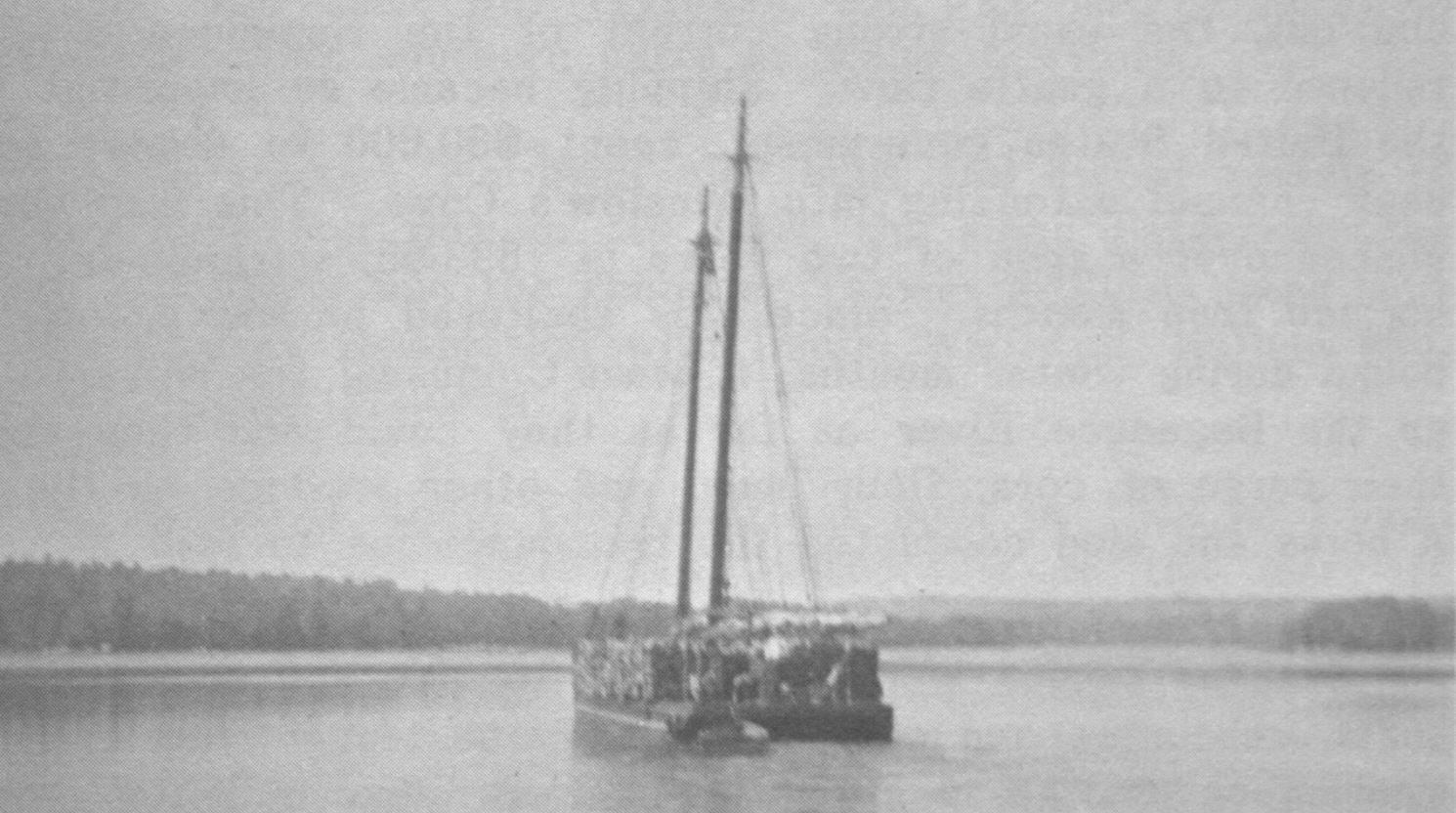 |
| The Jewell, Loaded with pulpwood |
| Arthur Perkins Sawmill |
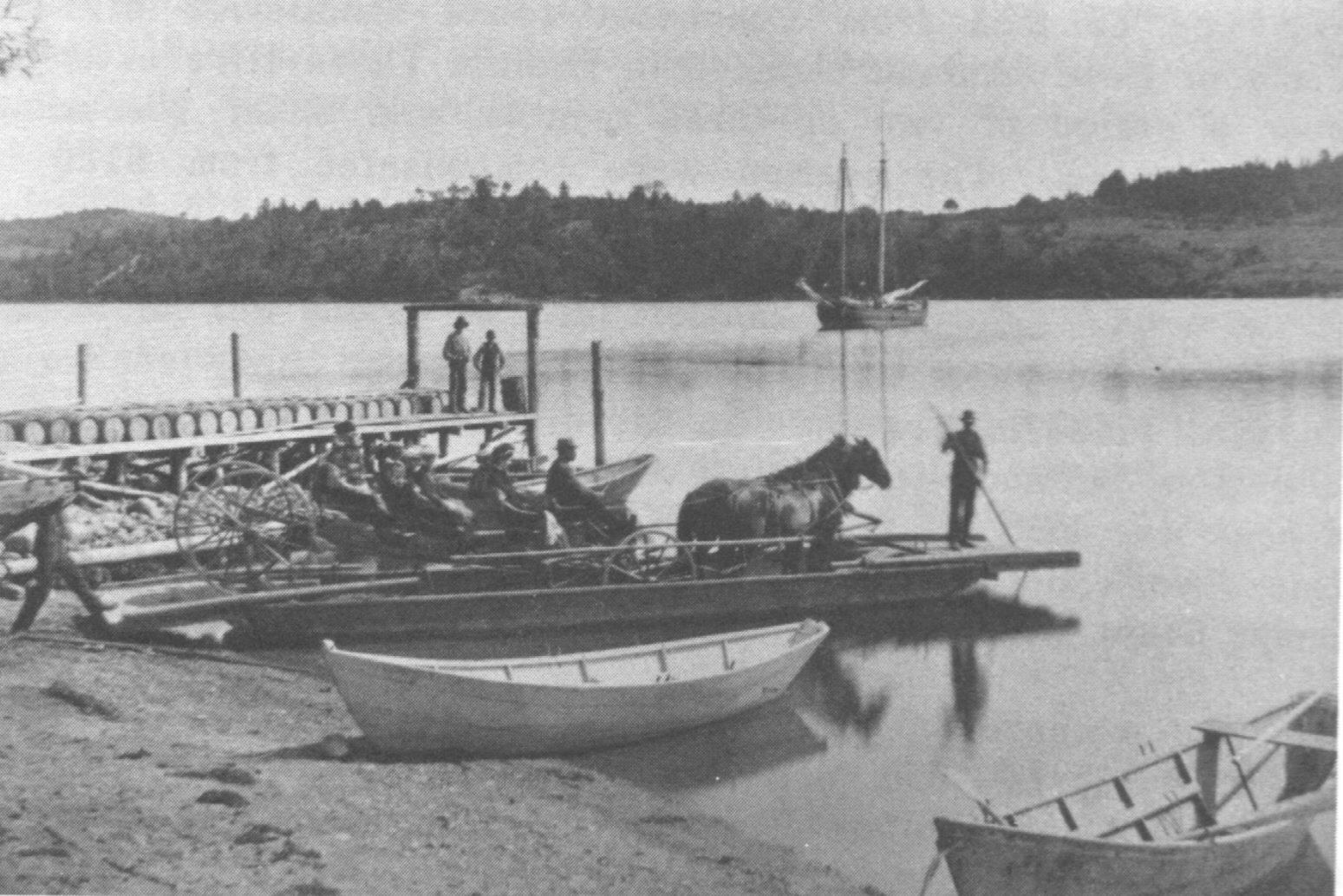 |
| No.Castine / Brooksville Ferry |