Visit the Olympic Museum
Olympic Anthem
Lyrics & music
ALTIS
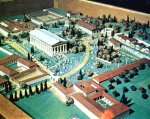
Take a tour of the sanctuary of Olympia

More images from Olympia

Read a news article written by an ancient "sports journalist" , Aristomenes of Thoas.
...................................
KTEL = Bus system
OTE = Greek telecommunications
ELTA = Post offices
...................................
How to get to Olympia:
By car:
via Patras (334 km) or Tripolis (323 km)
By bus:
KTEL from Athens tel: 210-5131601
By train:
(Athens - Patras - Pyrgos - Olympia) tel: 210-5240646/8, 210-3624402/6, 210-3236747
Numerous travel agencies organise one-day and several-days trips that include a visit to Olympia.
...................................
Useful tel numbers:
(use area code in front)
Police 22596
Police ancient Olympia 22100
Tourist Police Olympia 22550
Hospital 22222
Olympia museum 22529-22742
Museum of Olympic Games 22544
Olympia archaeological site 22517
OTE 31299
ELTA 33080
KTEL 34077-22372
Ferry Kyllini 92202
Port authority Kyllini 92211
...................................
Direct dialing codes:
Pirgos 26210
Amaliada 26220
Andravida 26230
Andritsena 26260
Vartholomio 26230
Gastouni 26230
Zaharo 26250
Kaiafas 26250
Kastro 26230
Katakolo 26210
Kounoupeli 26230
Krestena 26250
Kilini 26230
Lalas 26240
Lehena 26230
Loutra Kilinis 26230
Manolada 26230
Olympia 26240
Skafidia 26210
Figalia 26250
...................................
See also:
 Delphi
|
Ilia
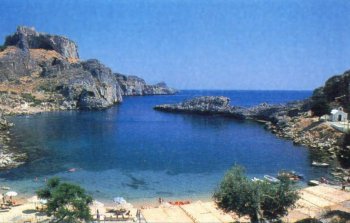 Ilia is the northwest part of Peloponesos. The capital is the city of Pyrgos with 28.700 inhabitants, 310 km. away from Athens. The area is known for its beautiful beaches such as Kaiafas and Killini but probably the most famous place in Ilia is the ancient Olympia, the birthplace of the Olympic Games. It was at Olympia more than anywhere else that bodily strength and the intellect were worshipped ("A healthy mind in a healthy body"). It was at Olympia that some of the loveliest love myths of the ancient Greeks were born: of Alpheios (the "sacred Alph" of Samuel Taylor Coleridge's Kubla Khan) and Arethousa, Apollo and Daphne, Pelops and Hippodameia, divine and heroic figures associated with the propagation of vegetation and of life. Ilia took its name from God Helios (Sun).
On either side of the road linking Patras and ancient Olympia are small towns and quaint villages. The coast is indented with bays and beaches to suit all tastes, from secluded coves to organised beaches with modern conveniences as the Katakolo, Agioa Andreas, Kourouta, Kyllini and Kalogria. The region is littered with ruins of ancient cities, Byzantine churches and Medieval castles of considerable archaeological and historical importance.
|
| Olympia
|
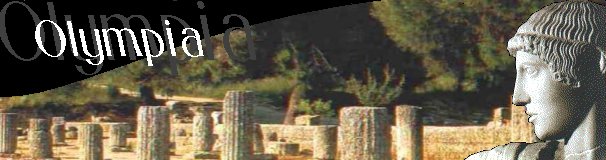
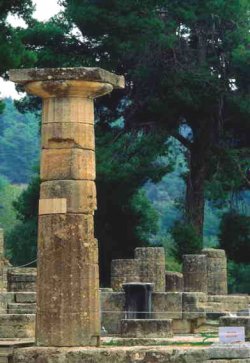
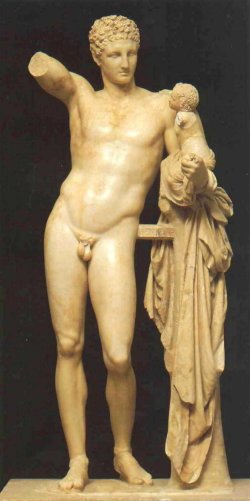 Olympia is a very beautiful little village with 1.000 inhabitants, 19 km. away from Pyrgos. There one can find the Museum of the Olympic Games. Close by there is the arhaeological site of ancient Olympia. Ancient Olympia is a peaceful, serene and verdant place with grandiose temple fountations, colonnades, altars and numerous interesting arhaeological findings crowned by that masterpiece of sculpture, the Hermes of Praxiteles. It was a complex of temples, priests' dwellings and public buildings.
One can also visit the New Arcaeological Musem, the Old Olympia Museum and the Museum of the Olympic Games. The New Museum houses all the findings of the Olympia site among which the pediments from the Temple of Zeus, some of the most magnificent examples of ancient Greek sculpture, and the famous statue of Hermes with the newborn Dionysos. The Old Museum now houses the bronzes and an exhibition on the history of investingations at the site. Exhibited in the Museum of the Olympic Games is material covering the Games until 1906 and a related collection of commemorative postage stamps.
|
| History
|
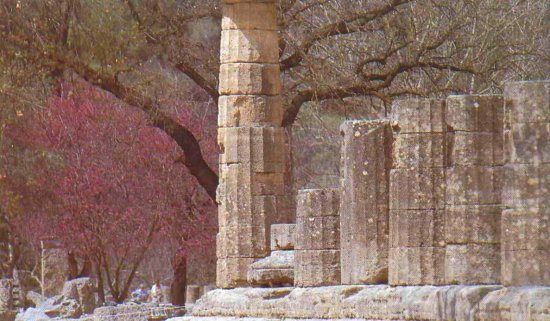 The area of Olympia was settled as far back as the prehistoric times. Until around 2.000 BC a fertility Goddess, Demeter Chamyne, was worshipped there, as well as the deities Rhea and Cronos. During the Mycenaean Age (1600 - 1100 BC) the area was part of the realm of Pisatis with capital the city of Pisa. According to their ancient tradition supernatural powers would emerge from a chasm that used to exist near by and they had established an oracle, just like the one in Delphi, in which originally was worshipped Mother Earth, the giver of life and fertility and rebirth. Around 1000 BC, with the "descent" of the Aetolian-Dorian phylae from the north, the religion of Earth will get substituted by the worship of a male God, the Thunder, Zeus. All the old traditions reflected in myths were altered in a way to lessen the role and the symbolism of the Old Religion in comparison to the New one. The origin of the name Olympia itself is not clear. Some say it comes from the name of Mount Olympos in Thessaly, the mythical adobe of the Gods, a name that came to underline the change from a matriarchal to a patriarchal religion that took place. Others claim that Olympia comes from the pre-hellenic name "Olympos" meaning "mountain", and it was used as an adjective for the Old Earth Goddess, the "Olympia Gaia". In the oracle there were two priests, one oionoscopos, a person that could predict the future by looking at the flying of birds, the rain or other natural phenomena, and a splachnoptis, a person that could read the internal organs of sacrificed animals.
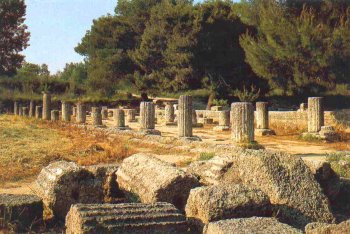 Since the Pisatis era or even older than that a religious ceremony involving athletic competitions would be held in Olympia. Originally it was just a local event with a very strong religious character. As the sanctuary of Olympia was gradually recognised as a very important religious centre placed under the protection of Zeus the more known the festival would become to the rest of the Greek world and the more people from all over Greece would attend it. Indeed to ensure the danger-free movement of athletes and spectators-pilgrims to the sanctuary, and the smooth conduct of the games, the Sacred Truce was declared, whereby all hostilities between Greek city-states were suspended for a month.
Concurrently the Games were reorganised and the whole area was declared sacred to Zeus and inviolable. The games were held every fifth year and from Classcal times onwards lasted five days. The intervening four-year period was called an Olympiad. The first Olympiad of this sort was held in 776 BC. Though the exact dates of the games are not known,
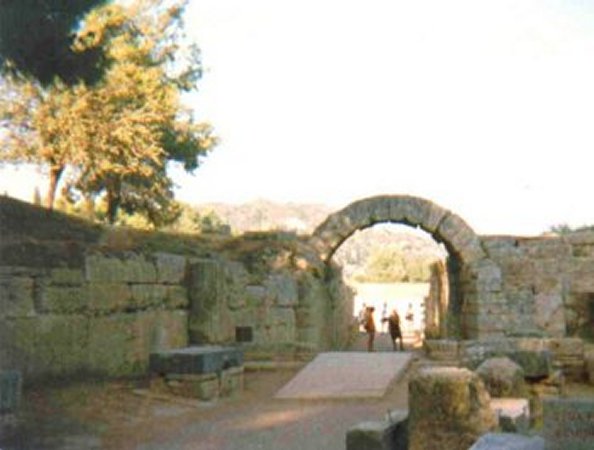 it is known that they took place during the aestival full-moon which fluctuated between the last week in July and the first half of August. So significant were the games in Olympia for the ancient Greeks that they soon came to be used as the main basis of dating all the events in the long and illustrious history of Hellas. A year before the beginning of the new Olympiad the officials responsible for the games sent heralds (spondophoroi) to every corner of Greece and to all Greek colonies, from the Pillars of Hercules to Magna Graecia, Asia Minor, the Euxine Pontus (Black Sea) and the Maiotis Lake (Sea of Azov). The heralds would announce the date of the opening of the games and they would inaugurate the Sacred Truce.
The numerous city-states were represented at these festive panhellenic gatherings at Olympia not only by athletes but also by official emissaries called theoroi who frequently stressed their presence by making splendid appearances. Rhetorical events took place on the fringe of the games.
it is known that they took place during the aestival full-moon which fluctuated between the last week in July and the first half of August. So significant were the games in Olympia for the ancient Greeks that they soon came to be used as the main basis of dating all the events in the long and illustrious history of Hellas. A year before the beginning of the new Olympiad the officials responsible for the games sent heralds (spondophoroi) to every corner of Greece and to all Greek colonies, from the Pillars of Hercules to Magna Graecia, Asia Minor, the Euxine Pontus (Black Sea) and the Maiotis Lake (Sea of Azov). The heralds would announce the date of the opening of the games and they would inaugurate the Sacred Truce.
The numerous city-states were represented at these festive panhellenic gatherings at Olympia not only by athletes but also by official emissaries called theoroi who frequently stressed their presence by making splendid appearances. Rhetorical events took place on the fringe of the games.
 In 146 BC the Romans arrived in Greece and they changed the character of the games forever, a character that already had decayed significantly. The Truce was not held so faithfully and the honour of both athletes and judges had repeatedly being questioned. Nero moved all the art to Rome and he declared himself an Olympic winner as Tiberius and Germanicus before him. All Romans had to take the Greek nationality first before they are able to participate in the games. In 393 AD the Byzantine Emperor Theodosius I forbid the games as paganistic festivities and for many centuries the ancient site destroyed by earthquakes and covered by the floods of river Apheios was covered in silence and oblivion.
In 1896 AD Baron de Coubertin revived the institution of the Olympic Games with the inspired and decisive support of Demetrios Vikelas. Since then, and with the exeption of the two World Wars, the games have been held every four years in one of the world's major cities, with the participation of athletes from all countries.
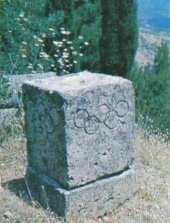
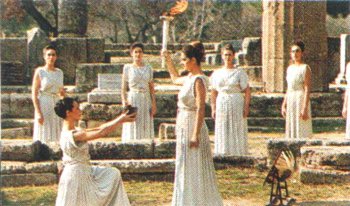 As symbol of the modern Olympics was used an image of five linked circles found on a monument in Olympia, symbolising the unity and cooperation between all continents. The Olympic Flame, symbol of Peace and Cooperation between nations and noble competition is lit in a ceremony in Olympia and then travels throughout most of the world to carry its message in all countries and it stops in the country that organises the Olympics. It stays lit all the days the event takes place as a reminder of the sacred character of the Games. Greece nowadays, through an active initiative of Georgos Papandreou, the present minister of Foreign Afairs in Greece, attempts to establish the institution of the Sacred Truce as well, an institution the Greeks feel it is vital for the true character of the Olympic Games. Hopefully all hostilities worldwide will stop during the Olympic Event.
[Click here for an official International Olympic Committee press release about the Truce]
|
| Mythology
|
 Pelops was the son of Tantalos and Dioni. Tantalos invited the gods to a feast and served up the flesh of his son to test their power of omniscience. The Gods realised that the meat served was human and avoided eating with the exception of Goddess Demeter who accidentally ate a piece of Pelops' shoulder because she was in a worry about the abduction of her daughter, Persephone, by Hades. Eventually, the gods reassembled Pelops' body and made a new shoulder from ivory. Tantalos was punished to eternal tantalising hunger and thirst. Fruit trees would rise their branches away from his reach and lakes and rivers would pull away their waters.
According to myth, which echoes a memory of historical events, after a few years and while he was an adult, Pelops, on his way from Lydia, defeated Oinomaos, King of Persia, in a chariot race. He claimed the hand of princess Hippodameia and subsequently ascended to the throne of Pisa, founding the dynasty of the Pelopids-Atreids. The entire peninsula was eventually named after him, the Peloponese (= Pelops' island).
Pelops was the son of Tantalos and Dioni. Tantalos invited the gods to a feast and served up the flesh of his son to test their power of omniscience. The Gods realised that the meat served was human and avoided eating with the exception of Goddess Demeter who accidentally ate a piece of Pelops' shoulder because she was in a worry about the abduction of her daughter, Persephone, by Hades. Eventually, the gods reassembled Pelops' body and made a new shoulder from ivory. Tantalos was punished to eternal tantalising hunger and thirst. Fruit trees would rise their branches away from his reach and lakes and rivers would pull away their waters.
According to myth, which echoes a memory of historical events, after a few years and while he was an adult, Pelops, on his way from Lydia, defeated Oinomaos, King of Persia, in a chariot race. He claimed the hand of princess Hippodameia and subsequently ascended to the throne of Pisa, founding the dynasty of the Pelopids-Atreids. The entire peninsula was eventually named after him, the Peloponese (= Pelops' island).
The ancient Greeks believed that the Olympian gods inaugurated the games at Olympia. Zeus defeated Cronos at wrestling, while Apollo beat Ares at boxing and Hermes at running. Myth relates that Heracles organized the first track events. He determined the site and size of the first stadium, established the first foot race and crowned the victor with a kotinos, a branch of wild olive from the tree he himself had panted at Olympia, after bringing it from the Hyperboreian islands, dwelling place of Apollo Hyperboreios. As a matter of fact winning an event in the Olympic games and wearing the Kotinos was an immense honour for a mortal, who was seen as equating with divinity in this way in frond of the Temple of Zeus, the God of Gods and Father of All. A winning athlete was so respected that his city would demolish a part of its walls at his return in sign of recognition of his athlos (= superhuman achievement).
|
|
|