BACK
(the Sacred Grove)
|
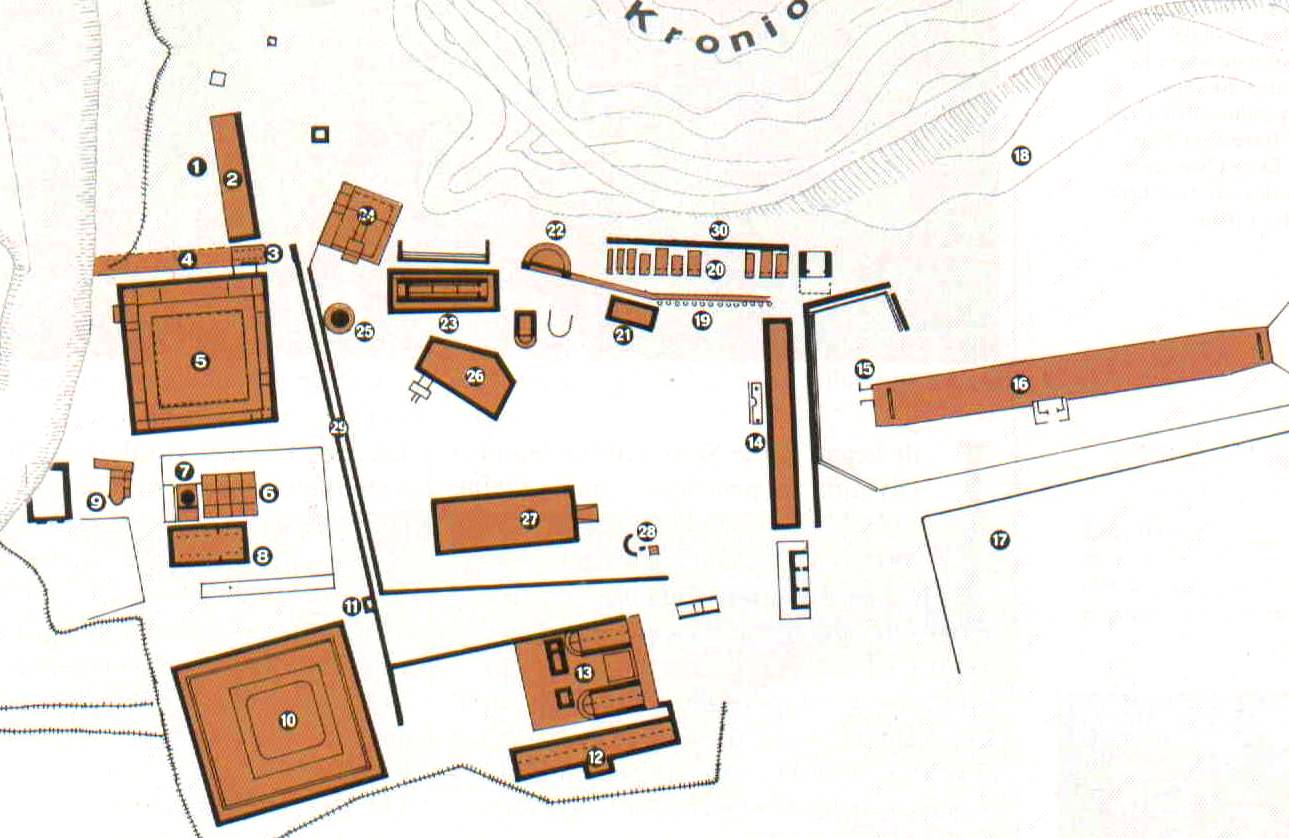
1. GYMNASIUM 2. EAST STOA OF GYMNASIUM 3. ENTRANCE TO GYMNASIUM 4. SOUTH STOA OF GYMNASIUM 5. PALAESTRA 6. THEEKOLEON (PRIESTS' RESIDENCE) 7. HEROON (ALTAR) 8. BYZANTINE CHURCH ORIGINALLY PHEIDIAS' WORKSHOP |
9. THERMAE (BATHS) 10. LEONIDAION (OFFICIAL GUEST-HOUSE) 11. SOUTH GATEWAY OF THE ALTIS 12. SOUTH STOA 13. BOULEUTERION (OLYMPIAN BOULE) 14. STOA OF ECHO 15. CRYPT |
16. STADIUM 17. HIPPODROME 18. NORTH EMBARKMENT 19. BASES OF STATUES OF ZEUS 20. TREASURIES 21. METROON 22. EXEDRA OF HERODES ATTICUS |
23. TEMPLE OF HERA (HERAION) 24. PRYTANEION 25. PHILIPPEION 26. PELOPION 27. TEMPLE OF ZEUS 28. BASE OF PAIONIOS' STATUE OF NIKE 29. WEST WALL 30. NORTH WALL |
|
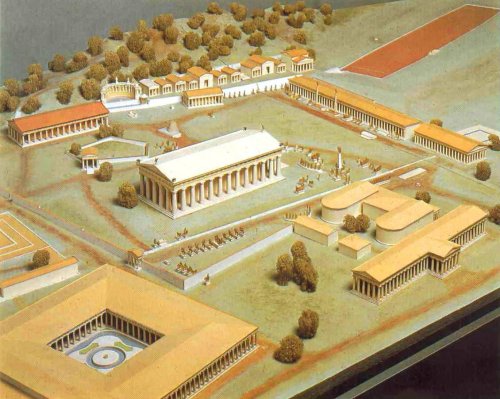
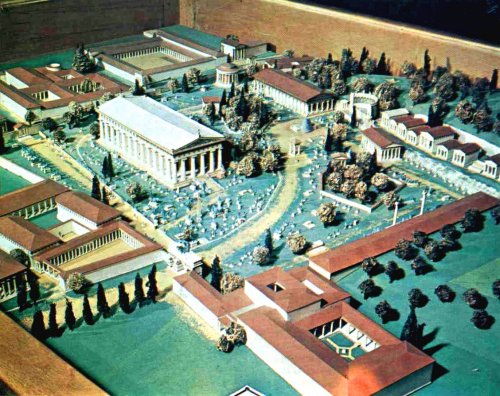
1. GYMNASIUM An open space surrounded by stoas on all four sides. Here athletes practised running when the weather was bad. It was built in the 2nd century BC while the monumental gateway with Corinthian columns between it and the Palaestra probably dates from the closing years of that century. BACK TO THE LIST |
|
5. PALAESTRA In Palaestra the athletes exercised in wrestling, boxing and jumping. A square building with peristyle court, it was located next to the Thermae (baths) close to the river Kladeos. It was including dressing-rooms, baths, exercising rooms and various other rooms especially made to be used for rhetoric or philosophic competitions and presentations. BACK TO THE LIST |
|
8. PHEIDIAS' WORKSHOP The famous sculpture workshop which was converted into an Early Christian basilica in the 5th century. This is where Pheidias built the gold and ivory statue of Zeus, kept in the temple of Zeus. BACK TO THE LIST |
|
10. LEONIDAION The largest building in Olympia erected in the 4th century BC. It was used as a guesthouse. BACK TO THE LIST |
|
13. BULETEUREON It was the basis of the Parliament of Ilia and the house of "ellanodikes", a body of judges responsible for the legal organisation of the games. In the tween buildings were also kept the archives of the games. In the yard there was the altar of the "Orkios Zeus", where the athletes were taking their oaths before the games. BACK TO THE LIST |
|
14. STOA OF ECHO It was a stoa 96,50 m long and 12,50 m wide with two roes of doric collumns in each side. It was called like that because the sound was thought to echo in there eight times before it fade away. It was also called "Poikili", due to the beautiful colorful decorations on its walls. BACK TO THE LIST |
|
16. STADIUM The stadium was the largest of its day with a capacity of 45.000 spectators and a track for foot races 192,27 m long. The stadium is now entered via the Crypt (Secret Entrance), avaulted roofed passage with Hellenistic propylon, constructed in Roman times. In the south side there is the "Vima", the seats of "ellanodikes", a group of judges, and right on the opossite side there is the altar of "Chamini Demeter", from which the higher priestess of the Goddess was watching the games. BACK TO THE LIST |
|
17. HIPPODROME The area whre the horse races took place. It was washed away by the waters of river Alpheios. BACK TO THE LIST |
|
20. TREASURIES Small edificies dedicated by the various city-states. The ruins of the Treasuries found had a porch (prostases) in the Doric order. BACK TO THE LIST |
|
21. METROON A Doric peripteral temple of the early 4th century BC dedicated to the "Mother of all Gods". BACK TO THE LIST |
|
23. TEMPLE OF HERA (HERAION) Earlier than that of Zeus, the temple of Hera is dated to 600 BC. It is peripteral as well in the Doric order. It was housing the statue of Goddess Hera siting in a throne and God Zeus standing wearing a helmet. In 1877 the statue of Hermes, a work of Praxiteles, was discovered in its cella. In the 2nd century BC was turned into a treasury keeping all the old valuables of the oracle. BACK TO THE LIST |
|
24. PRYTANEION In Prytaneion there was an internal square room where the iternal flame of Ilia was kept burning day and night. BACK TO THE LIST |
|
26. PELOPION A monument in honour of Pelops. Near it were originally taking place the chariot races which were the early version of the Olympic Games. The Pelopion was built in the middle of the sacred Altis, a wild olive grove thought to have been planted by the mythical hero Heracles. BACK TO THE LIST |
27. TEMPLE OF ZEUS It was built in 456 BC a lot after the temple of Hera and it was housing a magnificent statue of Zeus by Pheidias. The statue was 12,40 m high and it was made from gold and ivory. It was representing the mighty God Zeus sitting in a throne wearing a wrath of olive tree and holding Goddess Nike in his right hand and a sceptre with the image of an eagle in his left. His clothes and sandals were covered in gold and his face and skin was made from ivory. The throne was decorated with gold and precious stones and various sculptures representing mythological or heroic figures. In 267 AD the Eroules invade Ilia and the priests, in order to protect the temple and the statue, demolish most of the other buildings and they built a protective wall around the temple. In 293 AD, two years after the last Olympiad, the statue will be moved to Constantinople, the capital of the Byzantine Empire, and it well get destroyed by a fire. The temple itself will be burned in 426 AD with the order of Emperor Theodosius II and in 522 and 551 AD two terrible eartquakes will demolish it completely.
BACK TO THE LIST |