|
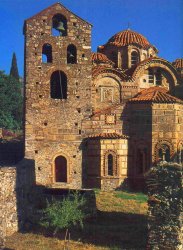 The story of Mistras begins in 1249 when the young Frank prince of Moreas, Billeardouin II, built
his castle on the side of the strangely shaped mountain of Mistras. At the same time, and while
in Europe a fierce war for power between East and West was taking place, the Byzantine lord of
the kingdom of Nikaia, Michael Palaiologos, was attempting to free Constantinople from the
crusaders. Eventually, ten years later fate brought these two men against each other.
Billeardouin became Palaiologos' prisoner and in exchange for his freedom he was forced to
surrender not only the castle of Mistras but all of the most strategic castles in Peloponnesos.
That was the time Mistras began to shape into the glorious Byzantine city we know today.
The story of Mistras begins in 1249 when the young Frank prince of Moreas, Billeardouin II, built
his castle on the side of the strangely shaped mountain of Mistras. At the same time, and while
in Europe a fierce war for power between East and West was taking place, the Byzantine lord of
the kingdom of Nikaia, Michael Palaiologos, was attempting to free Constantinople from the
crusaders. Eventually, ten years later fate brought these two men against each other.
Billeardouin became Palaiologos' prisoner and in exchange for his freedom he was forced to
surrender not only the castle of Mistras but all of the most strategic castles in Peloponnesos.
That was the time Mistras began to shape into the glorious Byzantine city we know today.
Gradually the people from the neighbouring areas would 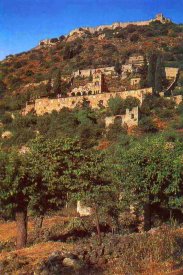 move near Mistras and built their houses
next to the castle for safety. This gathering of people was so intense that the walls of Mistras
had to be expanded twice to include all the new settlements. In 1308 both the generals of the
castle, Palaiologos and Kantakouzinos, will take the title of the permanent governor. A few
decades later Mistras will become the capital of Peloponnesos and it will have a life lord named
"despotes". The capital itself was the "Despotatto of Moreas", a city of power and
glory that would defend Peloponnesos from Slabs, Franks, Albanians, and many more attacking
tribes. That was the time the city would be decorated with a large number of churches, palaces
and luxurious buildings. It would become a cultural and political centre for the Byzantine Empire
and would attract artists, poets and scholars who would join the court of the despots. move near Mistras and built their houses
next to the castle for safety. This gathering of people was so intense that the walls of Mistras
had to be expanded twice to include all the new settlements. In 1308 both the generals of the
castle, Palaiologos and Kantakouzinos, will take the title of the permanent governor. A few
decades later Mistras will become the capital of Peloponnesos and it will have a life lord named
"despotes". The capital itself was the "Despotatto of Moreas", a city of power and
glory that would defend Peloponnesos from Slabs, Franks, Albanians, and many more attacking
tribes. That was the time the city would be decorated with a large number of churches, palaces
and luxurious buildings. It would become a cultural and political centre for the Byzantine Empire
and would attract artists, poets and scholars who would join the court of the despots.
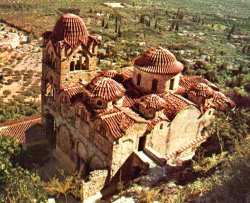 Of course this golden city could not enjoy its prosperity for ever. In 1460 Mistras falls to the
hands of the Ottomans. It will become the basis of the Pasha until 1687. During the Greek
struggle for independence Mistras will participate actively but it will pay the price. For ten
years the Turks will burn, steal and destroy the city. The people were continually slaughtered
and from 42.000 in 1770 will diminish only to 8.000 after these ten years. In 1825 it will end up
in flames again from the Egyptian army and the people move gradually to the new built city of
Sparta living behind old houses and ruins of once glorious palaces among which the palace of
Palaiologi. In 1950 the whole city became a museum and today the visitor can walk in the dead streets
admiring the architecture, the frescoes in the churches and reliving in
imagination the time when the city was alive and vibrant, the proud "Despotato of Moreas".
Of course this golden city could not enjoy its prosperity for ever. In 1460 Mistras falls to the
hands of the Ottomans. It will become the basis of the Pasha until 1687. During the Greek
struggle for independence Mistras will participate actively but it will pay the price. For ten
years the Turks will burn, steal and destroy the city. The people were continually slaughtered
and from 42.000 in 1770 will diminish only to 8.000 after these ten years. In 1825 it will end up
in flames again from the Egyptian army and the people move gradually to the new built city of
Sparta living behind old houses and ruins of once glorious palaces among which the palace of
Palaiologi. In 1950 the whole city became a museum and today the visitor can walk in the dead streets
admiring the architecture, the frescoes in the churches and reliving in
imagination the time when the city was alive and vibrant, the proud "Despotato of Moreas".
|