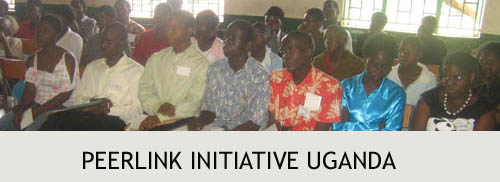
PEERLINK INITIATIVE UGANDA (PELI-U)
PROGRESS REPORT
Country: Uganda .
Area of Operation: Kampala and Rukungiri District.
Coordination Office: Kampala , Bukoto - Kisaasi Road , Bukoto Sunrise Supermarket Close.
Field Office: Kahumiro Village , Nyarushanje Subcounty , Rubabo County , Rukungiri District.
Organization Profile
PeerLink Initiative (PELI-U) is a not-for profit, non-governmental Organization concerned with the plight of the Youths. PELI-U was started in 2003 by teachers and students of Namilyango College as a school based HIV/AIDS programme involving Namilyango College , St. Peter's Nsambya Secondary School and St. Peter's Secondary School Nyarushanje in 3 districts of Uganda ( Kampala , Mukono and Rukungiri). As a result of the experience attained in the schools and the community, PELI-U was transformed into an NGO in 2005. PELI-U targets rural and urban out of school youths and school going youths aged 12-25.
PELI undertakes three broad programs, namely Youth Reproductive Health Program, Sustainable Livelihoods Program and Environmental Protection Program. PELI –U collaborates with existing structures such as the family, education institutions and religious institutions to promote youth participation in the programs. The organization works in close collaboration with the youths, teachers, parents/guardians and community leaders.
Vision
Empowered and healthy youth participating actively in reproductive health, sustainable livelihoods and environmental protection activities
Mission
To promote the health of the youths and enhance their contribution towards preservation of the environment.
Objectives of the organization
• To empower the youth with appropriate reproductive health knowledge, skills and attitudes for a productive and responsible life.
• To promote active youth participation in income generating activities and preservation of the environment for better livelihoods.
• To strengthen partnerships between youth and parents/ guardians/ teachers for sustainable youth interventions.
• To promote cultural preservation for identity and socio-economic development.
• To tap and develop the talents of the youth for self reliance.
• To integrate the use of Information Communication Technologies into organizational programs.
Reproductive Health Program
Projects
• PeerLink HIV/AIDS Project
This is a youth project that was implemented in 2004-2005 in three secondary schools namely: Namilyango College , Mukono District ( Central Uganda ), St. Peters ' Nsambya Secondary School , Kampala District ( Central Uganda ) and St. Peters ' Secondary School Nyarushanje, Rukungiri District (South Western Uganda). The project brought together young people and equipped them with knowledge, skills and attitudes about HIV/AIDS.
Objectives of the project
The major goal of the Project is to link the rural and urban youth and create a platform for information sharing and active involvement of the youths in HIV/AIDS prevention and management.
Specific objectives
• Link up and involve youths in addressing HIV/AIDS issues.
• Sensitization of the youths on HIV/AIDS as a way of minimizing further spread.
• Creation of an open discussion forum between the youths and parents/guardians on HIV/AIDS related issues.
• Encourage the use of Information Communication Technology in addressing HIV/AIDS.
Achievements
185 students participating directly in PeerLink HIV/AIDS Project
8 teachers actively involved in facilitating PeerLink HIV/AIDS Project student participants.
100 students trained in Ms. Word, Ms Excel, Ms power point internet and alpha smart keyboard use.
Improved communication between the youth and their parents/guardians
Close collaboration between participating students and the facilitating teachers.
• attending a one day dissemination workshop
Life Skills and HIV/AIDS Education Workshops for the Youth
These workshops took place in December 2007 (in Kampala ) and May 2008 (in Nyarushanje Rukungiri District) with an aim of bringing together the youth to discuss sexual reproductive health issues and HIV/AIDS concerns among the youth.
Workshops objectives include
• Address the sexual reproductive health issues faced by the youth in an HIV/AIDS era.
• To highlight the challenges faced by the youth in an HIV/AIDS era.
• To empower the youth with knowledge and skills to help them cope with challenges faced as they grow up and HIV/AIDS.
• To strengthen networking among the youth and enhance youth participation in HIV/AIDS prevention, care and support and mitigation of the impacts of HIV/AIDS.
Achievements
210 youth actively participated in the workshops
It brought on board many community stakeholders (health personnel, community development officers, Peace Corps volunteers and other NGOs)
Teen Moms Support Project
Teen Moms Support Project seeks to economically and socially empower teen moms with knowledge and skills to enable them cope with the challenges posed by teen motherhood in an era of HIV/AIDS. In this project Teen Moms receive training in art and crafts materials production and in maternal child health care (early child care and development, hygiene, nutrition, immunization, family planning), parenting skills, life skills, HIV/AIDS and improving teen moms' lives through involvement in income generating activities and alternative education.
Objectives of the Project
- To empower teen moms with life skills that will help in managing HIV/AIDS and teen motherhood related situations.
- To empower teen moms with skills that will help them come up with income generating activities to improve their livelihoods.
- To sensitize community stakeholders about the plight of teen moms and strengthen their involvement in related initiatives.
• To create a platform through which teen moms can speak out, share ideas, experiences and get support.
Achievements
• 50 Teen Moms have been selected to participate in the project.
• 50 Teen Moms are undergoing training in local art and crafts materials making under instruction of community based artisans.
• A workspace shelter has been constructed with support from Teen Moms and youth.
• A Community Based Project Committee of 9 has been formed to help in mobilization, discipline and guidance issues.
Sustainable Livelihoods Program
Art and Crafts Skills Development Project for Youth
Project Description: Art and Craft Skills Development project seeks to revive/promote skills development in African Art and Crafts by linking up the youths with community based artists. This will be done in close collaboration with community based artisans to be identified/selected by the community selection committee
Objectives of the project
General Objective: To equip the youths with knowledge and skills to enable them produce art and crafts materials.
Specific objectives:
- To revive African art and craft skills development among the youths in Rukungiri.
- To enhance the youths ability to create income generating activities to improve their livelihood and national development.
- To promote appreciation and preservation of African cultural heritage.
- To tap indigenous knowledge and skills for sustainable environment and for economic growth.
- To empower the youths with life skills that will help them cope with the different patterns of HIV/AIDS epidemic.
Expected Out puts
- 60 youths equipped with skills in art and crafts making.
- Revived African art and crafts culture among the youths and community based artisans.
- 60 youths trained in life skills
- Established African Art and Crafts Youth Club promoting youth involvement/participation in art and crafts making and a platform for networking.
- Increased utilization of art and crafts materials at community level.
- A designed website highlighting project activities, products and participa
This project is still seeking partners for financial and material support.
Voices of Hope Project
The project targets rural and urban vulnerable youth. The project will use theatre for development to equip the youth with skills and knowledge that can help them cope with ups and downs of growing up in an HIV/AIDS era. The project entails engaging the youth in composing and producing artistic pieces in form of music, dance and drama. The participating youth will pass on HIV/AIDS prevention, care, and support and mitigation messages on to their peers both in school and in the community.
General Objective
• The main objective of the project is to promote youth participation in HIV/AIDS and sexual reproductive health interventions through utilization of theatre for development.
Specific Objectives .
• To tap the talents of the youths and promote adolescent sexual reproduction awareness through the use of music, dance and drama.
• To empower the youths with knowledge and skills to help them in handling challenges posed by adolescence reproductive health.
• To promote the use of theatre for development as an income generating activity for the youth.
• To arouse community support and involvement in youth activities by highlighting their needs and problems through the use of music, dance and drama.
• To create a platform through which the youth can share ideas, speak out and strengthen networking.
It is expected that by the end of the project theatre pieces developed and produced by participating youth, 50 youths trained in life skills and HIV/AIDS education,1 established youth drama club and 4 dissemination shows will be held.
Expected Out put
- Theatre pieces developed and produced.
- 50 youths trained in life skills and HIV/AIDS education.
- HIV/AIDS prevention and management messages developed, produced and disseminated.
- 1 Established drama club
- 3 Dissemination seminars
- Enhanced positive behavioral change and moral rehabilitation
- Empowered youths capable of developing and conveying messages of positive behavior change and using drama in raising funds to sustain the project and later raise funds for similar future projects. ( This project is still seeking partners for financial and material support).
YOUTH ENTREPRENEURSHIP PROJECT
This project seeks to mobilise the youth and equip them with entrepreneurship skills and attitudes to enable them engage in productive commercial activities. This will be done through general entrepreneurship training, specific business/ project training field follow up, exposure visits, micro-project support and networking.
Goal
To develop the capacity of the youth and the community towards an improved and sustainable socio-economic status.
General Objectives
• To equip rural youth with appropriate skills, knowledge and attitudes for productive self employment.
• To improve production in the rural sector so as to curb youth rural urban migration.
• To increase the incomes of the rural poor and have more money in the rural economy.
• To create a platform through which the youth can network on development programs.
Specific Objectives
• To develop and produce and entrepreneurship training manual.
• To train 150 youth in entrepreneurship skills.
• To facilitate formation of 75 youth groups and projects.
• Strengthen the technical capacity of PELI-U to community projects.
Environmental Protection Program
Youth in Environmental Protection Project (YEPP)
Youth in Environmental Protection Project (YEPP) targets 160 youth (100 at household level and 60 at school level). Participants work in close collaboration with their parents/guardians, teachers, PELI-U staff. The project entails engaging participants in environment protection activities and helping them to develop attitudes, acquire skills and knowledge in environmentally friendly techniques. Project participants have been trained in environmental protection practices such as tree planting, fruit growing, vegetable growing and making of racks and bathroom for improved sanitation and hygiene.
This project is under implementation piloted in Ibanda Parish, Nyarushanje Sub-county , Rukungiri District.
Objective
(i) To support and facilitate youth participation in environmental protection measures.
(ii) To promote conservation strategies with much emphasis on youths' livelihoods and environmental protection.
(iii) To build capacity of youths, parents/guardians and teachers to enable them to act in the interest of a healthier environment
(iv) To enhance cooperation between youths and parents/guardians/teachers with respect to environmental protection efforts.
(v) To strengthen the organizational technical capacity of PELI (U) to provide sustainable quality services.
Achievements
A community based project committee is in place.
Identification and selection of 160 youths are participating in the project.
160 youth have received training in environmental protection practices.
160 youth have prepared compost manure and are planting trees, fruits and vegetables at household and school level.
Office Establishment and policy document making 2006 – 2007
PeerLink Initiative Uganda (PELI-U) has a Head office in Kampala and a field office has been set up in Kahumiro Village , Nyarushanje Subcounty , Rubabo County , Rukungiri District. Policy documents are in place and legal registration status as a non-governmental no S.5914/6849 was acquired from Non Governmental Organization Board under Ministry of Internal affairs in Uganda .
Research and Consultancy
PELI-U staff have participated in research and consultancy work and the funds raised facilitate in running the organization. PELI-U staff has participated in the following:
• Lead facilitators life skills and HIV/AIDS training workshops for Single Teenage Mothers of Ndejje Parish, Makindye Sub-county , Wakiso District December, January and February).
• Team leader baseline survey for Family Strengthening Program (FSP) SOS Uganda (Kakiri) May 2006.
• Lead facilitator Gender and HIV/AIDS Training organized by Centre for Development Research Network 2007.
• Facilitator Gender in Water and Sanitation organized by Plan International for Kawempe Program Area Community Members 2007.
• Lead facilitator Parenting Skills Training for Parents/Guardians beneficiaries of Family Strengthening Program SOS Uganda (Kakiri), Lubbe and Nakyerongosa parishes May, June 2007).
• Facilitator for Children's Rights training for Family Strengthening Program Staff, parents/guardians SOS Kakiri, 2007.
• Facilitator Training on Child-Child Approach to Learning and Development for Kawempe Muslim Primary School organized by Plan International Uganda 2006.
• Part of the Monitoring and Evaluation team for Breaking the Silence on HIV/AIDS Project implemented by Plan International Uganda in Primary Schools in Kamuli, Luweero, Kampala and Tororo District 2006.
• Facilitator training for Maternal Child Health Care Training for Village Health Team Members in Kawempe Plan Program Area 2006.
Funding for Activities
• PELI-U has received an individual contribution from William Wright which was used to implement the Pilot School based HIV/AIDS Project in 2004 – 2005
• Members have make contributions through membership fee and annual subscription.
• PELI-U promoters contributions help to facilitate the various activities.
-
Contributions from friends and well-wishers both at home and abroad
• Local Community contribution in form of land, time and labor.
• Voluntary services rendered by members.
• The organization also raises funds through conducting consultancies in training and research for other organizations.
- We have written project proposals and hope to get funding from local and international funding agencies.
Our Strength
• We have a committed executive committee that oversees guides and monitors implementation of program activities and makes financial contribution to the organization activities.
• PeerLink Initiative Uganda (PELI-U) has a committed, experienced multi-skilled team of members who are working as volunteers.
• Support from the community members who are helping with mobilization.
• Good will and support from local leaders.
• Experience of working with the youth.
• Capacity to mobilize the beneficiaries.
• A clear organisation structure.
• Potential to network with other partner organizations.
Challenges
• Donor fatigue and unpredictable change of policies.
• Increasing fake/briefcase non governmental organizations that taint the image of development workers.
• Tendency to be overshadowed by national long-time established non governmental organizations which are mostly preferred by funding agencies
• Meeting high expectations of the participants and community members.
Problems
• Inadequate funds to facilitate implementation of projects.
• Lack of transport to coordinate organizational work.
• Poor communication network in rural settings.
• Lack of electricity in the rural program area.
• Inadequate equipment.
- Lack of funds to facilitate institutional development.
News Updates
PeerLink Initiative Uganda (PELI-U)
P.O. Box 34625
Kampala
Uganda East Africa
Phone: 256-782-728243/256-712-849617/ 256-414-661992
Physical Address:
BUKOTO- KISAASI ROAD NEAR SUNRISE SUPERMARKET
Email: [email protected]
