| PBGVs With Other Pets Can they really get along? |
 |
 |
| Important things to consider if you have other pets in your home and want to add a PBGV |
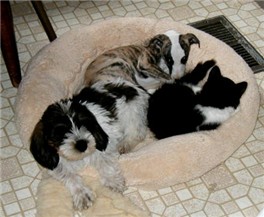
| Snuggle buddies |
| Social Butterflies or Not? In general, the PBGV is a very happy, social, outgoing and friendly breed, but you must never forget that he was bred for a purpose other than gracing your sofa and keeping you in stitches with his clever antics First and foremost, he is a scent hound who was developed to hunt small game (primarily rabbits and hare) in very rough and difficult terrain. His physical structure and his temperament are a direct result of precise selection of traits that best enable him to perform that task. The end result is a moderately small dog who is hardy, energetic, alert, bold and determined, extremely agile and a very intelligent hunter who will generally work cooperatively in small packs. He is usually willing to please but is never subservient. Leader of the Pack As with any pack-type hound, dominance can sometimes be an issue with a PBGV. They typically get on well with most other breeds, but they will never allow themselves to be bullied or pushed around by other dogs, no matter the size of the bully. Unless an individual PBGV has a exceptionally dominant personality, he is usually quite content being just another member of the family. But remember, when constantly pushed or bullied, he will defend himself with vigor! |
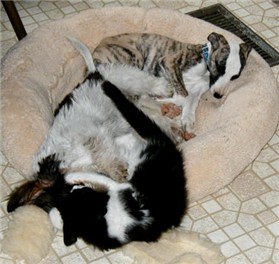 |
| A friendly scuffle |
| Breeds who are scrappy by nature are not generally good housemates for a PBGV, as he will only tolerate so much. Another inappropriate friend for your PBGV is any very tiny, nervous, or flighty dog. PBGVs can be rambunctious and can easily overwhelm toy breeds. Likewise, a very large dog with a domineering or selfish-type personality and resource-guarding tendencies would probaby not develop a harmonious relationship with a PBGV. On the other hand, large docile breeds can be perfectly suited to living with PBGVs. The Cat Once again, our pictures speak for themselves! PBGVs and cats who are raised together can become best of friends, even cuddling up together on a cold winter's night. |
| Many homes having adult cats who had never lived with a dog, and who were not particularly dog-savvy, have successfully incorportated PBGVs into their family structure. Again, the key to success is careful preparation and taking a slow, gradual approach. With a helping hand from you, Mother Nature generally works out any differences between a dog and a cat.. Cats are well-equipped to make a dog aware of their boundaries, and most dogs learn to respect cats with no trouble at all. However, you should never simply let them work this out for themselves. An angry or frightened cat's claws can be exceedingly dangerous to the dog's eyes, so you'll need to be watchful when first introducing the two, to be sure the dog is not injured. Additionally, you should be prepared to provide a "safe place" for the cat until he adjusts to having a dog in the home. Once a cat and a PBGV have entered into a friendship, it's not uncommon for them to routinely play together and even sleep side by side. Our PBGV Lifeline adoption facilitators will always be available to advise and assist you with any problems. |
 |
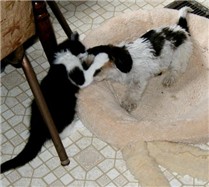 |
| Payback! |
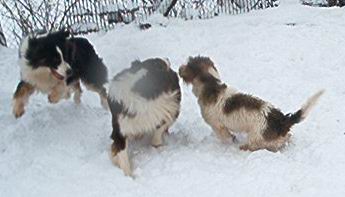
| Dashing through the snow |
| Final Thoughts Any time a new pet is introduced into an established household, a period of adjustment is to be expected. Before making that final decision to add a PBGV into the mix, you should thoughtully and carefully consider the current relationship between your existing pets, as well as, making an honest assessement of their personalities and individual comfort zones. After all, their home and routines will be at least temporarily disrupted if you adopt another pet. |
 |
 |