
Name: Corina Tamas
Nationality: Romanian
Previous diving experience: has been part of several programs about diving in Discovery Channel (yeah, watching them!)
The first day of the trip we arrived at the Jogasaki-kaigan station after a train ride that took nearly three hours (it's worth to say that we started our journey just after 6a.m.), and it was basically a day marked by a constant shower. Once in P-fish we arranged our baggage (yeah, quite a lot of it!) and signed all the waivers, and finally we were able to set for the pool, to complete the evaluations and studying the necessary skills for thursday and friday dives.
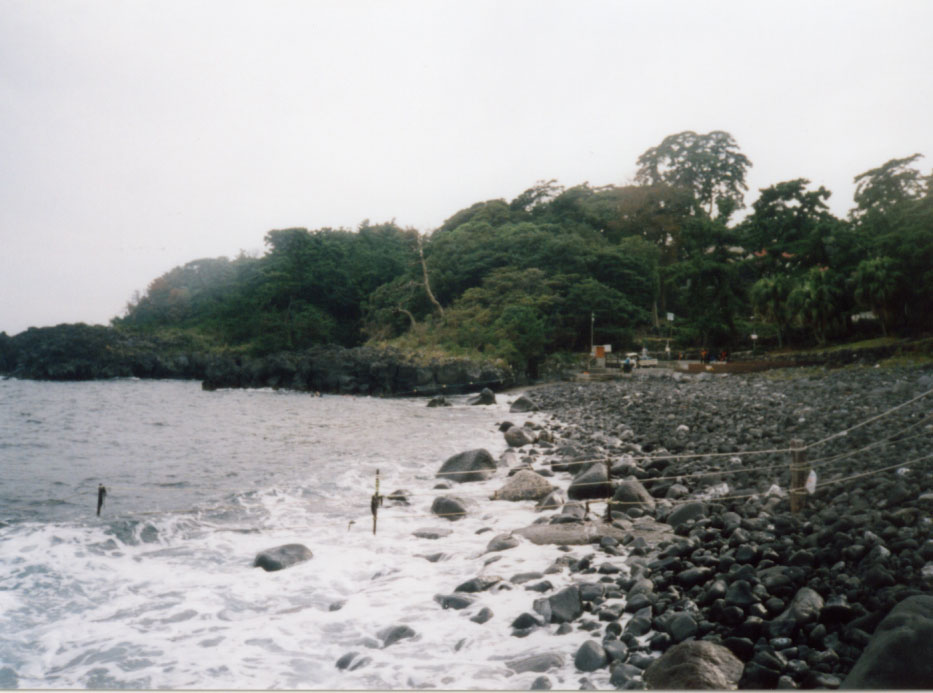
The wind and waves were hitting strongly the beach of Kayo koen (marine park), while the shower kept on going, becoming from time to time stronger but not less cold... Now, we've said that the summer of 2003, so well known in Europe because of its strength, was reckoned in Japan as one of the coldest in the last 10 years; and this translated inmediatelly (for our grief) into an almost frozen pool: 16 degrees C, that enhanced by the wind, kept us wandering about when the penguins and polar bears were comming!
Fortunately, japanese people like hot water as you can't imagine, and we had a zig-zag practice: hot shower - skill in the pool - hot shower - next skill - hot shower. Thanks God (and the dry practice we did before the trip), Corina mastered the skills so fast, that we were able to escape that fridge.
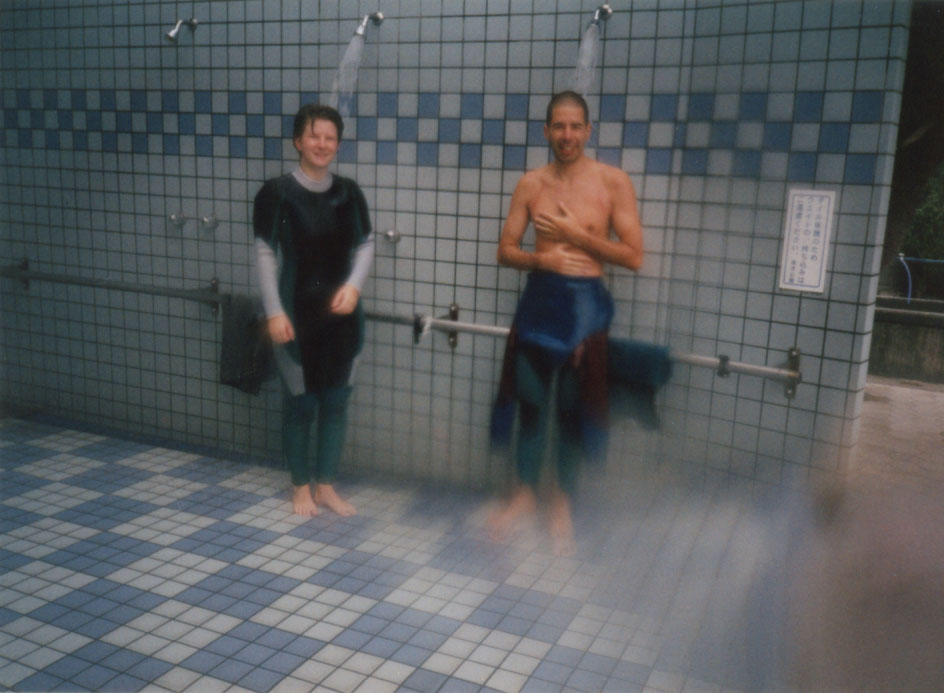
Although it was cloudy, thursday wasn't rainy either (that's a good progress) and the wind was completely absent. Kayo koen is a nice place, but open to the sea as it is, it's quite prone to the sea state: even a mild wind can make wave strong enough to make you cancel your dive; but fortunately that wasn't the
The original plan was to complete three dives to review the techniques learnt in the pool, and work out some new skills. The first new technique to be mastered was --you guessed it-- the shore entry, through the surf zone (you'll get surprised if I say that about 70% of the diving in Japan is shore diving --at least in Honshu--, and you'll get even more surprised if I tell you the price of a boat dive!). The entry itself wasn't a big deal, not difficult nor risky, but if this is your first time facing a surf zone with a scuba equipment in you back, then the anxiety is allowed. And that was exactly what Corina had.
The entry was uneventful, and Corina's 5mm wetsuit and my 4.5mm (trick: 3mm wetsuit plus 1.5mm vest) were enough for the water temp (76F). Being it the first dive, we needed a patch of sand to make our skill review, but finding a sandy partch proved a difficult task. There was a big sandy patch, indeed, but it is at 50ft depth, what can be translated as "there was no patch". We decided to head south, looking for a shallower one, but topography and geology weren't in our team.
Kayo koen was formed several centuries ago, when a close volcano (yes, Japan is crowded with volcanos) erupted, sending rivers of lava that solified once they entered the sea. This left some singular features: rocky shores, followed by dendrite-like steep rocky bottoms, usually located over the original sandy shore, very much deeper. The substrate of rock is house for a huge amount of fauna. But be carefull: "rocky bottom" is not to be confused with other rocky bottoms we've seen in Gorgona or Choco... Since it is solidified magma, it doesn't feature the huge amount of crevices that feature our differently origined bottoms, and the general landscape that it offers is plenty of subaquatic canions and valleys
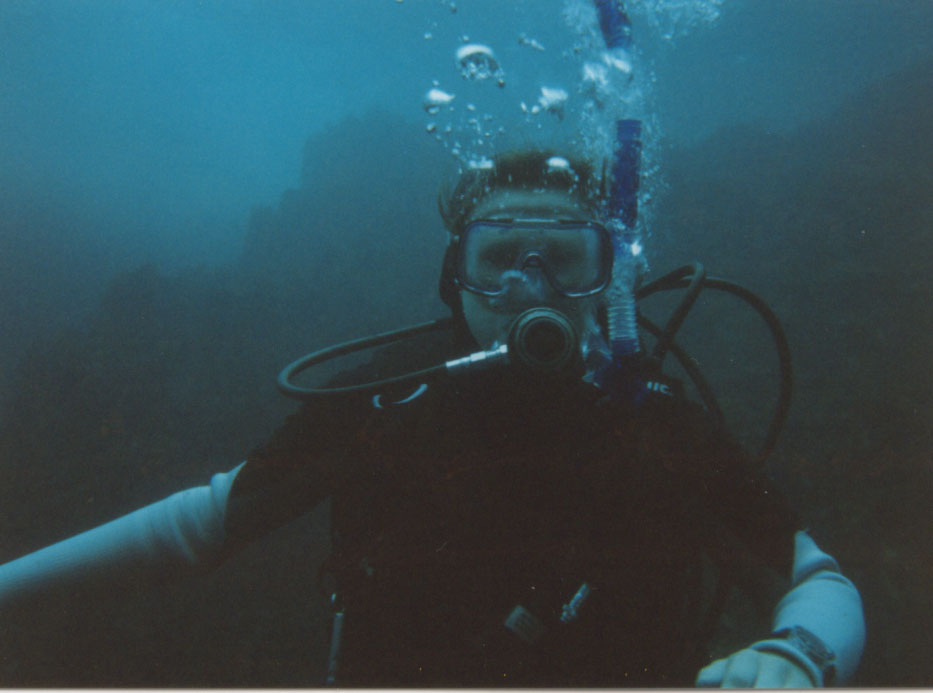
Perhaps because of the cold and the anxiety caused by not finding the now famous "sandy patch", Corina experienced a little of difficulty in equalizing her right ear, what finally
But after some review, rehersal and chat --and of course, a good dose of warm shower!--, we managed to locate the origins of anxiety, and less that two hours later we were ready to start our second dive.
The second dive was in the same place (well, it's big enough to dive it many times without being twice in the same place!), called Ichi no ne (First stone), and it was much better than the first one. Not only Corina had a much better control of her anxiety and buoyancy, but also there were much more things to see. We dove to 42ft for 35 minutes, and even when we were doing the skill review (you guessed! we found a mini-sandy patch!) we saw many crabs between the rocks, accompanied by a great number of cleaning shrimps.
The next day was characterized by the nostalgia previous to departure, that every last-day-of-the-trip produces; a shy sun and the practical absense of wind. With this relative warmth and smaller waves, the quality of friday's dives was guaranteed.
Friday's first dive was the "deep", in it Corina would visit tha maximum depth she is permited to reach by now: 60ft. Efectively, we registered 57ft for 41 minutes, we navigated in direction of
Many interesting things appeared into the dive, many morray eels close to the sand, more crabs hidden in the rocks, a clownfish (I'll tell you about it later) and mainly an excelent performance of our protagonist. Excelent bouyancy control, and a really good dive in general.
I also learnt that the rocks of volcanic origin can induce a great deviation in diving compasses, in this particular dive I measured deviations well in excess of 30 degrees when I apporached certain rocks. The effect dissipated once I ascended some feet, or moved away from them. For the peace of mind of those suspicious: no, we didn't get lost!
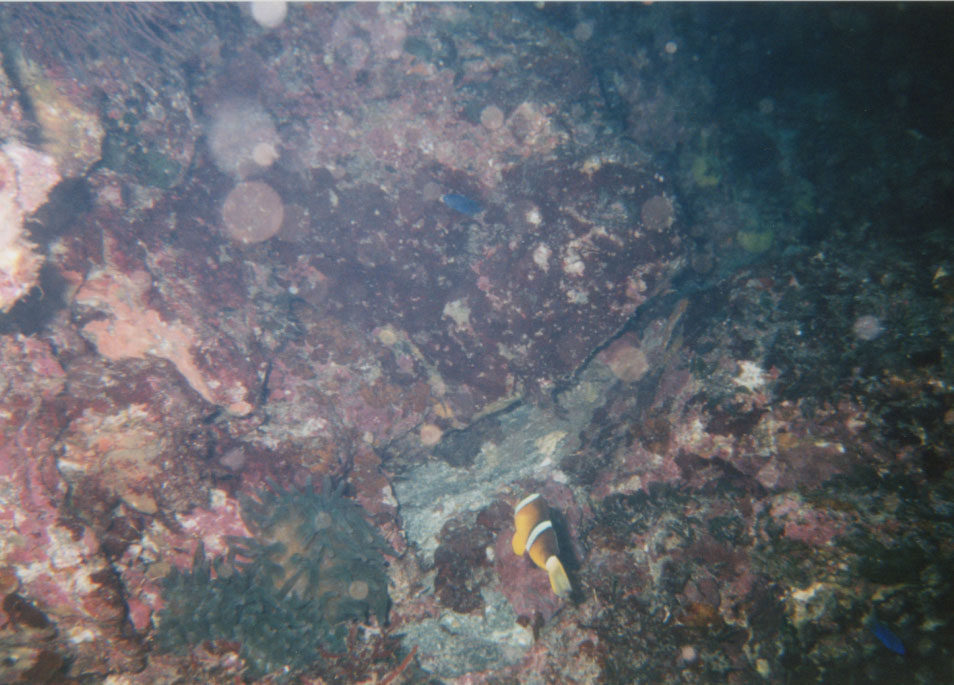
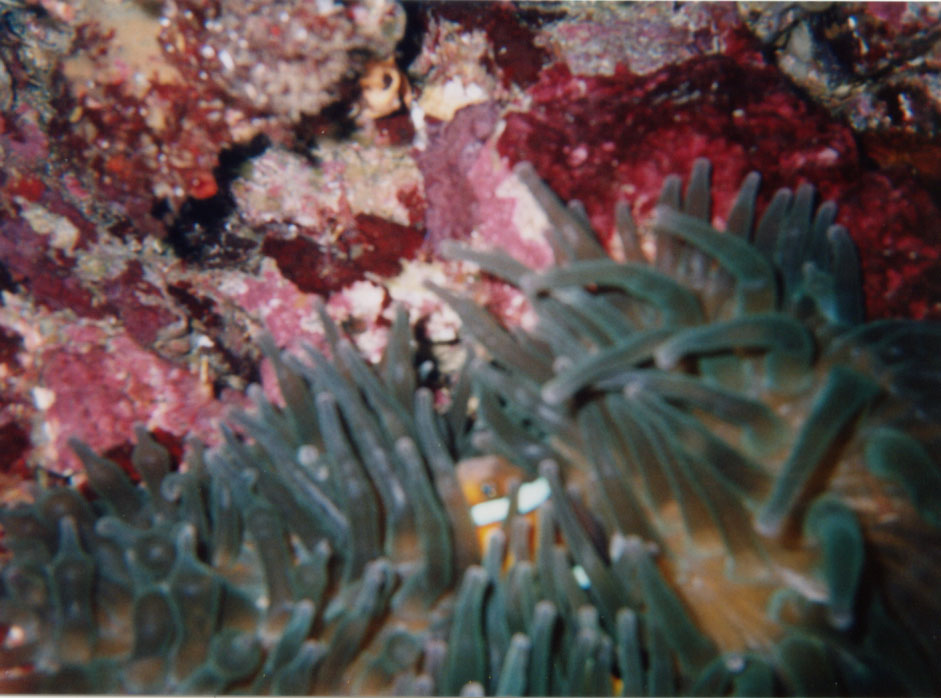
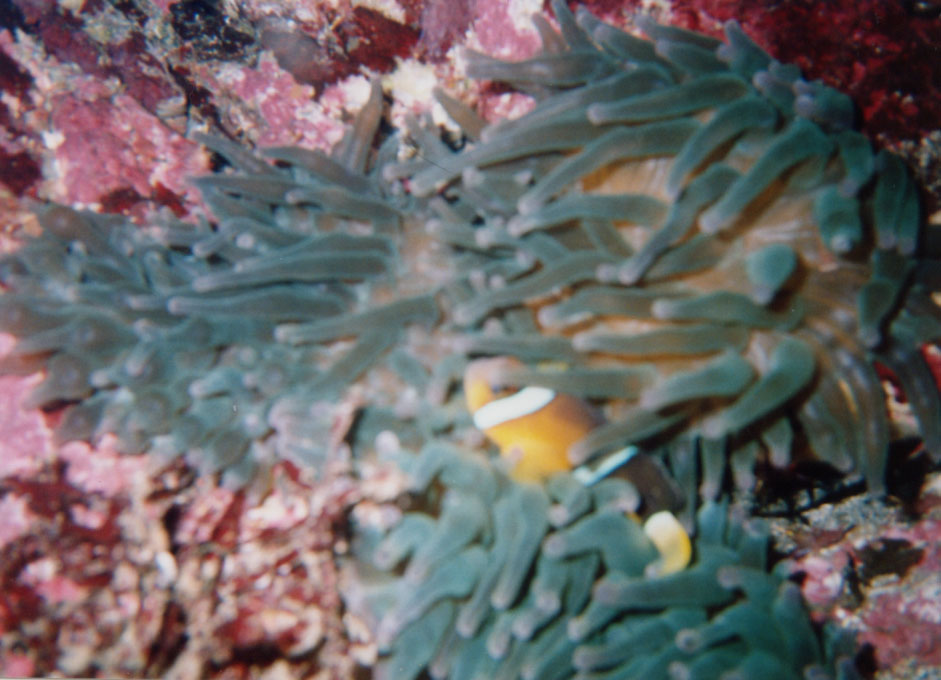
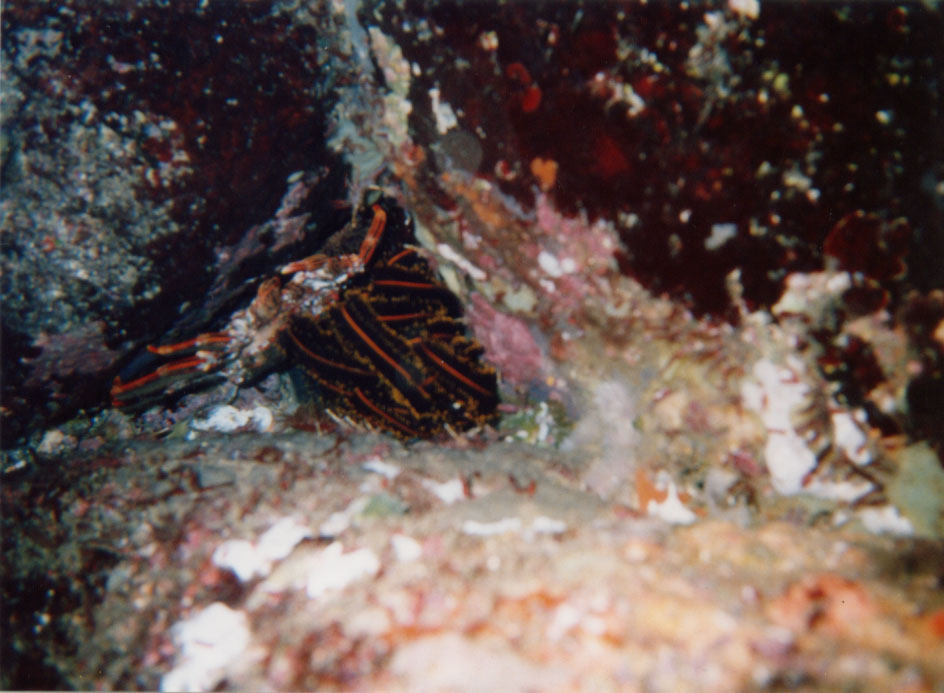
But as the saying goes, try to strike a happy medium! It seems I didn't try (but I swear I tried!), and the results are overwelming: the last two photos were so close that they're anything but sharp or centered, but about "centering photos" we better give space apart. The most important thing is that we saw one of the most beautiful critters that populate the sea (not near Colombia, waht a pity!) and that I took it on film, even though I must reckon that I have a lot to learn in terms of photography.
But if I need to become more able with my camera and learn to take better photos, there's a person I know that is not behind!
But as the Master said, it's necessary to look into one's own eye's planck before looking to the other's speck...
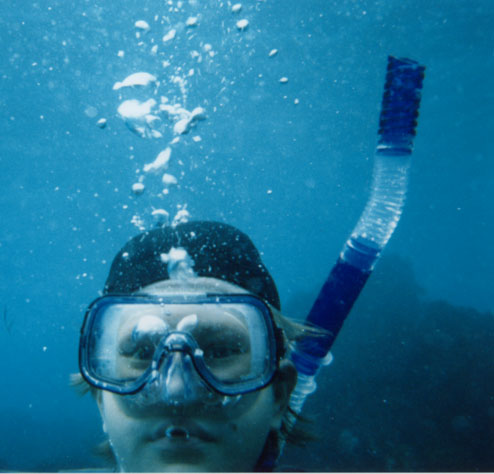
But there are some good photos also, I didn't came to write a page to let you make fun of our ability taking photos!
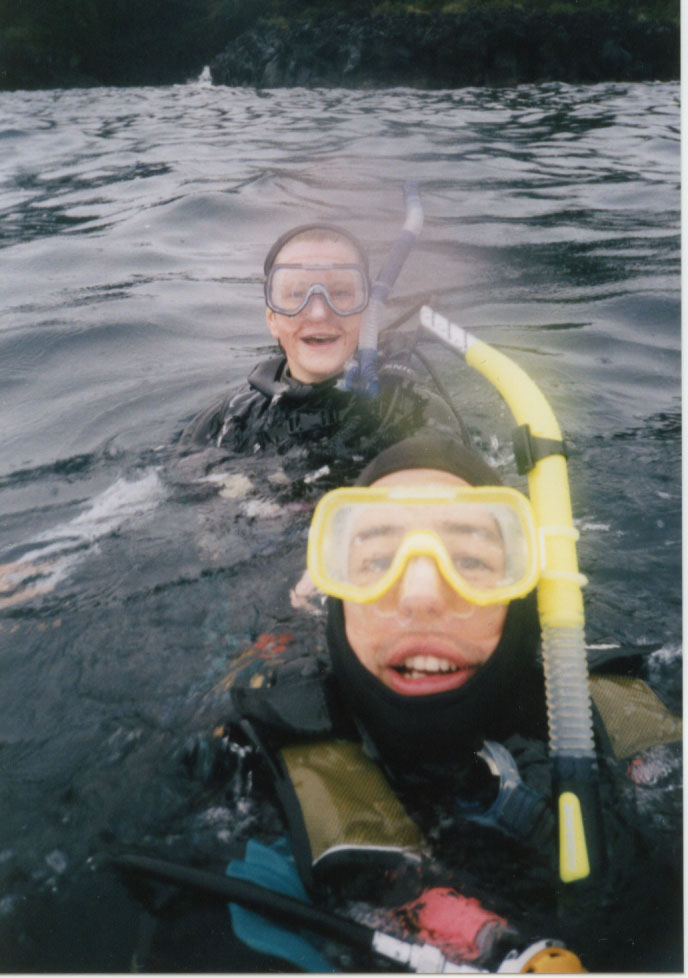
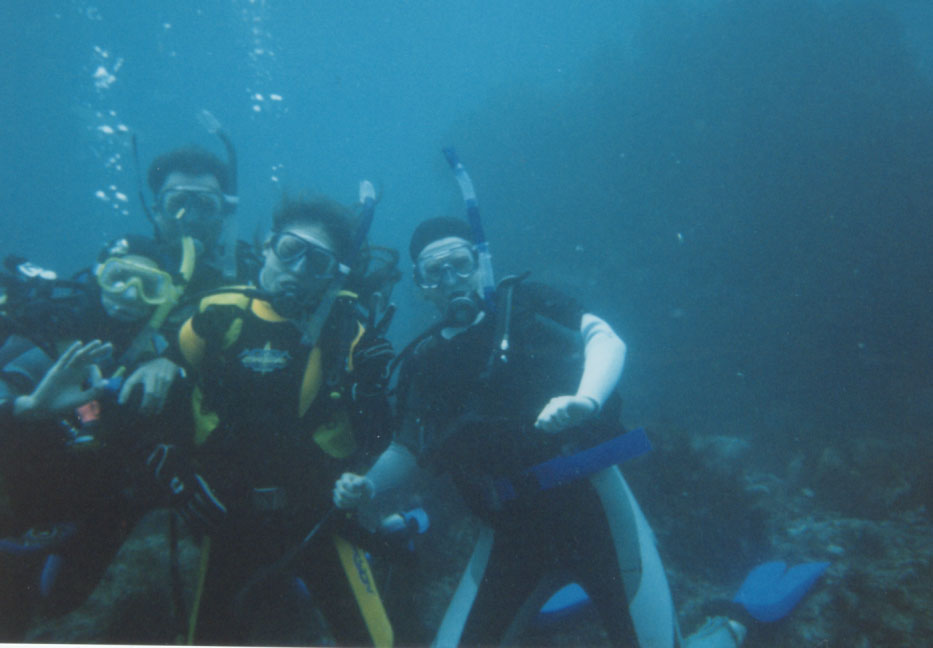
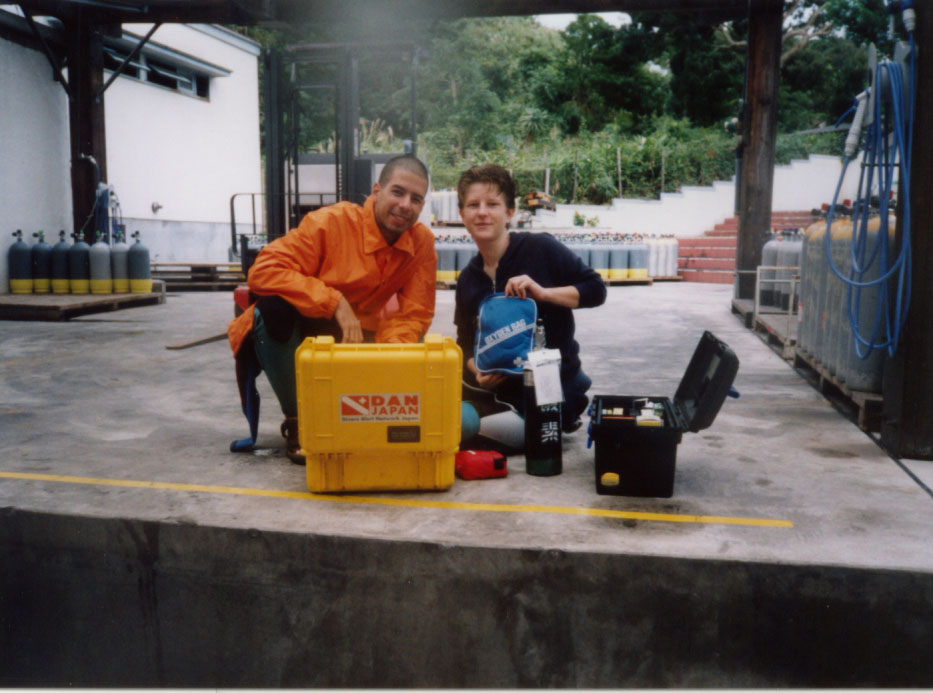
We had very pleasant and --most important-- safe dives.
Now we can count a new member of the PavoDive group, a new customer at Los Buzos, a new ambassador to Romania of the "quality through education" of NAUI, and a new buddy in our pourpose of keeping the oceans clean and divable.
Instructor NAUI
Yokohama, november, 2003