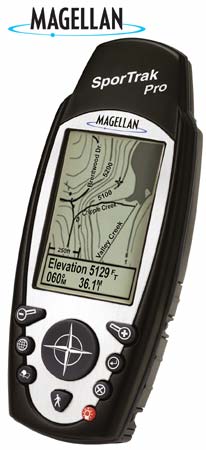
Geocaching is a relatively modern hobby in which its participants use a GPS (Global Positioning System) receiver such as the one pictured at right to navigate themselves to a "cache." The cache is most commonly a small treasure trove of inexpensive trinkets placed in some sort of container and hidden in a public place, or some physical point of interest such as a landmark or a historic site/marker. The map coordinates for the cache are available on websites dedicated to the hobby, and the geocacher uses his or her GPS receiver (which uses satellites to calculate where you are on the face of the earth) to figure out where the cache is situated and how to get there.
When a "traditional" geocache (i.e., stuff placed in a container and hidden somewhere) is found by the geocacher, he/she typically notes the visit in a log book stored in the cache, and may choose to swap a trinket or two from the cache for something he/she has brought along to place in the cache. In cases where the "cache" is some existing point of interest, the geocacher will usually either need to take a photo of it, or take note of information at the site to prove that he/she was there (for example, note a date in history that might be displayed on a plaque at the site).
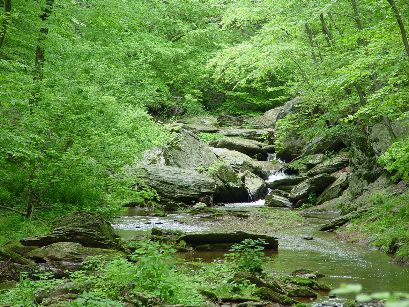
We got into geocaching after Pat attended an educational session for work (of all places!) at which members of the Maryland Geocaching Society gave a presentation on the hobby. They humbly admitted it's a somewhat geeky pursuit, so right there and then Pat was interested!!! Seriously, geocaching is a perfect fit for the two of us. How many people are inspired to go for walks through the woods and parks in the dead of winter or on gray, drizzly days? We certainly weren't, at least not on a regular basis, until we picked up geocaching. Now that we're into the hobby, we find that we're pushed by the thirst to track down and find MORE geocaches to add to our list of finds (see below for more information). We've also been the type that gets bored by the same old park or walking route, passing on opportunities to make return trips to some very nice trails that aren't very far from where we live. Geocaching has led us to dozens of terrific parks, wonderful trails, and beautiful scenic areas that we would not have otherwise known about or visited. Photos from some of these sites are displayed on this page, though we have often left the camera behind at home or in the car, and thus have no photos from some of the most attractive cache sites we've visited. In short, geocaching gets us off our butts, keeps us active, and gives us something worthwhile and healthy to do on weekends!
Geocaching does require a bit of an up-front investment unless you have a geocaching buddy that already owns a GPS receiver. The GPS receiver (a.k.a. GPSr) is the key piece of gear you will almost certainly need to begin geocaching. The device, whose cost starts around $90 or so and will vary depending upon model and features, is needed to mark the coordinates at which the caches are located, and to communicate with the satellites (free of charge-- NO user fees!) to determine where you are and to show the bearing and distance to the cache. There are a slew of different GPSr's available either online, or through some sporting goods, electronics, and boating stores, with handheld receivers being the best for geocaching purposes (GPSr's seem to be very popular with boaters and fishermen, and we've found that the best local selection seems to be at boating stores). The model we ended up purchasing, the Magellan SporTrak Pro (cost us about $200), has served us well so far, though we have no basis for comparison since we haven't used any other model! There are a number of helpful webpages that can help you decide which GPSr is right for you, with the best I've found being gpsinformation.net and GPS Navigator Magazine
After you select a specific cache, its information page will appear, giving the cache's map coordinates (which you enter into your GPSr), a brief background of the cache including ratings for its terrain and difficulty, some additional information about the cache, some hints about its location (which are by default coded, and may be automatically or manually decoded if desired), and logs and notes from those who found or failed to find the cache. As mentioned previously, there are different types of caches available, including:
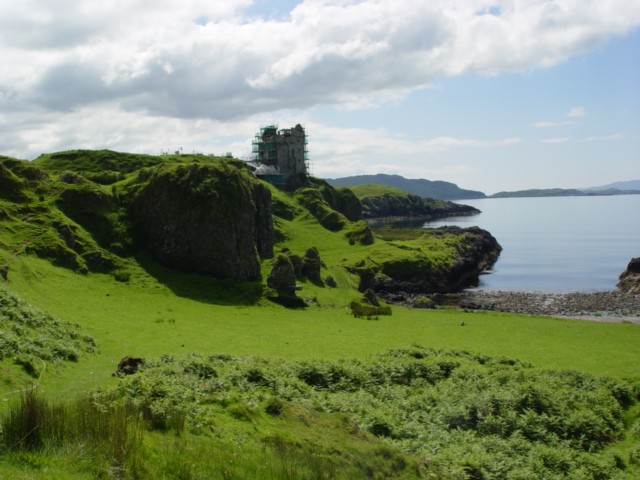
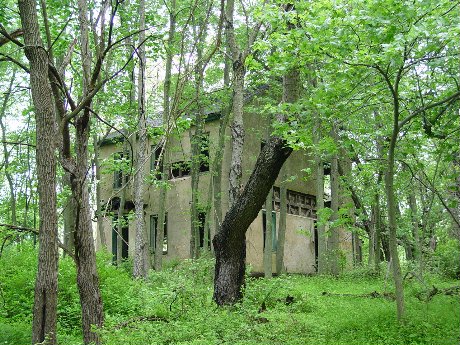
VIRTUAL- Described by geocaching.com as "a cache that exists in the form of a location." An example of a virtual cache in our home state of Maryland is the Blair Witch Project- Parr's House virtual cache, pictured above-left. Remember the house from the end of the first Blair Witch Project movie (the good Blair movie)?
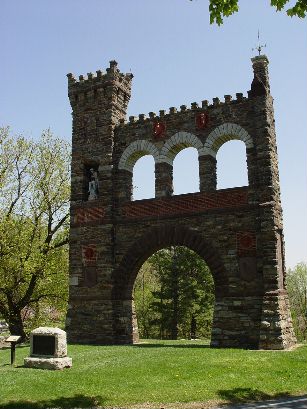
TRADITIONAL- This is the most common type of cache, in which various brik-a-brak and cheap trinkets are stashed away in tupperware or some other type of small container, which is then hidden somewhere. Most traditional caches are hidden in somewhat remote areas within parks, usually not too distant from established trails or footpaths so as to not require too much "bushwhacking." Typical hiding places would be in a hole/indentation at the base of a tree, amidst a rock outcropping, or under the trunk of a fallen tree. Half the fun of traditional caches is discovering and visiting the parks and areas in which they're situated. For example we enjoyed visiting the historical area of Gathland State Park while completing the Tinker's Folly #1 cache just off the Appalachian Trail.
MULTI-CACHE- This type of cache requires the geocacher to travel to two or more sites before finding the destination cache. The caches or mini-caches leading up to the last one will usually contain only the map coordinates of the next cache. In some cases, such as the clever CCC Bridge Tour Octoraro, some of the preliminary caches might be historical signs that include numbers that relate to the next cache's coordinates.
In summary, you'll never have a shortage of fun and diverse caches to hunt down. Along the way you're likely to experience all sorts of natural beauty, and to be thrilled by new discoveries!

If you're like us, and get hooked on geocaching, the next step you'll probably take is active participation in being a "provider." After finding some caches, you may very well find that you wish to give back by creating some caches of your own. This too is easy enough and pretty cheap. There's no cost to post the cache on the geocaching.com website, so you'll simply need to shell out a few dollars for a container, log book, pen and pencil, and some trinkets to serve as the treasure trove (chances are you'll have sufficient unwanted stuff floating around your home to fully stock the cache!). Some folks create caches with a theme, filling the cache with goodies that match the theme thy've chosen (e.g., sports cards, patches, animal-related stuff, etc.). Be sure to mark the cache container to make it obvious that it's a geocache, and enclose the geocaching.com letter that explains what the cache is all about.
The next step is to think up a good spot-- maybe a remote area of a park that you enjoy. Before hiding the cache, make sure that the site isn't already "claimed" or packed with other caches. A simple check of your local cache map will do the job. In this age of high security and suspicion, use care and common sense when choosing where to place you cache. Here in Maryland, a geocachers advocacy group called the Maryland Geocaching Society has established an arrangement with Maryland State Forests and Parks and developed guidelines and approval forms for cache placement. The bottom line is that geocaching is generally a low-intensity recreational activity, and SHOULDN'T result in damage to natural areas and parklands. Use common sense and don't place caches in areas where they're prohibited, unwanted, or would result in damage to environmentally-sensitive areas. When you've found a good spot and carefully hidden the cache, be sure that your get good coordinate readings on your GPSr and maybe think up a couple decent clues while you're at the cache site. Afterwards, go home and place the cache on the geocaching.com website, and keep up with its status and visitors' logs once it is active and starts being found. Bear in mind you may need to perform occasional maintenance (replacing the whole thing if it ends up being leak-prone or is pilfered by some villian, or restocking it with a logbook, pen, or pencil if needed).
If you don't want to create a traditional cache, or can't find a good place to do so, you may want to consider posting a virtual cache. Think of a point of interest that is not obvious to John Q. Public. A virtual could beanything from a little-known historical or cultural site, to something strange, humorous, or fun to visit. Be creative! Most virtuals require the finder to take a photo (usually with the GPSr in the picture with the virtual cache) or to answer some questions about the site via e-mail. We've enjoyed almost all of the virtuals we've experienced to date, and have posted one ourselves.
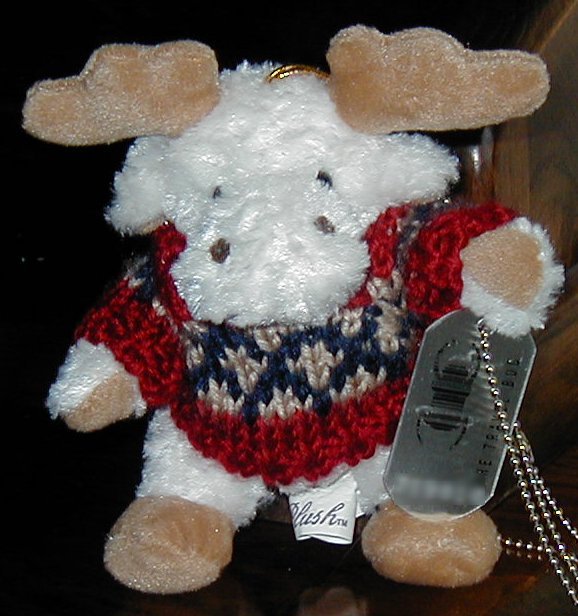
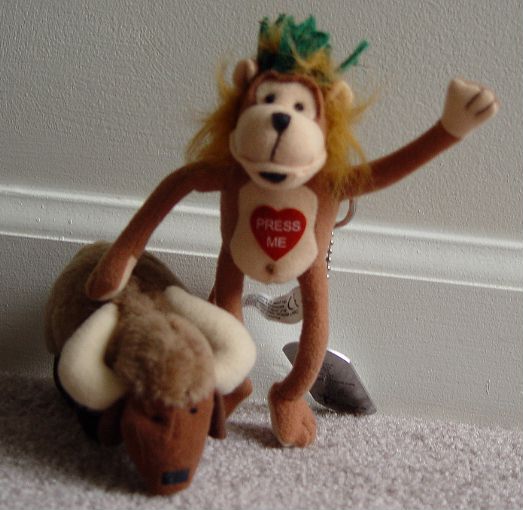
Another fun thing you're sure to discover once you've done a few caches is something called a "travel bug." Travel bugs are items to which a registered numbered "dog tag" has been attached for the purpose of tracking its movement. Most travel bugs are small plush animals, though we've seen some pretty strange and wild ones as well! A "rogues gallery" of some of the travel bugs we "own" and have released is displayed at right.
So, how do travel bugs work?!? The dogtags, each of which has a unique assigned number, may be purchased through Groundspeak (the company that runs the geocaching.com website). You start by registering the tags you've purchased, then you assign one of the tags to the critter/object you wish to use as a travel bug. You next fill in a travel bug page in which you describe your bug and list any travel-related goals it may have. As an example, click here to go to the webpage for Harry the Holiday Hound (pictured below right). You then place your travel bug in a traditional cache, either your own or some other cache you visit.
Once you've registered the travel bug, you place it in a cache somewhere and then "assign" it to the cache via the geocaching.com website. For example, you could assign it to a cache when you log your visit to the cache. Thereafter, others who find and pick up the travel bug can log their find through the bug's special webpage. They would then move it on to another caches, hopefully keeping in mind the bug's desired goals. After placing it in another cache, they would assign it to that cache when they log their visit. This is how travel bugs move along their merry way from cache to cache. All the while, the travel bug's movement is being tracked on its webpage, where you can check in on its status and view a map of the bug's travels. These bugs can go pretty far afield, as we found out with our Chilly DeMoose travel bug, pictured at top right. Travel bugs are fun, and add an interesting element to the hobby of geocaching.



WARNING! The geocaching.com website can be slow at times!
Who Wants a Banana?!?! (Virtual, created January 15, 2003)
Clagett's Cache (Traditional, hidden January 19, 2003)
Moose in the Maryland Woods (Traditional, hidden January 26, 2003)
Christmas in Miami (Traditional, hidden February 2, 2003)
Parkville 2 for 1 Cache Quest (Multi- three parts within two sites, hidden March 16, 2003)
Dorsey's MMT (Traditional, hidden April 12, 2003)
Milling Around in the Garden of Eden (Multi- two parts within one site, hidden May 4, 2003)
Marylanders on Kerrera (Traditional cache in Scotland, hidden during vacation in June, '03)
Moose on Lismore?!?! (Traditional cache in Scotland, hidden during vacation in June, '03)
Visiting the Lord of the Isles (Virtual in Scotland, created during vacation in June, '03)
Monumental Heights - Islay (Virtual in Scotland, created during vacation in June, '03)
Carroll's Woods (Traditional, hidden July 12, 2003)
Alms for the World's Poor (Multi- three parts within one park, created July 12, 2003)
Molly's Meadow (Traditional, hidden July 19, 2003)