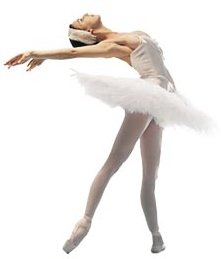
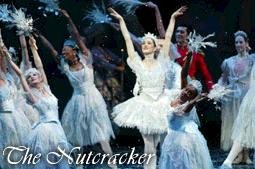
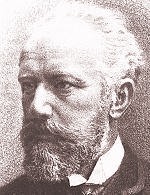
Born Kamsko-Votkinsk on May 7th, 1840, he was a famous composer who is better known as Piotr Tchaikovsky. He wrote such well-known works as Swan Lake, Sleeping Beauty and the Nutcracker:all which have been turned into ballets as well as other artistic productions and are still performed today.
Although he had no musical background in his family (his father was
a mine inspector), he started to learn piano at the age of five and
proved to have a natural talent for it. At the age of ten, he was sent
to the School of Jurisprudence in St. Petersburg;this separated him
from his mother which was painful, especially since she died when
Tchaikovsky was only 14.This tragic event may have been what helped
Tchaikovsky start to compose. At 19, he took a job at the Ministry of
Justice and stayed there for four years, despite his increasing
involvement in music. In 1863, he joined the conservatory and started
private teaching. His work had not yet impressed the conservatory,
nor his friend and severe critic, Balakirev.
Tchaikovsky continued to travel and compose, but in 1875, when he returned home, he was deeply depressed as he could not accept his homosexuality. Later that same year, he was contacted by an affluent widow, Nadezhda von Meck, who admired his music, gave Tchaikovsky financial security and corresponded with him for fourteen years although without meeting him. Tchaikovsky was later contacted by a young lady who enjoyed his music and Tchaikovsky thought that immediate marriage might rid him of his sexual problems. Unfortunately, their marriage did not work out and he escaped from her almost at once in a state of nervous breakdown, attempted to kill himself and went abroad.Tchaikovsky continued to compose while away from home and his work "Eugene Onegin," told of a girl's rejected approach to a man who fascinates her, which mirrored Tchaikovsky's situation exactly.
He resigned from the conservatory and tortured by his sexuality,
he found that he could compose no more music of real emotional value.
He continued travelling and conducting and he as very honoured. The
next three years (1889-1892) saw the composition of two ballets and
they would also be two of his most famous works:"Sleeping Beauty" and
"The Nutcracker." In 1893, he worked on his sixth symphony with a
specific plan the first movement would be about activity and passion,
the second about love, the third, disappointment and the fourth and
final, death. It was performed on the 28th of October, 1893 and
Tchaikovsky died nine days later. Officially, he died of cholera,
but more recent evidence shows that he underwent a trial from his
old school regarding his sexual behaviour and it was decreed that
he commit suicide.The truth of his death will remain a mystery, but
what is important is the music he wrote during his life.
Information based on: http://w3.rz-berlin.mpg.de/cmp/tchaikovsky.html