





 飛行傘具
飛行傘具 



Paragliders:飛行傘介紹 初級傘 中級傘 高級傘 高級競賽傘
詳細數據資料如下:: (以奧地利傘廠---AIRWAVE 舉例說明)
全世界生產飛行傘的廠牌超過50家以上.在臺灣常見的約有10個廠牌.初學者倒不必擔心如何選擇傘具,他們的教練會
替他(她)決定.其他的人可依照幾個原則來選擇:1. 等級認證2. 傘具尺寸3.廠牌顏色喜好.等級及傘具認證 , 選擇傘具完全
得依照你的本領程度初學者就是飛初級傘,再隨程度成長漸進到中級,高級或競賽等級 的傘具.國際間傘具的認證標準
主要有DHV( 德國認證標準),AFNOR (法國標準)及SHV(歐洲通用),為何只有這些因為歐洲是傘具主要的 消費市場而其中德國
又是最大的市場. DHV用數字3等代表等級.簡單的說數據越大表示傘具等級越高 須要更高的操縱技巧,DHV-1就代表傘具安全,
穩定性佳適合初學者或休閒飛行用, AFNOR標準將傘具分為 :STANDARD( 標準), INTERMEDIATE(中級),PERFORMANCE(高級)以及
COMPETITION(競賽)等.這個不必多做解釋各 人依自己程度對號入座即可.SHV我們這裡較不時興,DHV及AFNOR已夠清楚了.
傘具尺寸: 傘具尺寸可分為 XS, S, M, L及XL,不過可以肯定的說每家傘廠
各尺寸適用的體重範圍都不相同,原因很簡單,各傘設計時的目標及往後認證時的修改在在都影響到它的適用範圍,這
個我們不用擔心.我們只要把握選擇起飛總重量是該尺寸的中限即可.起飛總重包括:體重,傘重,套袋重,套袋裡所有的
東西及你身上所有的東西.我們參考傘廠的目錄對照該尺寸的適用重量範圍取其中間範圍就對了.
廠牌顏色喜好: 各家傘廠所用的布料,繩索,扣具都是那幾家沒甚差異,甚至有六成以上的傘廠都是使用同一套電腦設計
軟體來設計傘具,這麼說來傘具廠牌盡管不同性能應該差別不大吧?才不呢.決定傘性能好壞的一個重要因素是看誰在
試飛調整該傘具.國際比賽的前幾名廠家經由不斷的競賽洗鍊下對於各級傘性能掌握更勝於其它默默無名的廠家因此
在調較各級傘時也較能掌握並讓傘在該級數中發揮最大性能.也就是所謂的: "名牌". 那些是名牌上網查 看那些國際比
賽常勝的廠家就對了. 不過"名牌"養了一批選手花費很高,再加上名家調較所以當然這些傘也比較貴. 傘具長期得受日
光照射,傘布的抗紫外線性能關係到傘具的壽命. 一般來說含螢光色的傘布抗紫外線性能較差,其他如粉紅,紫,白,藍,綠
,黃等依序抗紫外線性能皆可.


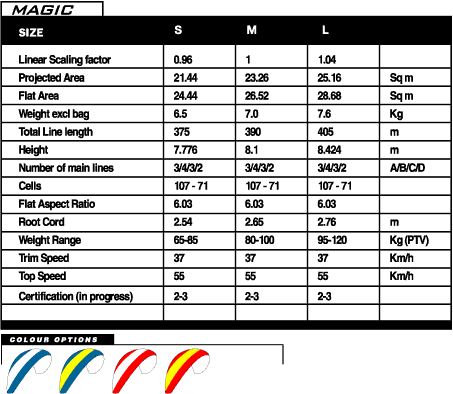
The handling of Airwave paragliders has always been
legendary,
but with the Magic our handling has entered a new dimension. - See specifications
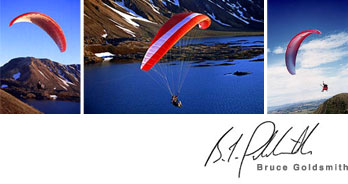
The handling of Airwave paragliders has always
been legendary, but with the Magic our handling has entered a new dimension.
Low negative tendancy, large brake range and low stall speed mean that the
Magic is such a pleasure to fly that we defy you to fly
it in thermals and to land without a big smile on your face.It feels at home
in thermals and loves to help you find the core.
The Magic is the latest glider from the drawing board of Bruce Goldsmith and
by incorporating several new design features
he have been able to maintain a high level of safety, as well as a new modern
look. Open and Closed Leading Edge Cells
Two Types of Diagonal Ribs New Panel Shaping Technology Built to Last Wing-Flex
System Low stall speed

A true Sports Class wing allows the pilot to have real
fun and
not to have to worry about the integrity of his glider. -- See specifications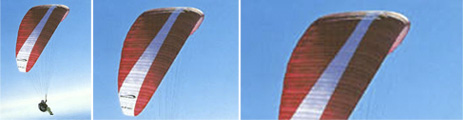
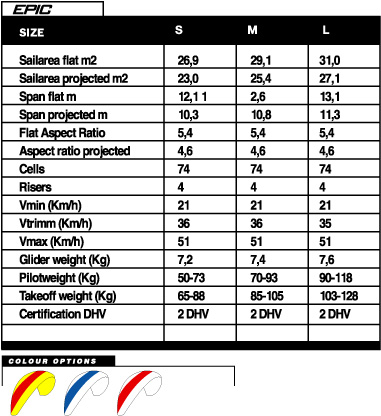
A true Sports Class wing allows the pilot to
have real fun and not to have to worry about the integrity of his glider.
The Epic not only acheives this goal but the handling makes it simply a pure
pleasure to fly. As soon as you
flying one you will know how good flying can feel.

The HY-2 is a paraglider designed for fun flying. As
soon as you launch
the HY- 2 it inspires confidence and feels totally dependable. -- See specifications
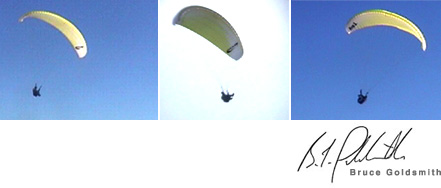
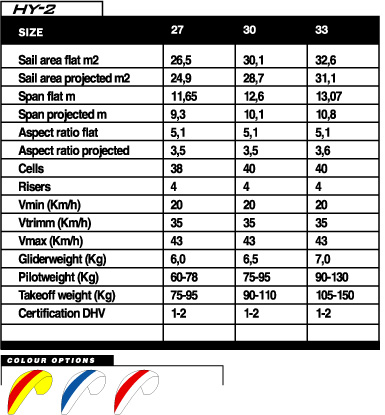
The HY-2 is a paraglider designed for fun flying.
As soon as you launch the HY- 2 it inspires confidence and feels totally
dependable. An ideal paraglider for the new pilot to relax and enjoy the pure
fun of flying without any surprises.
'I designed the Hy2 to strike that perfect balance between handling and safety.
Many competition pilots I know hate
the Harmony because it can out climb them in thermals and sit at the top of
the stack on the ridge. Get a Hy2 and
outclimb the local hotshots!' Bruce Goldsmith - designer Features DHV 1-2
Speed 20 – 43 Km/h Very stable also in
rough conditiones Perfect recovery from unusual maneuvres Safety and performance
Airwave quality and workmanship


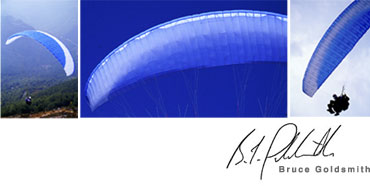
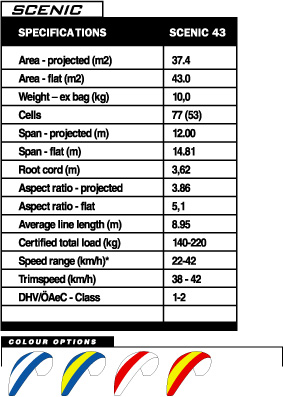
Airwave are proud to present its new tandem glider the
Scenic, the first tandem glider to bridge
the gap between high performance tandems and tandems which are easy to handle.
-- See specifications
Until now pilots have had to chose between
high performance tandems that can be a handful to control if
conditions are not ideal, or else working tandems which are easy to use but
often lack the performance needed for
good cross country flights. Airwave are proud to present its new tandem glider
the Scenic, we believe this is
the first tandem glider to bridge this gap.
Easy Launch
Launching a tandem is not always the easiest
of tasks.Four legs and a tailwind are often a recipe for disaster, so we believe
a
tandem must have the very best take-off characteristics possible.We were not
surprised when the DHV test pilots
agreed with us and awarded the Scenic a DHV1 for this test (with trimmers
released).
Soft Landings
Not only does the take-off need to be super
easy but the landing has to allow the pilot to slow down enough so that even
in light tailwind conditions the pilot and passenger can achieve a stand-up
landing.The Scenic has a combination of a new
aerodynamic profile and an effective brake line distribution allowing the
pilot to achieve unusually slow landing speeds and
a remarkable energy conversion for super soft landings.
Dream Handling
Thermalling the Scenic is a real pleasure.The
turn co-ordination allows the Scenic to outclimb many solo gliders and
the trimmers with their gearing ratio allow easy trim application and lower
brake pressure particularly with the trimmers on.
Eternal Trimmers
The first thing to wear out on a tandem paraglider
is usually the trimmers.Most pilots use the trimmers for both launch
and landing and normally after a couple of hundred flights the trimmer webbing
becomes worn and the pilot has to order
a costly replacement pair of risers……not on the Scenic. To reduce trimmer
wear we have used a 2-1 reduction which
halves the load. This avoids slipping and makes the trimmer easier to pull.
Also we have made the trimmer itself replaceable
and every Scenic is delivered with a spare pair!If after all these new innovations
you still need a replacement trimmers,
they will be only a fraction of the price of new risers.
Good Performance
Due to the internal diagonal system the Scenic
has a total line length of just 440 meters.This makes untangling the lines
easier as well has giving superior glide performance.
Partially Closed Leading Edge
The leading edge of the Scenic is fully open
in the center to promote fastinflation.The tips are fully closed as is conventional
in paragliders, but between these two areas is a zone of transition of partially
closed cells.This detail is not only
the logical transition zone between the two extremes but also produces a cleaner
leading edge.
 想多看看一些國外傘廠?
 趕快超連結去看看吧 !




|
飛行傘身分證 AFNOR vs DHV 


|
|
|
|
|
若通過測試將給一個Gutesiegel 等級。 |
|
|
是一個於歐洲飛行傘製造廠的協會。 |
AFNOR及DHV 兩者都有負載測試和飛行測試,重量的負載測試為最大的飛行重量的8倍,來 保証此飛行傘的負載強度足夠。
AFRON AFRON有17項飛行的測試,局分3等級和一個雙人傘(Tandem/dual)範疇 。測試之飛行傘必須通過全部所有項目,
然而這方法對競賽級飛行傘將不進行測 試旋轉,不對稱失速....等項目。
AFNOR等級分類為:
|
|
|
|
|
( ACPUL 11A'S 與 1B或者1C同意) |
|
|
|
DHV
gutesiegel's飛行的測試有三主要的等級範疇:1、2和3 ;同時也有二重疊等級 範疇- 1/2和 2/3。
DHV gutesiegel 有13項飛行的測試。全部不論對何種等級飛行傘測試,在DHV 皆必須通過全部測試項目。
|
|
|
|
|
|
|
|
|
AFNOR vs DHV YES=有測試 NO=無測試
測試項目 DHV AFNOR
|
|
|
|
|
|
|
|
|
|
|
|
|
|
|
|
|
|
|
|
|
|
|
|
|
|
|
|
|
|
|
|
|
|
|
|
|
|
|
|
|
|
|
|
|
|
|
|
|
|
|
|
|
|
|
|
|
|
|
|
|
|
|
|
|
|
|
|
|
|
|
|
|
|
|
|
|
|
|
|
|
|
|
|
|
|
|
|
|
|
|
|
|
|
|
|
|
|
|
|
|
|
|
|
|
|
|
|
|
|
|
|
|
|
德國 DHV 各級傘報告
|
|
|
|
|
|
|
|
|
|
|
|
|
|
|
|
|
|
|
|
|
|
|
|
|
|
|
|
|
|
|
|
|
|
|
|
|
|
|
|
|
|
|
|
|
|
|
|
|
|
|
|
|
|
|
|
|
|
|
|
|
|
|
|
|
|
|
|
|
|
|
|
|
|
|
|
|
|
|
|
|
|
|
|
|
|
|
|
|
|
|
|
|
|
|
|
|
|
|
|
|
|
|
|
|
|
|
|
|
|
|
|
|
|
|
|
|
|
|
|
|
|
|
|
|
|
|
|
|
|
|
|
|
|
|
|
|
|
|
|
|
|
|
|
|
|
|
|
|
|
|
|
|
|
|
|
|
|
|
|
|
|
|
|
|
|
|
|
|
|
|
|
|
|
|
|
|
|
|
|
|
|
|
|
|
|
|
|
|
|
|
|
|
|
|
|
|
|
|
|
|
|
|
|
|
|
|
|
|
|
|
|
|
|
|
|
|
|
|
|
|
|
|
|
|
|
|
|
|
|
|
|
|
|
|
|
|
|
|
|
|
|
|
|
|
|
|
|
|
|
|
|
|
|
|
|
|
|
|
|
|
|
|
|
|
|
|
|
|
|
|
|
|
|
|
|
|
|
|
|
|
|
|
|
|
|
|
|
|
|
|
|
|
|
|
|
|
|
|
|
|
|
|
|
|
|
|
|
|
|
|
|
|
|
|
|
|
|
|
|
|
|
|
|
|
|
|
|
|
|
|
|
|
|
|
|
|
|
|
|
|
|
|
|
|
|
|
|
|
|
|
|
|
|
|
|
|
|
|
|
|
|
|
|
|
|
|
|
|
|
|
|
|
|
|
|
|
|
|
|
|
|
|
|
|
|
|
|
|
|
|
|
|
|
|
|
|
|
|
|
|
|
|
|
|
|
|
|
|
|
|
|
Your first glider should be an ACPULS STANDARD or DHV 1-2 rating. The levels
of gliders are: the beginner-intermediate
(ACPULS STANDARD or DHV1 or 1-2), the performance intermediate and advanced
(ACPULS Performance or DHV 2 or 2-3, pilots with 100+ hours), and the competition
(ACPULS Competition or DHV 3).
With all the new and latest designs, most current ACPULS Standard or DHV 1-2
gliders have the performance that would
surpass advanced gliders with older design features. If you choose a modern
glider which is less than a year or two old,
you will have a better chance of finding a market for it when you want to
resell it. Most of the time, I fly my
DHV 1-2 glider rather than my competition glider since it is fun and I can
accomplish 95% of the same tasks which
my competion glider allows me to complete. The big difference is the FUN factor
of no stress flying!
Your glider should be easy to handle on the ground. Remember, your glider
behaves the same whether you are kiting on the
ground or flying in the air. Give it a no hand forward inflation test! The
glider should come up nicely without any of your input.
The design quality and the materials it is made from is very important. Ask
your instructor to explain to you why you should
buy a particular brand name of glider and to explain the difference between
various gliders. Don't be swayed towards one model
or brand name because your instructor, school or friends decide it's the one
they want to sell you. (Some instructors will
sell you only one brand of glider since they get big discounts for volume
selling!)
Choose the correct size of glider where your hook-in weight should be in the
middle of the weight range of the glider!
Remember that the total weight range of the glider (usually about 44 lbs or
20 kgs) includes everything: the weight of your
glider (15 lbs) with the carrying bag, harness, reserve, flight suit, lunch,
water, emergency kit, cellular phone, radio, etc. Your
hook-in weight range should be=your body weight + 20 kgs or 44lbs. Purchasing
a used/second hand glider is a difficult
task if you are new to the paragliding sport. Your instructor or your knowledgeable
friends should be able to help you to check
the condition and porosity of the glider. Most often you will find a good
used glider and harness with about 20 hours or
40 hours of airtime for about US$1500~US$2500. Brand new gliders usually cost
around US$2800~US$3400. A new harness
should be around US$500~US$800. (Stay away from harnesses that use a stiff
Kevlar backplate which could give you a
compressed fracture backbone when you fall). (See my review on back protection.)
A new reserve should be around US$400~$US700.
Choosing a glider of the correct size and stablity will enhance your flying
time and give you far more pleasure. Be sure to
make use of your local instructors and school services. Talk to your local
paraglider pilots about your local instructors/schools
before you sign up for lessons. There are many schools and instructors in
the US. Some are excellent, some are there to rip
your money off. As a courtesy, you should purchase your first glider with
your local instructor who spends time helping you
trying out different gliders. We need to support the local instructors. Without
the local instructors, there will not be new pilots!
Please feel free to consult with Kinsley Wong - Big Air ParaGliding if you
have any questions concerning your purchasing decision.
Big Air ParaGliding offers the best deal for your next equipment purchasing
or advanced paragliding instruction! You will not be disappointed
when you obtain a price quote on the glider or equipment: such as helmets,
harnesses, etc. that you are planing to purchase. We are not
oligated to sell or promote one brand name. Big Air ParaGliding sells and
recommends only products which suit your need and budget!.
Mr. Kinsley Wong is always up-to-date in testing and knowledgeable with all
the latest development in ParaGliding equipment.
Why buy somewhere else when you can have the best price, the best friendly
customer service (such as free labor cost in line replacements, etc.)