
| | Home | Gallery | Contact |About | |
Cosplay
| Cosplay (kosupure), short for �costume play,� refers to a global practice of building costumes and performing as characters from manga (Japanese comic books), anime (Japanese animation), television series, films, video games, and other popular-culture sources whose narratives have produced characters that have developed a fan base. Performance entails replication of the chosen character�s appearance and enactment of the character�s typical behavior in certain contexts. In Japan and increasingly in the West, the term cosplay may also describe the use of costumes for sexual purposes, in which case the �play� refers not to performance of a character but to sexual play in costume. Further, the act of cosplaying as characters of the opposite gender is called crossplay, and the act of cosplaying as characters who themselves dress as the opposite sex is called cross-dressing. This practice is common due to the prominence of gender-bending in girls� stories in anime and manga. Each of these cultural forms is separated into gender genres:shojo refers to girls� stories and shonen to boys� stories. Within shojo, there is a popular category called boy�s love (also known as BL or yaoi), stories about male homosexual love, primarily aimed at a readership of young women. Shojo characters frequently shift genders or cross-dress in the stories, adding to the complexity and pleasure of identity performance for the cosplayer. |
| Over the years the demographics in cosplay at conventions have shifted from the vast majority being male fans to an even gender balance and an ethnically mixed population. This indicates that the cosplayer and the emerging cosplay designer represent a global response to anime and manga that moved it from an obscure and marginal practice to a well-known source of popular-culture style that has had a profound influence on fashion.
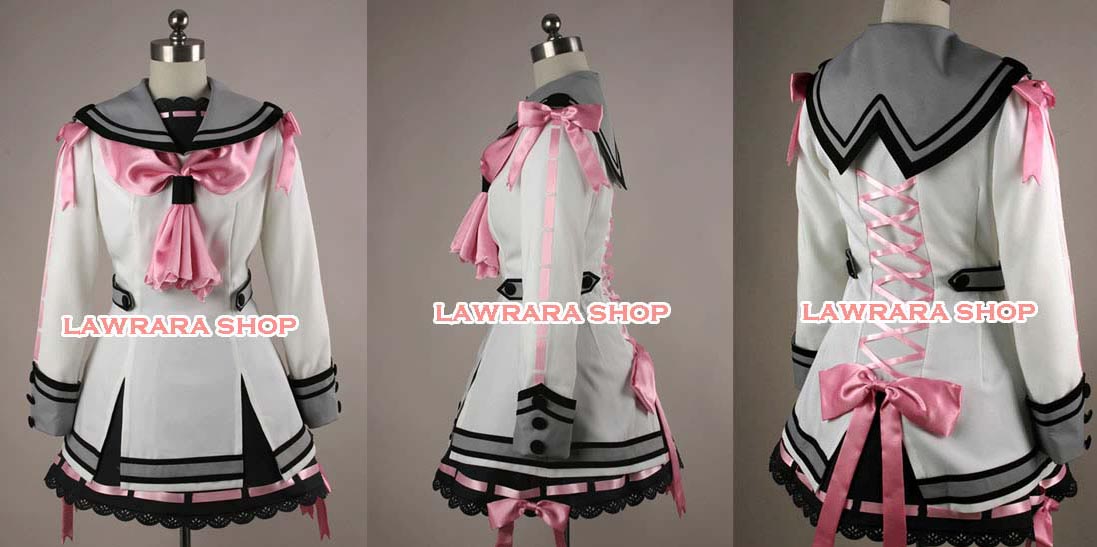
Cosplayers are usually designers by definition, but a cosplay participant has emerged who may or may not actually wear or perform in the costume. The cosplay designer began as an amateur ad hoc designer: someone who had design sense and could sew well. In the early twenty-first century, however, the cosplay designer has become a specialist who sells online and in dealer rooms and who may specialize in weapons, hats, wigs, or costumes. Frequently, this designer may also work with cosplay forms outside the confines of anime and manga characters, such as Loli, or may even create �mundane� mainstream fashions.
|
| A primary focus of cosplay is the convention performance, which can take several forms: themasquerade, the hall performance, and the impromptu photo session. The cosplayer performs the character derived from the original text. In the masquerade, a traditional and popular part of convention programming, cosplayers register by name and character; at some more established conventions, the cosplayer must also register by rank, that is, according to their experience and evaluation in previous judged events. The notion of performance ranges from an elaborate but brief enactment of a scene to the posing in tableau of an action or behavior typical of the character. Sources for the performance can range from anime and manga to games, fan fiction, parodies, bands, and other popular-culture texts. Judging can be an all-day event, or it can be restricted to the masquerade performance, depending on the size and preference of the convention. Judges are typically drawn from the convention community, people who attend many conventions every year and are knowledgeable in anime and manga texts. They can be voice actors, costume experts, cosplay celebrities, or guests of the convention. The criteria or elements for evaluation are set by the convention but are based on the following general categories: Workmanship. This category pertains to the level of complexity of the design and the craftsmanship in construction techniques and finish materials. In this category, ranking, if used as a delineator, comes into play: Each rank would be judged according to the expectations for that level. Those expectations would most likely be set by the judging panel and would be described in the cosplay section of the program booklet for the convention. Construction. This category alludes to the evaluation of whether and to what extent the costume was made by the cosplayer and how much was purchased from another source. Cosplayers generally make their own costumes but may purchase parts or particular details from a commercial source or from a cosplay designer. Since the entire costume is evaluated, from hats and wigs to shoes, boots, weapons, and accessories, this can be a complicated process. The more of their costumes the cosplayers have constructed themselves, the higher their marks. |
| | Home | Gallery | Contact |About | |