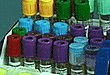
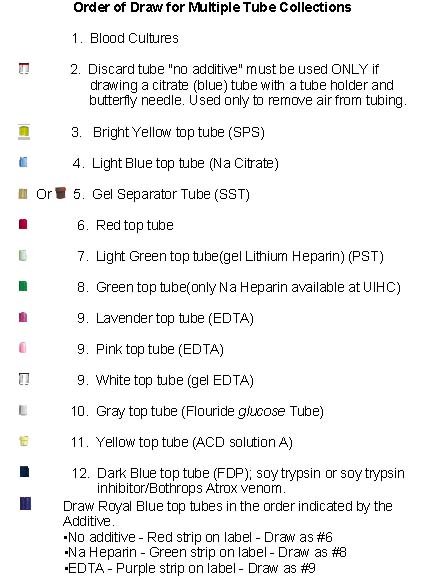
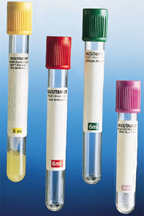
The proper order in which blood collection tubes should be filled is designed to prevent the carryover of additives from one tube to the next. Such carryover alters the composition of the next tube and can lead to erroneous results, with the potential to mislead physicians and invite catastrophic errors in patient management. For the record the order of draw has been established by the NCCLS - the National Committee for Clinical Laboratory Standards, which develops voluntary standards--through its concensus process with industry, government and laboratory professionals and is published by NCCLS in document H3- Proceedure for the Collection of Blood Specimens for Diagnostic Testing by Venipuncture.
The order was revised and simplified this past December to one that works for both glass and plastic tubes, regardless of whether the specimen is drawn by using a tube holder and needle assembly or syringe. The order of draw in which I used for the making of the bracelets are based on the order of draw for Vacutainer/Syringe draws. Capillary tube draws are different in the way that EDTA tubes are collected, first due to the droplet clotting factor. |