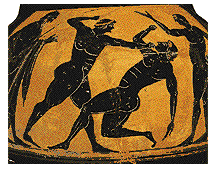
The pankration was added in
the pankration was the most dangerous and toughest of all events, since victory was sought with no consideration of the danger to the body or the life of one's opponent.
equipment
There is no equipment used in the pankration (no boxing gloves).
Pankratiasts did not wear gloves as competitors in boxing did, so the blows were not as painful; however, a pankratiast was allowed to hold his opponent with one hand and hit him with the other, unlike boxing. The fighter who fell to the ground first was in a difficult position, for his opponent was able to fall on top of him and immobilize him with his legs, leaving his hands free to strike him or apply a strangle-hold. The fighter who fell would try to turn on his back and use his arms and legs to protect himself. Slightly built competitors often deliberately fell on their backs, a device called hyptiasmos (back fall).
Kicking played an important part in the pankration. A kick to the stomach was called gastrizein (the stomach-trick). The hold, in which a fighter held his opponent's foot as tightly as he could to make him lose his balance, was called apopternizein (the heel-trick).
rules of the Game
All the holds used in wrestling and all the blows used in boxing were allowed.
The only things forbidden were biting and gouging.
TYPES OF PANKRATION
The pankration had two forms:
Kato pankration, in which the contest continued after the opponents fell to the ground. It was used in games.
Ano pankration, in which the opponents had to remain standing. It was used in training or in preliminary contests. This was a much lighter and safer form.
characteristics of a Good Pankratiast
According to Philostratos, the perfect pankratiasts were those whose physical build was such that one might describe men suited for the event as being the best wrestlers amongst the boxers and the best boxers amongst the wrestlers. Psychological qualities like courage and endurance were also important.