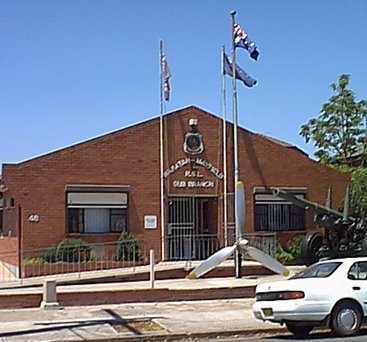
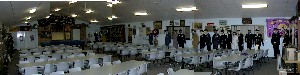
Waratah-Mayfield RSL sub-branch was set up in 1936 for the Veterans in the area. In 1946 a committee was set up to establish a club. The club could not be part of the RSL sub-branch as an RSL sub-branch is not allowed to hold a liquor licence. In 1946 a part-licence for alcohol was obtained for the club and by 1947 a full licence was obtained. The club developed from there to what it is today.
Currently the RSL club is involved in a program called Veterans in Schools which aims to provide an opportunity for the young people of today to hear and discover our history and heritage. This program has to date proved highly successful and will continue to do so.
In 1997 Kay Coppa, a community advisor with the Department of Veteran Affairs in Newcastle, approached the Newcastle District Council of RSL sub-branches to see if it was possible to set up a veterans in schools program in Newcastle. A meeting was held to discuss the possibilities of such a program.
The group consisted of Kathy Bennett, a consultant with the Volunteer Support Department of Veteran Affairs in Sydney, Kay Coppa from the Newcastle Office, Dianne Barney from the Department of Education and Training, Colin Davies, Jack Coughlin, Cliff Dibden and Tom Fayle, from Newcastle sub-branch members from the Naval Association, WRAAF Association and several other veterans.
It was decided to start a pilot program. Two schools, one high, one primary, would take part in the pilot. The pilot program was a huge success.
The following year it was expanded, by years end the veterans had spoken to over 1300 students from 14 schools in thee Newcastle area.
In 1999 the program was expanded to include schools in the Lack Macquarie District, the Catholic schools and the private schools system. So far we have had 14 schools this year. The program over all has been a huge success and quite a surprise to some people.
Every week, groups of students aged 9 to 15 interview veterans at the Waratah-Mayfield RSL Sub-Branch, where they are also treated to a tour of the military museum. Many questions concern war service, but students are also keen to know details about the veterans before and after their service.
A number of veterans say their physical and emotional wellbeing has increased since they have been in the program. They are gratified to be helping young people understand their country's' history, by ensuring their service to Australia is not forgotten. A spirit of camaraderie, mutual support and fun has developed amongst members of the group.
Students report that the veterans make history come alive with first-hand accounts of the facts that they have read about in textbooks. They love handling the artifacts veterans show them. They are also developing a respect for older people. One unexpected outcome was the time a girl was shown the watch of her great grandfather in a display case.
To date more than 3000 students from 30 primary and secondary schools and 20 veterans have been involved. Veterans represent the Army, Navy, Air Force, and National Service serving in World War II, Korea, Vietnam and the Gulf War. Some currently serving personnel also participate.
This program is going from strength to strength. If you are interested in more information, contact the coordinator Colin Davies on 49682088.
Oral histories allow people's perceptions of the time that they have lived through to be tabled as relevant historical statements. From this students are able to put other historical materials into context and the person who tells their oral history is able to contribute to the development of the students as well as improve their own self confidence.
Andreas Jerzyna
Basil Crouch
Colin Davies
Emily (Joan) Bale
Jack Coughlin
Norman Cann
Ray Bennett
Thelma Steirluird
Tom Fayle